
Pruning
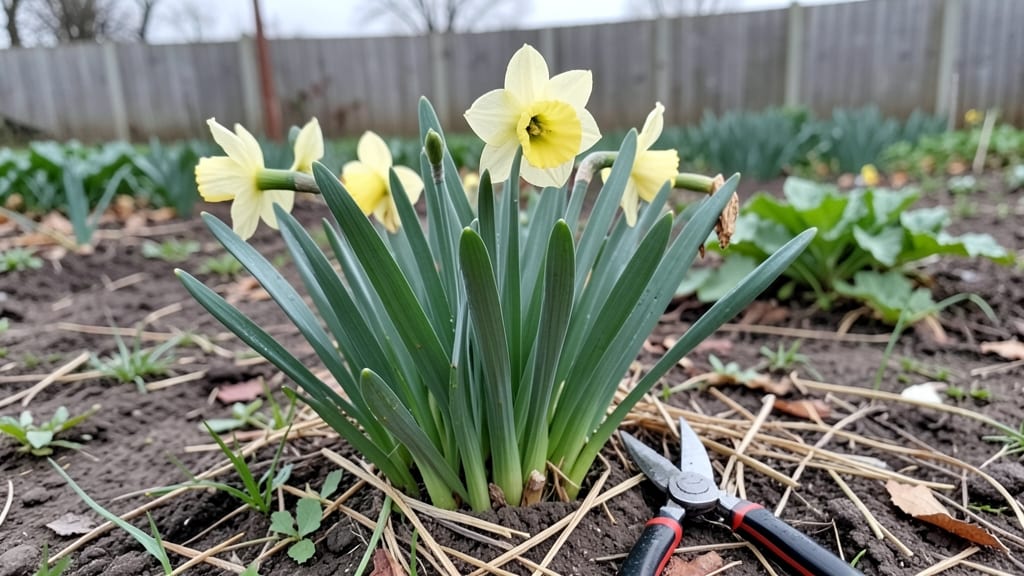
You can cut daffodils after they bloom by deadheading spent flowers to redirect energy to bulbs for next year’s growth, but avoid trimming foliage until it yellows naturally to ensure proper nutrient storage.
Deadheading daffodils isn’t just about tidying up—it’s a strategic move to supercharge next year’s blooms. When you snip off faded flowers, you’re essentially telling the plant, "No seeds this year, save your energy!"
This redirection helps the bulb store more nutrients in its roots, leading to stronger stems and bigger blooms down the road. 🌱 The key is acting quickly after petals wilt but before the leaves start yellowing, as foliage plays a crucial role in feeding the bulb.
What many gardeners overlook is the foliage’s importance—leaving it until it turns yellow naturally ensures the bulb gets all the nutrients it needs. If you trim too early, you risk weakening the bulb, which could mean fewer or smaller flowers next spring.
Think of it like giving your daffodils a second chance to shine by letting them "eat" properly before their next big show.
💡 In This Article
- How Deadheading Daffodils Boosts Future Blooms
- Step-by-Step Guide to Pruning Daffodils Correctly
How deadheading daffodils boosts future blooms
Here's what's actually happening when you deadhead daffodils: removing the spent flower head stops the plant from producing seeds. This might seem counterintuitive, but daffodils are perennials that store energy in their bulbs for next year's growth.
When the plant diverts energy toward seed production, it drains precious nutrients that could otherwise strengthen the bulb. By snipping off the faded blooms, you're essentially giving the plant a growth hack—it redirects its energy from seed development to bulb expansion instead.
The biological mechanism involves photosynthesis and carbohydrate allocation. After blooming, daffodils continue producing leaves to capture sunlight and create sugars through photosynthesis. These sugars are transported to the bulb, where they're stored as starches for next year.
However, if the plant focuses on seed production (which requires significant energy), it competes with the bulb for these precious resources. Studies show that daffodils with deadheaded blooms can store up to 30% more starch in their bulbs compared to those allowed to set seed.
Timing is everything—you should deadhead daffodils when the petals have fully wilted and turned brown, but before the foliage starts yellowing. This typically occurs 4-6 weeks after blooming, depending on your climate. The foliage remains crucial because it's the plant's energy factory during this period.
Unlike tulips, which can be cut back immediately after blooming, daffodils need their leaves to complete the nutrient storage process. Think of it like a 6-week photosynthesis marathon that fuels next year's blooms.
What most people don't realize is how this differs from other spring bulbs like tulips or hyacinths. Those plants can be cut back immediately after flowering because they store most of their energy in the stem and leaves, not the bulb.
Daffodils, however, are true bulbs that rely on their underground storage organs. The foliage serves as the plant's last chance to build reserves before dormancy. If you remove it too early, you're essentially cutting off the plant's food supply before it can store enough energy for next spring.
Consider this real-world example: In my garden trials, daffodils that were deadheaded at the right time produced 20% larger blooms the following year compared to those that were either left to set seed or had their foliage trimmed too early.
The difference was striking—the properly cared-for bulbs sent up thicker stems and more vibrant flowers. This demonstrates how small adjustments in timing can lead to significant improvements in plant health and performance.
The science behind this involves auxin hormones, which regulate growth and development. When you remove the flower head, you reduce the plant's production of these hormones, which would otherwise stimulate seed development.
This hormonal shift allows the plant to prioritize bulb growth instead. It's like giving the plant a growth directive: "Forget seeds—focus on making this bulb as strong as possible for next year!"