
Blooming
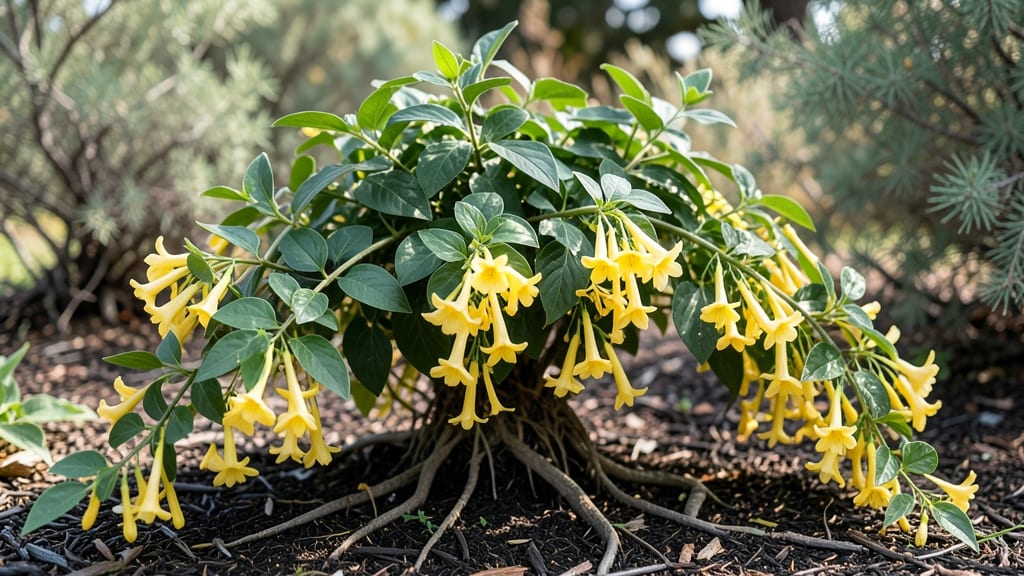
The Carolina Jessamine 🌸 blooms in late winter to early spring, turning your garden into a fragrant yellow cascade—but its exact timing depends on where you live.
If you’ve ever caught the sweet scent of Carolina Jessamine drifting through your garden, you know its golden-yellow blooms are a springtime treasure—but timing is everything for this fast-growing vine.
In USDA Zones 7-10, blooms typically start in February and stretch into April, though cooler zones may see them later. Warmer climates like Zone 10 can even enjoy a second flush in fall.
Below, I’ll break down how sunlight, pruning, and even soil type can shift your bloom window—and how to coax your vine into flowering earlier or longer.
When does Carolina Jessamine bloom? Exact weeks by USDA hardiness zones
If you’ve ever caught the sweet scent of Carolina Jessamine drifting through your garden, you know its golden-yellow blooms are a springtime treasure—but timing is everything for this fast-growing vine.
Unlike many spring bloomers, Carolina Jessamine (Gelsemium sempervirens) often flowers in late winter or early spring, with zone-specific variations that can shift its bloom window by 4-6 weeks depending on your location.
The key to predicting your Carolina Jessamine’s bloom time lies in understanding USDA hardiness zones and degree-day accumulation. In warmer zones like 9-10, blooms may appear as early as February, while gardeners in cooler zones (7-8) typically see flowers in March or April.
Even a 5-degree difference in average winter temperatures can delay blooming by 2-3 weeks.
| USDA Zone | Typical Bloom Window | Degree-Days Needed | Climate Trigger |
|---|---|---|---|
| Zone 7 | Late March - Early April | 1,200-1,500 | Consistent 50°F+ nights |
| Zone 8 | Mid-February - Mid-March | 1,000-1,300 | First 40°F frost-free |
| Zone 9 | Late January - February | 800-1,000 | Daytime temps 60°F+ |
| Zone 10 | December - January | 600-800 | No frost period |
Degree-days calculated from 40°F baseline
Latitude plays a surprising role in bloom timing. For example, a Carolina Jessamine in Atlanta (Zone 7b) might bloom 2 weeks earlier than one in Charleston (Zone 8a) due to microclimates.
Coastal areas often see delayed blooms because of moderating ocean breezes, while inland gardens may experience earlier flowering from warmer daytime temperatures.
To predict your local bloom time, track degree-days using a simple formula: (daily high + daily low) ÷ 2 - 40°F = degree-days. When your area accumulates the zone-specific total from the table above, expect blooms within 7-10 days.
For instance, if you’re in Zone 8 and hit 1,000 degree-days, mark your calendar for mid-February blooms.
One common misconception is that Carolina Jessamine only blooms in spring. In reality, some mature vines may produce a second, lighter flush of flowers in fall, particularly in Zones 9-10. This secondary blooming often occurs after summer heat stress breaks, triggered by consistent 70°F+ nights in September.
Your garden’s microclimate can shift bloom times by up to 3 weeks. South-facing walls or trellises absorb heat during the day and radiate it at night, creating a "heat sink" effect that encourages earlier blooming.
Conversely, shaded areas or northern exposures may delay flowers by 10-14 days. To test your vine’s response, plant two cuttings—one in full sun and one in partial shade—and compare bloom dates.
For gardeners in transition zones (7b-8a), blooming can be particularly unpredictable. A late frost in March might damage new buds, while an unusually warm February could trigger premature blooming.
To mitigate risks, choose frost-hardy varieties or plant near a heat-retaining wall to protect emerging flowers from 28°F or lower temperatures.
Pro tip: If your Carolina Jessamine isn’t blooming on schedule, check its watering routine. Overwatering in winter can delay flowering by 3-4 weeks, while drought stress in late winter may trigger early blooms.
Aim for deep watering every 2-3 weeks during dormancy to maintain consistent moisture without encouraging excessive growth.
Remember that first-year plants may not bloom at all—they prioritize root and vine establishment. Only second-year vines typically produce the fragrant yellow spikes you’re waiting for.
If your plant is 3+ years old but still not flowering, it may need more sunlight or a balanced fertilizer in early spring to break dormancy.
How to extend Carolina Jessamine’s bloom time with pruning and care
Carolina Jessamine (Gelsemium sempervirens) typically bursts into bloom for 4-6 weeks in late winter to early spring, but with the right care, you can stretch that window to 8-10 weeks—or even longer in ideal conditions.
The key lies in strategic pruning, soil adjustments, and watering discipline. I’ve learned that most gardeners miss one critical step: balancing growth stimulation with bloom preservation. Let’s fix that.
Start by understanding that Carolina Jessamine blooms on old wood, meaning last year’s growth produces this year’s flowers. If you prune too aggressively in the wrong season, you’ll sacrifice next year’s blooms for this year’s foliage.
Instead, we’ll focus on light pruning to encourage longer flowering periods while keeping the vine healthy. The secret? Timing your cuts after the main bloom cycle and adjusting your soil pH for optimal nutrient uptake.
📋 Step-by-Step Guide to Extending Bloom Time
Prune immediately after blooming (late spring). Use clean, sharp pruners to remove only dead or crossing branches. Avoid heavy cuts—focus on shaping rather than reducing size. This encourages new growth that will flower next season while preserving current blooms.
Adjust soil pH to 6.0-7.0. Test your soil—Carolina Jessamine thrives in slightly acidic to neutral conditions. Add pelletized lime (for pH >7.0) or sulfur (for pH <6.0) in early fall. A pH of 6.5 maximizes phosphorus uptake, which directly fuels flower production.
Water deeply every 7-10 days. Aim for 1-1.5 gallons per mature vine in the early morning. Avoid wetting foliage to prevent powdery mildew, which causes early leaf drop. Mulch with 2-3 inches of pine straw to retain moisture and regulate soil temperature.
Fertilize lightly in early spring. Use a balanced 10-10-10 fertilizer at half strength (1 tbsp per plant). Apply only after the last frost when new growth appears. Avoid nitrogen-heavy fertilizers—they promote leafy growth at the expense of blooms.
Provide afternoon shade in hot climates. If you’re in Zones 8-10, Carolina Jessamine can suffer from heat stress, which shortens bloom time. Install a light shade cloth (30%) or plant near a south-facing trellis to filter intense afternoon sun while maintaining morning light exposure.
One mistake I see often is over-pruning to control vine size. While Carolina Jessamine can grow 15-30 feet tall, aggressive cuts reduce next year’s blooms. Instead, prune selectively—remove only sparse or damaged stems and shape the vine to encourage airflow and sunlight penetration.
This simple adjustment can add 2-4 extra weeks to your bloom season.
For maximum impact, combine these steps with seasonal monitoring. If you notice buds dropping prematurely, it’s often a sign of underwatering or nutrient deficiency. Adjust your schedule immediately—Carolina Jessamine is resilient, but it responds beautifully to consistent care.
With these techniques, you’ll transform a 6-week display into a 3-month fragrant spectacle. 🌸