
Blooming
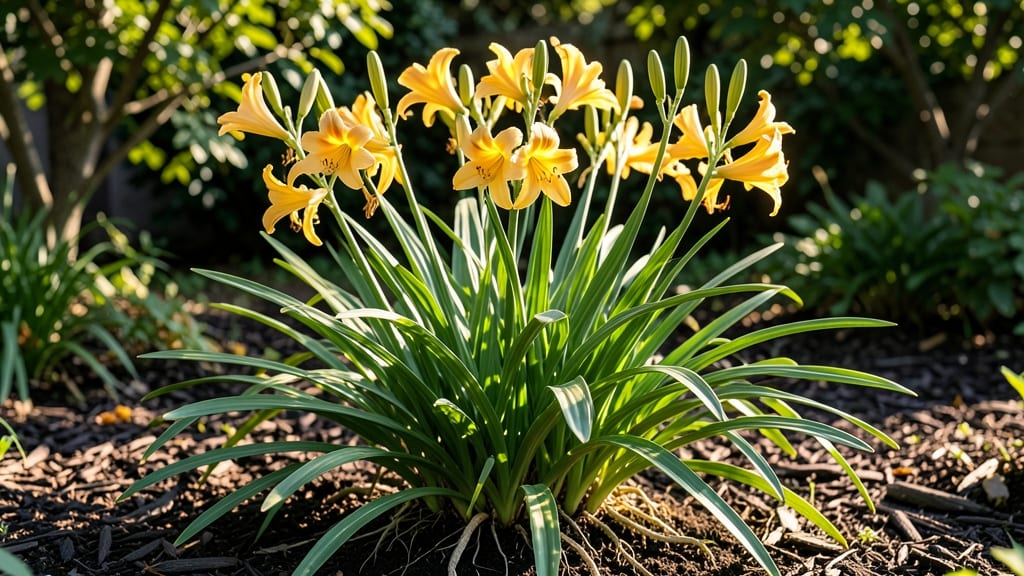
Continuous bloom daylilies extend their flowering seasons through multiple blooming cycles each year, thanks to advanced hybridization and targeted care practices. These varieties maintain vibrant blooms well into fall by combining genetic resilience with strategic deadheading and sunlight optimization.
These reblooming daylilies owe their extended displays to careful plant breeding that creates tetraploid hybrids—plants with double chromosome sets that resist dormancy better than traditional varieties. 🌸 The key is selecting cultivars like 'Stella de Oro' or 'Happy Returns,' which naturally produce secondary blooms after their initial flush.
Unlike single-bloom types, these varieties stay active through summer heat waves and often reward gardeners with late-season color when other perennials fade.
What sets them apart isn't just genetics—it's how they respond to your care. Proper sunlight exposure (at least 6 hours daily) and consistent moisture keep their energy flowing, while regular deadheading redirects their focus to new buds rather than seed production.
The result? A garden that stays lively from early summer through crisp autumn days.
💡 In This Article
- How Hybridization Creates Longer Daylily Bloom Cycles
- Top Continuous Bloom Daylily Varieties and Planting Tips
How hybridization creates longer daylily bloom cycles
Daylilies naturally follow a seasonal bloom pattern, but continuous bloom varieties break this cycle through a genetic trick called tetraploidy.
Most garden daylilies are diploid (2 sets of chromosomes), but breeders developed tetraploid hybrids (4 sets) that produce larger, more vigorous blooms—and crucially, resist the hormonal signals that trigger dormancy.
This extra genetic material creates stronger root systems that store more energy, allowing plants to push through summer heat without shutting down. 🌿 The result? Instead of one 4-6 week bloom period, these hybrids can produce 3-5 flowering cycles per season.
Temperature sensitivity plays a key role in their extended performance. Traditional daylilies enter dormancy when nighttime temperatures drop below 50°F, but continuous bloom varieties like 'Happy Returns' maintain activity until 40°F nights.
This difference comes from modified photoperiod responses—these hybrids interpret daylight hours differently, continuing to produce flower buds even as days shorten. The trade-off? They often bloom less prolifically in extreme heat (above 90°F), when photosynthesis slows and energy reserves get depleted.
What you'll notice in your garden is that these hybrids prioritize flower production over seed development. After the first bloom wave, they redirect energy toward new buds rather than setting seed pods.
This is where deadheading becomes critical—removing spent blooms within 24 hours prevents seed formation and signals the plant to produce more flowers. Without this step, a continuous bloom daylily might still produce secondary blooms, but with 30-50% fewer flowers than when properly maintained.
There's also a fascinating chemical process at work. Daylilies produce florigen—a flowering hormone—during long daylight periods. Continuous bloom varieties have been bred to maintain higher florigen levels throughout the season by:
- Enhanced photosynthesis: Larger leaves capture more sunlight, sustaining energy production
- Improved nutrient uptake: Deeper root systems access water and minerals more efficiently
- Modified hormone regulation: Reduced sensitivity to dormancy-inducing signals
The visual difference is striking. While single-bloom daylilies might produce 10-15 flowers over 4 weeks, a well-cared-for continuous bloomer like 'Stella de Oro' can produce 50-70 flowers over 12+ weeks. The blooms also tend to be slightly larger (3-4 inches vs 2-3 inches) due to the tetraploid genetics.
What's even more impressive is how they maintain color vibrancy—many continuous bloom varieties develop deeper hues as the season progresses, creating a natural color gradient from pale yellows to rich oranges.
One common misconception is that all continuous bloom daylilies perform equally in all climates. While they're more adaptable than traditional varieties, their performance varies by region. In USDA Zones 5-6, they may produce 4-5 bloom cycles, while in Zones 7-9, they can extend to 6+ cycles.
The key difference lies in how each zone's temperature fluctuations interact with the plant's modified dormancy triggers. 🌸
For gardeners, this means selecting varieties that match your specific climate conditions. Northern growers should prioritize cold-hardy types like 'Happy Returns,' while southern gardeners can choose heat-tolerant options like 'Gold Band.'
The right match can extend your bloom season by 6-8 weeks compared to traditional daylilies—turning a 4-week display into a 10-week garden highlight.