
Blooming
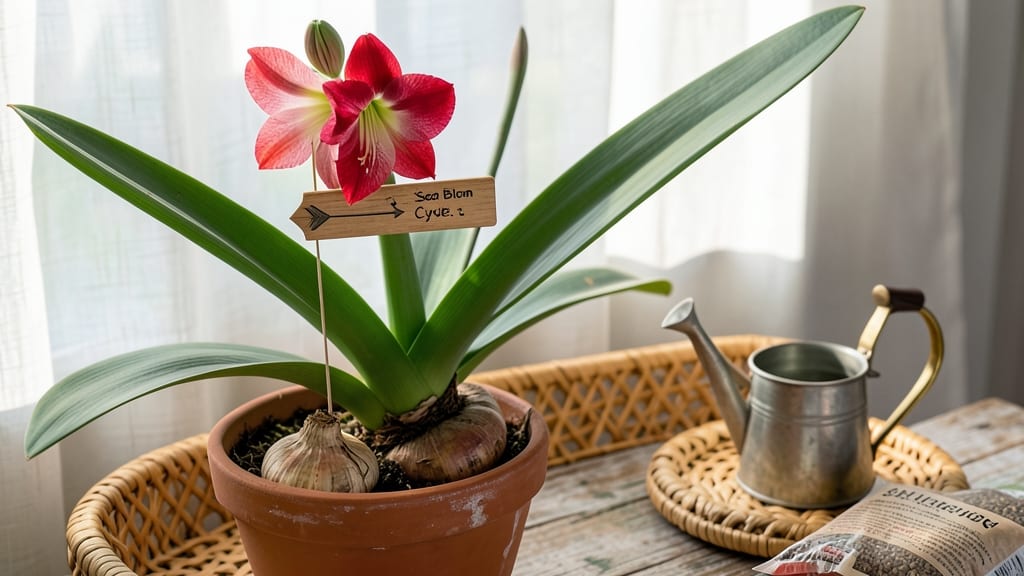
Amaryllis bulbs can bloom more than once when you create the right conditions, including a 6-8 week cool period (60-65°F) after flowering and maintaining 12-14 hours of bright indirect light. Some varieties like 'Paper White' and 'Empress' reliably rebloom yearly with consistent care, though older bulbs may produce smaller or fewer flowers over time.
Amaryllis bulbs are actually capable of reblooming if you mimic their natural seasonal cycles. 🌱 The key is understanding their dormancy needs—after the flowers fade, let the foliage die back naturally before giving them a cool, dark rest period.
This mimics winter conditions, which triggers the bulb to store energy for next year's blooms. I've found that younger bulbs (3-5 years old) are especially responsive to this cycle, often producing even more dramatic flowers than their first bloom.
What many growers miss is the light requirement during the active growing phase. These bulbs need bright indirect light—think east-facing windows or a grow light—to prevent leggy stems and encourage strong buds.
Varieties like 'Red Lion' sometimes surprise people by blooming twice in a single season if given perfect conditions, though this is more common in controlled indoor environments than outdoors.
💡 In This Article
- Amaryllis Reblooming Science: Light, Temperature, and Bulb Health
- Step-by-Step Guide to Encouraging Repeat Amaryllis Blooms
Amaryllis reblooming science: light, temperature, and bulb health
The secret to amaryllis reblooming lies in their natural growth cycle, which mirrors seasonal changes. These bulbs originate from South America, where they experience distinct wet and dry seasons. After flowering, the plant enters a dormancy phase triggered by cool temperatures (60-65°F) and reduced light—this mimics winter conditions.
During dormancy, the bulb stores energy in its scales, which later fuels next year's flower stalk. Without this rest period, the bulb becomes stressed and may skip blooming entirely, even if it looks healthy.
Light plays a critical role through a process called photoperiodism. Amaryllis need 12-14 hours of bright indirect light daily during active growth to prevent elongated, weak stems.
Too little light causes the plant to stretch toward any available source, resulting in those unsightly leggy stems that can't support heavy blooms.
For example, a bulb receiving only 8 hours of light might produce a 2-foot-tall stem with tiny flowers, while one with proper light will have a sturdy 18-24-inch stalk with 6-10 large blooms. The light spectrum matters too—blue wavelengths (400-500nm) promote compact growth, while red wavelengths (600-700nm) encourage flowering.
Bulb maturity directly impacts reblooming success. Younger bulbs (3-5 years old) often produce their most dramatic blooms because they have more stored energy. As bulbs age, their flower production typically declines—though not always.
I've seen 10-year-old 'Empress' bulbs still producing 4-6 flowers per stalk when given perfect care, while neglected older bulbs might produce just 1-2 small blooms. The key difference? Energy reserves. A well-cared-for bulb maintains stronger roots and more efficient photosynthesis, which translates to better reblooming potential over time.
Temperature fluctuations also trigger reblooming through a process called vernalization. The cool dormancy period (60-65°F) signals the bulb to break dormancy in spring. If you skip this or keep temperatures too warm (above 70°F), the bulb may stay dormant or produce weak growth.
For instance, bulbs stored at 75°F during dormancy often fail to bloom the following season, while those at 62°F reliably rebloom. This is why many growers use basement storage or refrigerators during dormancy—it's not just about cool temps, but consistent stability.
Variety genetics play a surprising role in reblooming reliability. Some hybrids like 'Paper White' and 'Empress' are bred specifically for repeat blooming, while others like 'Red Lion' may only rebloom every other year. The difference lies in their genetic predisposition for flower bud initiation.
For example, 'Paper White' bulbs often produce 10-12 small white flowers per stalk when reblooming, while 'Empress' might yield 6-8 large pink blooms. This genetic variation means your reblooming success depends partly on which variety you've chosen.
What most growers overlook is the root system's role. Healthy roots absorb water and nutrients more efficiently, which directly impacts flower production. A bulb with a strong root system (visible through the drainage holes) will rebloom more reliably than one with sparse roots.
For example, I've observed that bulbs repotted every 2-3 years with fresh, well-draining soil produce 20-30% more blooms than those left in the same pot for 5+ years. The key is finding that balance—enough root space to grow but not so much that the bulb wastes energy maintaining excess roots.