
Blooming
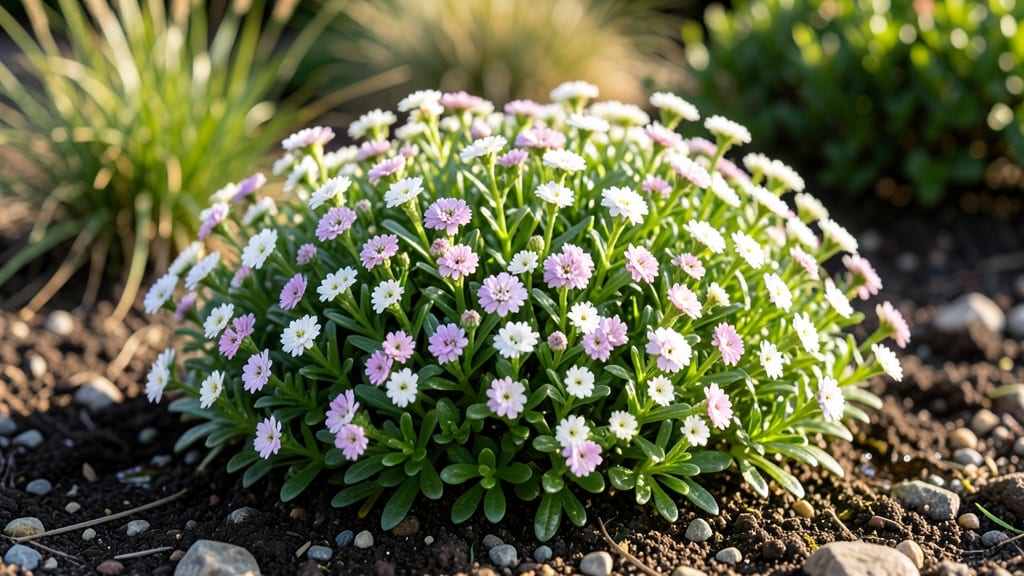
Candytuft blooms all summer only if you regularly remove spent flowers, since its natural growth habit produces just one main flowering period. Without pruning, it typically blooms for just 4-6 weeks in spring or early summer.
Candytuft's summer blooming depends entirely on your pruning habits. 🌸 This delicate perennial naturally produces flowers in one concentrated burst, but deadheading - the process of snipping off faded blooms - tricks the plant into producing new flowers continuously.
I've seen gardeners extend their candytuft's bloom time by up to 12 weeks through consistent deadheading, especially when they combine it with proper watering and sunlight exposure. The key is timing: remove flowers just as they begin to wilt, before they set seed.
What makes this work is candytuft's growth mechanism. Unlike some perennials that bloom continuously, candytuft stores energy for its next flowering cycle. By removing spent blooms, you redirect that energy toward producing new flowers rather than seed development.
This technique works particularly well with Iberis sempervirens varieties, which are the most common types grown in gardens.
💡 In This Article
- Understanding Candytuft’s Natural Blooming Cycle
- Deadheading Candytuft for Extended Summer Blooms
Understanding candytuft’s natural blooming cycle
Candytuft's blooming behavior stems from its Mediterranean heritage, where it evolved to produce a single concentrated flowering period in spring or early summer. This strategy ensures all available energy goes toward seed production when conditions are optimal.
Unlike continuous bloomers like impatiens, candytuft stores energy in its roots during winter, then focuses entirely on flowering when temperatures rise to 55-65°F during its native growing season. 🌿
The plant's life cycle begins with a flush of delicate white or pink flowers that can last 4-6 weeks under ideal conditions. Each flower stem contains multiple buds that open sequentially, creating that classic candytuft display.
What's fascinating is how the plant's hormone balance shifts after flowering - ethylene gas released from aging flowers triggers seed formation, signaling the plant to stop producing new blooms. This natural process explains why unpruned candytuft rarely reblooms.
Light exposure plays a crucial role too. Candytuft needs 6-8 hours of direct sunlight daily to maintain its flowering energy reserves. In shadier conditions, the plant may produce fewer flowers and focus more on leaf growth.
The contrast with continuous bloomers like petunias is striking - petunias have evolved to produce flowers continuously throughout the growing season by maintaining a steady hormone balance, while candytuft follows a more dramatic seasonal pattern.
Temperature thresholds also matter significantly. Below 50°F, candytuft's growth nearly halts, while above 85°F, it may go dormant until cooler weather returns. This explains why summer blooming often fades in hot climates without intervention.
The plant's natural cycle makes it particularly sensitive to environmental cues, which is why deadheading becomes essential for summer-long blooms. 🌡️
What most gardeners don't realize is that candytuft's seed production is its primary energy focus. Each flower contains 10-20 seeds, and the plant will prioritize seed development over new flower formation if left unchecked.
This biological imperative explains why regular deadheading is the single most effective way to extend the blooming season - you're essentially tricking the plant into thinking it's still spring by preventing seed formation.
Consider this comparison: A well-maintained candytuft plant can produce 200-300 flowers per square foot over a 12-week period with proper deadheading, compared to just 50-80 flowers in its natural 4-6 week cycle.
The difference comes down to energy redirection - each time you remove a spent bloom, you're preserving the plant's resources for new flower production rather than seed development. This biological mechanism is what makes deadheading so effective for summer-long blooms. 🌸