
Blooming
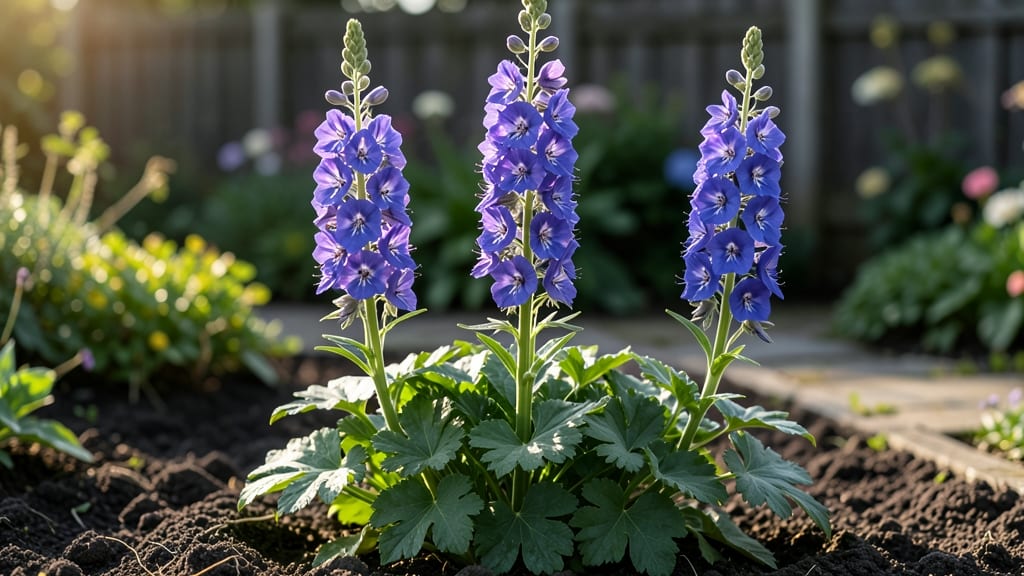
Delphiniums don't bloom all summer continuously—most varieties bloom in one long cycle from spring through early summer, then fade unless you take specific steps. Some perennials like Pacific Giants can extend blooms with mid-season pruning, while annuals like 'Black Knight' finish quickly. Your climate and the specific variety will determine how much reblooming you can expect.
Delphiniums follow nature's seasonal cues, with their blooming triggered by specific temperature and daylight combinations. 🌸 Once they've exhausted their primary energy reserves in that first flush of flowers, they need a strategic break—like deadheading spent blooms or giving their foliage time to recover.
I've found that varieties like 'Blue Bird' respond well to consistent care, while others need more aggressive pruning to coax a second round of blooms.
What makes this especially interesting is how perennials and annuals differ in their behavior. Perennial types can sometimes be coaxed into reblooming with proper mid-summer pruning, while annuals typically put all their energy into that initial burst of color.
The key is understanding your specific variety's tendencies and adjusting your care routine accordingly.
💡 In This Article
- Why Delphiniums Bloom Seasonally (And How to Extend Their Season)
- Best Delphinium Varieties for Longer Blooms (And How to Care for Them)
Why delphiniums bloom seasonally (and how to extend their season)
Delphiniums follow a natural energy conservation cycle where they allocate resources to either flowering or foliage growth, but rarely both simultaneously. During their primary bloom phase (typically spring to early summer), these plants focus nearly all their energy on producing those iconic spiked flowers.
This is driven by photoperiod sensitivity—their response to daylight length—which triggers bud formation when days grow longer in spring. Once the flowers open and set seed, the plant's energy shifts to seed production, leaving little reserve for additional blooms unless you intervene.
The botanical process involves flower buds forming along the main stem in late winter or early spring.
These buds require consistent temperatures between 50-65°F to develop properly, and once they open, the plant prioritizes seed maturation over new growth. 🌿 For varieties like 'Pacific Giant', which can reach heights of 4-5 feet, this energy allocation means a single bloom cycle unless you prune strategically.
The key is understanding that delphiniums are "one-and-done" bloomers by nature, but with proper care, you can coax some varieties into a secondary (though often smaller) bloom.
Temperature and daylight play critical roles in reblooming potential. In cooler climates (USDA zones 3-6), delphiniums often need a period of heat stress in mid-summer to trigger secondary bud formation. This is why many gardeners report better reblooming in northern gardens where hot afternoons are followed by cool nights.
Conversely, in hotter climates (zones 7-9), the plants may go dormant prematurely without proper watering and shade. The ideal scenario involves maintaining soil moisture while allowing foliage to recover after the first bloom cycle—typically a 4-6 week rest period before attempting to stimulate new growth.
What most gardeners overlook is the role of flower buds that form along the stems. Each node on the stem has the potential to produce a new flower spike if given the right conditions.
For example, the variety 'Blue Bird' produces side shoots that can develop into secondary blooms if you remove the first flowers before they fully mature. This technique, called "bud pruning," redirects the plant's energy toward these lateral shoots rather than seed production.
The trade-off is smaller, less robust blooms, but they'll extend your flowering season by 4-8 weeks depending on your climate.
Here's what actually happens when you prune correctly: cutting back stems by one-third after the first bloom forces the plant to produce new growth from lower nodes.
These new shoots will form smaller flower spikes (typically 2/3 the size of the original), but they'll bloom again in late summer or early fall. The science behind this is that delphiniums, like many perennials, can produce multiple flushes of growth when their primary energy reserves aren't completely exhausted.
This is why varieties like 'Elite' (a perennial) respond better to pruning than annual types like 'Black Knight', which have already allocated all their energy to that initial bloom.
Consider these key factors when planning your care routine:
- Variety selection: Perennials like 'Pacific Giant' have better reblooming potential than annuals
- Pruning timing: Wait until 50% of flowers have opened before deadheading
- Fertilizer strategy: Use high-phosphorus fertilizer after first bloom to encourage root and bud development
- Watering: Maintain consistent moisture (1-1.5 inches per week) during dormancy period
The most rewarding part of working with delphiniums is seeing how they respond to your care. I've had 'Blue Bird' plants produce three distinct bloom cycles in a single season by carefully managing deadheading and watering—though the third flush was always the smallest.
The secret is patience and understanding that each subsequent bloom requires more effort from the plant. 🌺 With the right approach, you can extend their season by nearly half, turning what would be a 6-week display into a 12-14 week garden highlight.