
Blooming
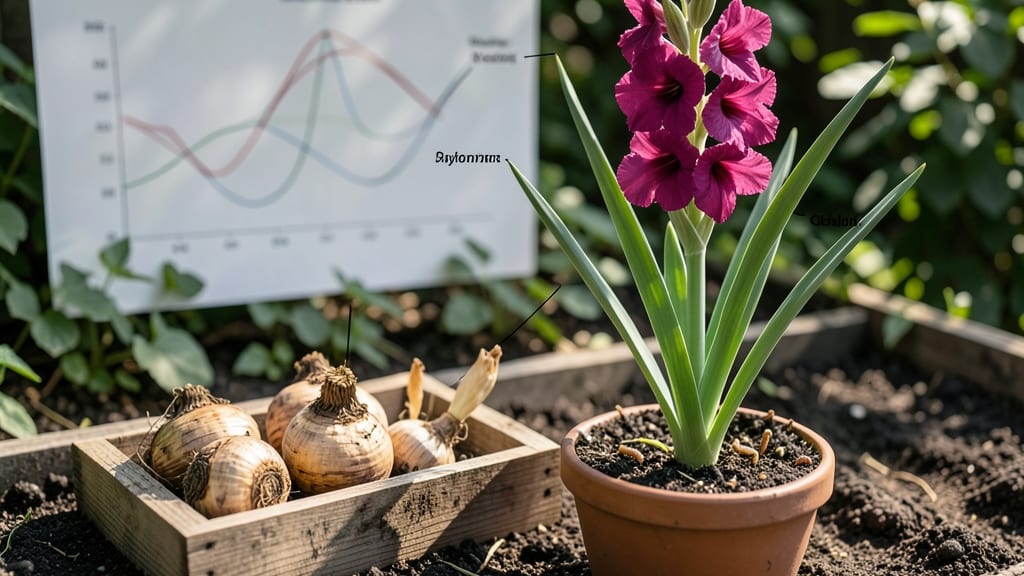
Gladiolus do not bloom every year as perennials—they are technically corms that require annual replanting or division to produce flowers, though some varieties may rebloom if conditions and care are ideal. Most gardeners treat them as seasonal plants for reliable flowering.
Gladiolus behave more like seasonal bulbs than true perennials because their underground corms deplete stored energy after flowering.
Unlike hardy perennials such as daylilies, gladiolus corms don't regenerate enough to support another full bloom cycle without intervention. 🌱 The key to encouraging reblooms lies in proper winter storage—keeping corms in dry, cool conditions (around 40-50°F) preserves their energy reserves for next season's growth.
Varieties like 'Green Star' or 'Picasso' are known for their longer blooming windows when given optimal care.
What sets gladiolus apart is their two-year life cycle: the first year focuses on building root systems while the second produces flowers. Many gardeners mistakenly assume they'll return yearly without understanding this biological pattern.
The solution? Treat them like annuals for guaranteed blooms, or invest in careful corm management to extend their flowering lifespan.
💡 In This Article
- Why Gladiolus Corms Need Annual Care for Blooming
- How to Maximize Gladiolus Reblooming in Your Garden
Why gladiolus corms need annual care for blooming
Gladiolus rely on corms—thickened underground stems—that act like natural batteries, storing energy for growth and flowering. Unlike true perennials such as daylilies, which regenerate from robust root systems, gladiolus corms deplete their energy reserves after producing flowers.
This is because each bloom spike demands significant resources, leaving the corm with insufficient strength to regenerate fully for another season. 🌱 The corm's lifespan is typically just 2-3 years unless carefully managed, as it lacks the regenerative capacity of perennial roots.
Temperature and light play critical roles in this cycle. Gladiolus corms enter dormancy when nights grow cooler, typically below 50°F. During this phase, they need dry storage to prevent rot and preserve energy.
If left in the ground during winter, they risk freezing or fungal infections, which further deplete their reserves. True perennials like daylilies, however, can survive winter's chill because their underground rhizomes remain active and continue growing, unlike gladiolus corms which must be treated like seasonal plants.
The root system of gladiolus is another limiting factor. While they develop fibrous roots during the growing season, these roots don't provide the same regenerative benefits as perennial root systems.
This means that without annual intervention—such as dividing and replanting corms—gladiolus will produce fewer and smaller blooms each subsequent year, eventually stopping altogether. The energy required to produce a single flower spike can be equivalent to 30-40% of the corm's stored energy, making reblooming without care nearly impossible.
Light exposure also affects reblooming potential. Gladiolus need 6-8 hours of direct sunlight daily to produce strong flower spikes. Insufficient light leads to weak growth and smaller blooms, further draining the corm's energy reserves.
This is why gardeners in northern climates often struggle with reblooming—shorter daylight hours combined with cooler temperatures create less favorable conditions for the corms to recover and prepare for another flowering cycle.
What most gardeners don't realize is that even the hardiest gladiolus varieties—like 'Black Star' or 'Telemon'—won't rebloom reliably without proper care. These corms are designed to produce a spectacular display once, then require a full year of recovery.
The misconception that gladiolus are perennials stems from their striking flowers, but their biological structure dictates they behave more like seasonal bulbs. 💫
For comparison, consider daylilies, which can bloom for decades with minimal care. Their rhizomes continuously regenerate, allowing them to produce flowers year after year. Gladiolus, however, lack this regenerative ability, making annual replanting or division the only way to ensure consistent blooms.
This fundamental difference in growth patterns explains why gardeners often see gladiolus treated as annuals despite their perennial classification.