
Blooming
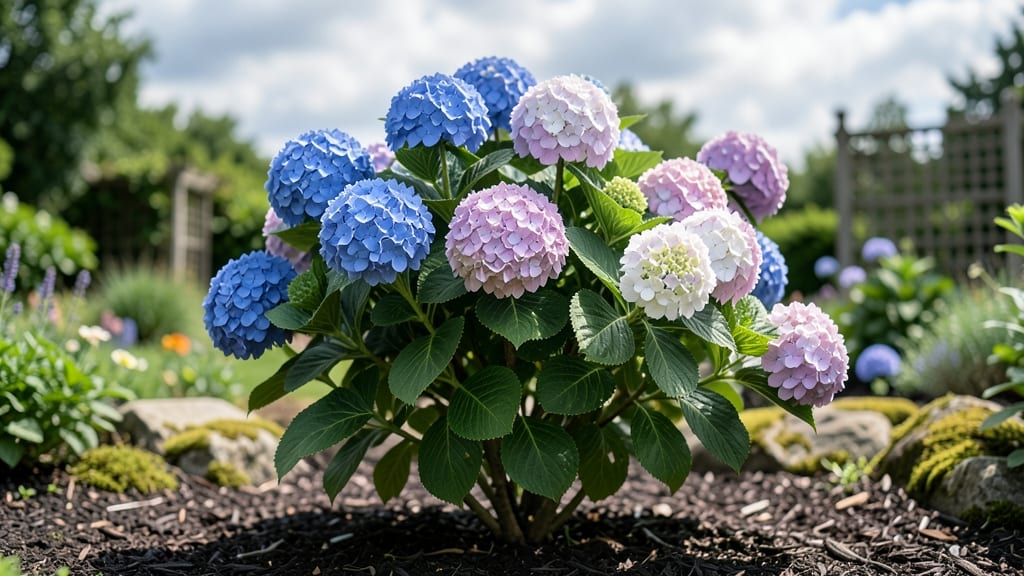
Hydrangeas do not bloom all year in most climates, as their flowering cycles depend heavily on seasonal temperature shifts and dormancy periods, creating vibrant blooms in late spring to summer before entering dormancy in fall or winter.
Hydrangeas are seasonal bloomers by nature, with their growth patterns tied to temperature cues that trigger flowering. 🌸 In cooler climates (USDA zones 3–7), they typically bloom once per year on old wood—stems that formed the previous season—while warmer zones (8–11) may see two bloom cycles.
The key is vernalization, where cold winter months "reset" the plant to prepare for spring blooming. Even ever-blooming varieties like 'Endless Summer' need periodic dormancy to maintain health, though they produce flowers on both old and new wood.
What makes this fascinating is how microclimates can extend bloom seasons. Sheltered garden spots or containers near heat-retaining walls can create localized warmth, pushing blooms into early fall.
Pruning strategies also play a role—cutting back old wood in late winter (for spring bloomers) or selectively trimming in summer (for rebloomers) can coax extra flowers, but timing is everything. Over-pruning or fertilizing too late in the season can actually shorten bloom periods.
💡 In This Article
- Hydrangea Bloom Cycles and Climate Dependence
- Extending Hydrangea Blooms: Pruning and Care Hacks
Hydrangea bloom cycles and climate dependence
Hydrangeas rely on a biological process called vernalization—a cold-induced trigger that prepares buds to bloom. When temperatures drop below 40°F for several weeks during winter, the plant's growth hormones shift from vegetative growth to flower production.
This is why most hydrangeas bloom in late spring or summer, as they need this cold period to \"reset\" their cycle.
Without it, buds may fail to open or produce sparse flowers. 🌿 For example, in USDA zone 5, where winters dip to -10°F, hydrangeas enter deep dormancy, while zone 9 plants (mild winters) may only experience light dormancy.
Photoperiodism—response to daylight length—also plays a role. Many hydrangeas detect shortening daylight in late summer as a cue to prepare for dormancy. Ever-blooming varieties like 'Endless Summer' break this rule by producing flowers on both old and new wood, allowing them to rebloom after pruning.
However, even these need a 4-6 week rest period in cooler months to maintain vigor. The science behind this is fascinating: flower buds form in late summer/fall, but their development halts until warm spring temperatures reactivate growth.
Climate zones dramatically alter bloom timing. In zones 3-7, cold winters force a single bloom cycle on old wood, while zones 8-11 may see two cycles—spring and fall—if temperatures stay mild. The difference? Warmer zones lack the extreme cold needed for full dormancy.
For instance, a hydrangea in Miami (zone 10) might bloom in March and again in October, while one in Chicago (zone 5) blooms just once in June. This explains why tropical hydrangeas (like Hydrangea macrophylla) struggle in cold climates—they lack the genetic adaptation for winter dormancy.
What most gardeners overlook is how microclimates can extend bloom seasons. A hydrangea planted against a south-facing wall might bloom 2-3 weeks earlier than one in full sun, thanks to radiant heat.
Similarly, container-grown plants in urban areas can experience 5-10°F warmer soil temperatures than ground-planted ones, pushing blooms later into fall. This is why professional gardens in cooler zones use heat-retaining materials like gravel mulch or black plastic around root zones.
Even ever-blooming varieties have limits. While 'Endless Summer' can produce flowers on new growth, it still requires 6-8 hours of sunlight daily and consistent moisture. Skipping these factors leads to weak stems and sparse blooms. The trade-off?
These hybrids often bloom 30-50% longer than traditional varieties, but their flowers may be smaller. For example, a standard 'Nikko Blue' hydrangea might bloom for 6-8 weeks, while 'Endless Summer' extends that to 10-12 weeks—but with half the flower size.
Here's what this means for your garden: If you live in a zone 6-8 area, focus on ever-blooming varieties and prune strategically. In colder zones (3-5), accept the single bloom cycle but choose late-blooming cultivars like 'Limelight' to extend the season.
The key is matching the plant's biology to your climate—not fighting it. 🌸