
Blooming
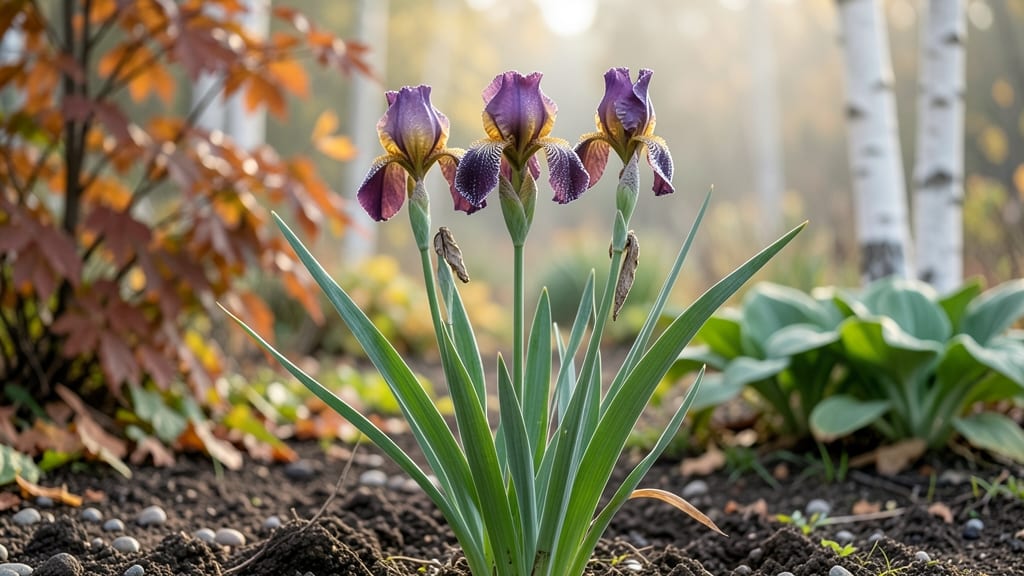
Fall-blooming irises exist only in heat-loving varieties like Louisiana, Japanese, or Siberian irises, which respond to warm temperatures and shorter days by producing flowers as cool air arrives. Traditional bearded irises bloom exclusively in spring or summer.
These autumn-flowering irises rely on specific growing conditions to trigger their unique bloom cycle. 🌸 Louisiana irises, for example, need consistent warmth and humidity, while Japanese varieties thrive in cooler but still mild temperatures.
The key difference lies in their sensitivity to daylight hours—most spring-blooming irises respond to increasing daylight, whereas these fall varieties react to shortening days combined with stable warmth. I've found that planting them in well-draining soil with partial afternoon shade helps maintain their delicate blooms longer into the season.
For gardeners in cooler climates, Siberian irises offer the best chance of fall color since they tolerate temperatures down to -30°F while still producing vibrant blooms. The trade-off? They may require more frequent dividing every 3-5 years to prevent overcrowding, which can reduce flower quality.
If you're considering adding these to your garden, timing matters—plant rhizomes in early spring or late summer to give roots time to establish before their first autumn bloom.
💡 In This Article
- Heat-Loving Iris Types That Flower in Autumn
- Planting and Care Tips for Fall-Blooming Irises
Heat-loving iris types that flower in autumn
The botanical magic behind autumn-blooming irises lies in their sensitivity to temperature and daylight changes. Unlike spring-blooming varieties, these irises trigger flower production when daytime temperatures hover between 60-75°F combined with shortening daylight hours.
Louisiana irises, for example, need consistent warmth and humidity—think of them as the tropical cousins of the iris family. Their blooms appear in late summer to early fall, often lasting 3-4 weeks if conditions remain ideal. 🌿
Japanese irises take a different approach, thriving in cooler but still mild temperatures (55-65°F) and partial shade. Their blooms emerge as summer transitions to fall, often producing delicate, often fragrant flowers that contrast with the bold colors of Louisiana varieties.
Siberian irises stand out for their hardiness, tolerating temperatures down to -30°F while still producing vibrant blooms in autumn. This makes them the most reliable choice for cooler climates, though they may bloom slightly later than their southern counterparts.
The key difference lies in their growth cycles. Spring-blooming irises like bearded varieties rely on increasing daylight and warmer soil temperatures to trigger blooms, while autumn varieties respond to the opposite conditions.
Louisiana irises, for instance, grow best in USDA zones 7-10, where they can remain dormant in winter but still produce flowers when temperatures dip but remain above 40°F. Japanese irises prefer zones 4-8, making them more adaptable to northern gardens.
What most gardeners overlook is how these varieties handle humidity. Louisiana irises actually prefer 60-70% humidity to thrive, while Japanese irises do better in drier conditions with afternoon shade to prevent leaf scorch.
Siberian irises fall somewhere in between, handling both moderate humidity and cooler temperatures exceptionally well. This explains why they're often recommended for transitional climates where summers are warm but winters are crisp.
Another fascinating detail is their root structure. Autumn-blooming irises develop rhizomes that store energy differently than spring varieties. Louisiana irises, for example, produce thicker rhizomes that store more water, helping them survive periods of drought that might stress other types.
This adaptation allows them to push through with blooms even when other plants are conserving energy. 🌸
Consider this when choosing varieties: if you live in a humid southern climate, Louisiana irises will likely reward you with the most abundant fall blooms. For cooler regions, Siberian irises offer the best balance of hardiness and autumn color.
Japanese irises provide a middle ground but require more careful placement to avoid stress from heat or drought.