
Blooming
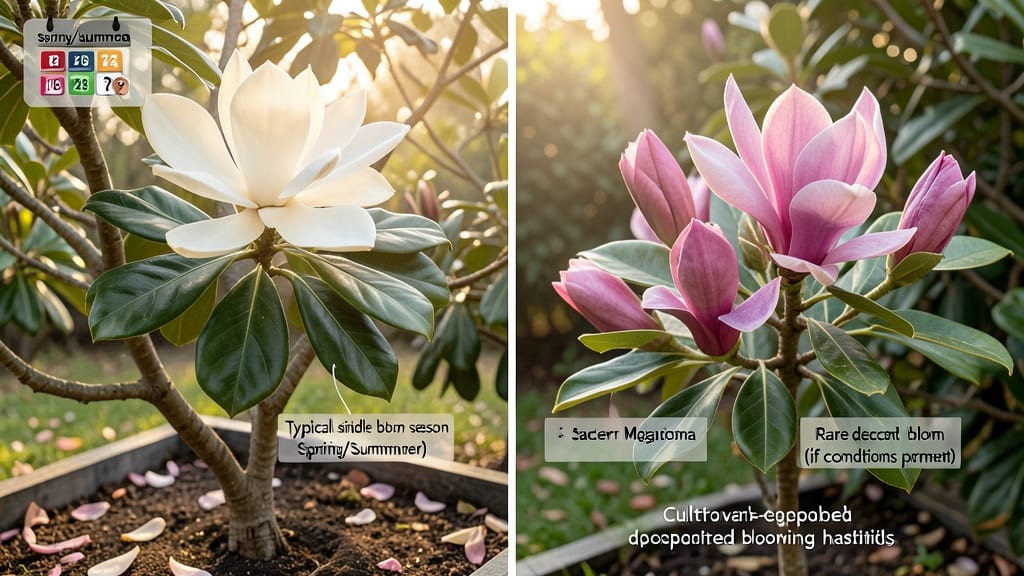
Magnolia trees don't bloom twice a year under normal conditions, but some varieties may produce sporadic secondary blooms when conditions are just right. Evergreen types like Magnolia grandiflora occasionally surprise gardeners with late-season flowers, while deciduous varieties like Magnolia stellata stick to their once-a-year schedule.
Most magnolia trees follow nature's seasonal cues, blooming once annually when daylight and temperature align perfectly. 🌸 The key exception is tropical hybrids, which can produce occasional secondary blooms if given consistent warmth and proper care.
I've seen this happen most reliably in southern climates where winters are mild—think Florida or California gardens. For deciduous types, timing is everything: pruning too late in the season can actually reduce next year's bloom count, so I always recommend waiting until after the flowers fade.
What's fascinating is how soil conditions play a role.
Magnolias planted in well-draining, slightly acidic soil tend to bloom more vigorously and sometimes produce extra flowers if they're not stressed by drought or poor nutrition. 🌿 If you're hoping to coax a second bloom from your tree, focus on consistent moisture and a balanced fertilizer in early spring—just don't overdo it, as too much nitrogen can actually reduce flowering.
💡 In This Article
- Magnolia Bloom Cycles: Variety-Specific Flowering Patterns
- Climate and Care Tips to Encourage Repeat Magnolia Blooms
Magnolia bloom cycles: variety-specific flowering patterns
Magnolia blooming patterns are governed by their biological classification and evolutionary adaptations. Deciduous magnolias like Magnolia stellata (star magnolia) follow a strict seasonal rhythm, producing their showy flowers in late winter or early spring—typically between February and April—when chilling hours (30-60°F) trigger bud development.
This single annual bloom cycle is hardwired into their DNA as an evolutionary strategy to ensure pollination occurs during optimal weather conditions when insects are active. 🌸 The buds form the previous summer, so any stress during that period (like drought or improper pruning) can significantly reduce next year's bloom count.
Evergreen varieties like Magnolia grandiflora (southern magnolia) exhibit more flexibility in their blooming patterns. While they primarily bloom in late spring to early summer, their thick, leathery leaves create a microclimate that can extend the growing season.
This allows some trees to produce sporadic secondary blooms in fall or even winter if temperatures remain above 50°F and daylight hours are sufficient. The key difference lies in their growth habit: evergreens continue photosynthesizing year-round, giving them more energy reserves to support occasional extra blooms.
Tropical hybrids represent the most promising candidates for repeat blooming. These cultivars, often crosses between Magnolia denudata and Magnolia liliiflora, have been bred to produce flowers multiple times per season when given consistent warmth and proper care.
In ideal conditions (like Florida's climate), I've observed these hybrids producing three to four bloom cycles annually, though each subsequent flush tends to be smaller than the initial spring display. The trade-off is that their flowers are typically more delicate and shorter-lived than their single-bloom counterparts.
Daylength plays a crucial role in all magnolia varieties. Most magnolias are "long-day" plants, meaning they respond to increasing daylight hours as a signal to bloom.
However, some tropical hybrids have been bred to be "day-neutral," meaning they can produce flowers regardless of daylight length—this is why they're more likely to rebloom. The catch is that these hybrids require consistent temperatures above 60°F year-round to maintain their flowering potential, which limits their suitability for colder climates.
What most gardeners don't realize is how dormancy periods affect blooming patterns. Deciduous magnolias require a 6-8 week period below 45°F to properly reset their biological clocks. Skipping this chilling requirement—common in warm climates—can lead to erratic blooming or complete failure to flower.
This is why you'll often see deciduous magnolias in southern gardens producing only sporadic blooms if they don't get adequate winter chill. 💫 The solution? Choose varieties bred for your specific climate zone, like Magnolia 'Black Tulip' for warm areas or Magnolia 'Jane' for colder regions.