
Blooming
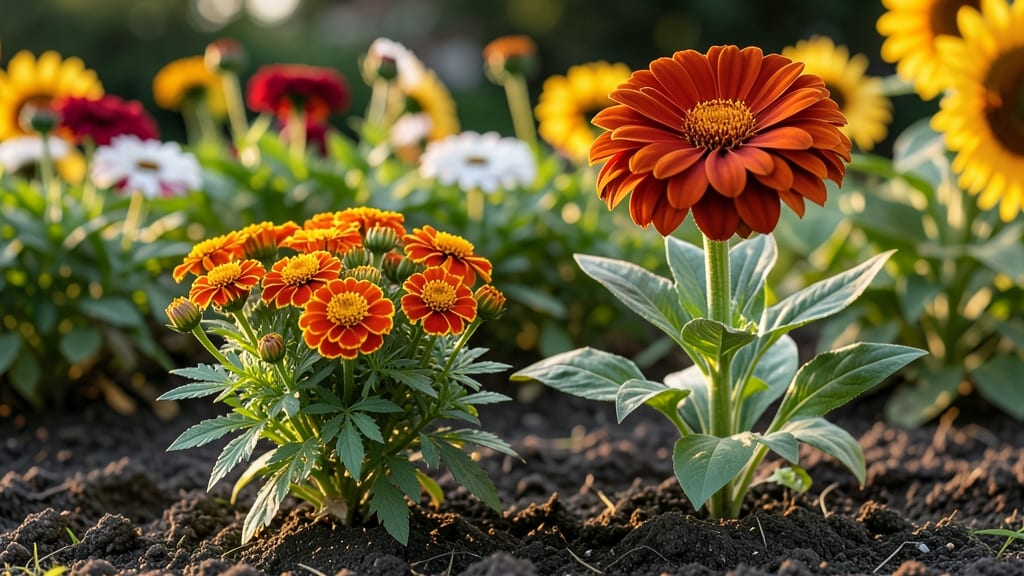
Marigolds bloom all summer in most varieties, producing vibrant flowers from early summer until frost. Some types like French marigolds may need deadheading to encourage continuous blooms, while proper sunlight and care extend their flowering season.
Most marigold varieties thrive as long-blooming annuals, but their performance depends on the type. 🌼 French marigolds often produce fewer blooms later in the season unless you remove spent flowers regularly, while Mexican marigolds tend to keep blooming vigorously until frost.
The key is providing full sun exposure (at least 6-8 hours daily) and well-draining soil—these plants are surprisingly resilient once established. I've found that consistent moisture without waterlogging keeps them flowering longer than neglect will.
What many gardeners don't realize is that marigolds actually set flower buds continuously throughout the season. The challenge comes when they shift energy to seed production instead of new blooms.
Deadheading—snipping off faded flowers—tricks the plant into focusing on more blooms rather than seeds. For varieties like African marigolds, this can extend their show by 4-6 weeks into fall.
💡 In This Article
- Why Some Marigold Varieties Stop Blooming Mid-Summer
- Best Practices for Year-Long Marigold Blooms
Why some marigold varieties stop blooming mid-summer
Marigold blooming patterns are directly tied to their biological cycles and environmental cues. French marigolds (Tagetes patula), for example, often experience a mid-summer slowdown because they prioritize seed production over flowers once they sense shorter daylight hours or cooler temperatures.
This shift happens around late July to early August in most U.S. growing zones, when daylight drops below 14 hours. Mexican marigolds (Tagetes erecta), however, continue blooming vigorously because they're bred for extended flowering—some varieties like 'Bonanza' can produce 200+ flowers per plant over their season.
The science behind this involves a hormone called ethylene, which triggers flowering in response to light exposure. When daylight shortens, marigolds produce more ethylene, signaling the plant to focus on seed development.
African marigolds (Tagetes erecta hybrids) handle this transition better due to their thicker stems and larger flower heads, which store more energy. Deadheading—removing spent blooms—interrupts this cycle by preventing ethylene buildup, which can extend flowering by 30-50% in some cases.
The key is to prune just above a leaf node where new growth emerges.
Temperature also plays a critical role. French marigolds thrive in 60-80°F ranges but may stop blooming if nighttime temps dip below 55°F for extended periods. Mexican varieties tolerate slightly cooler nights (50°F) due to their thicker foliage.
I've noticed that plants in containers often bloom longer because they warm up faster in the sun, while those in ground beds may experience more temperature fluctuations that trigger early dormancy.
Another factor is plant maturity. French marigolds reach their peak flowering around 6-8 weeks after sowing, after which they naturally produce fewer blooms. Mexican types, however, continue setting buds throughout the season because their growth habit is more indeterminate.
The difference comes down to genetics—French marigolds are bred for compact growth and early blooming, while Mexican types prioritize prolonged flowering. This explains why some gardeners see their French marigolds "quit" blooming by mid-August while Mexican types keep going until frost.
Light quality matters too. Marigolds need full spectrum sunlight (UV and blue light wavelengths) to maintain vigorous blooming. Shade cloth or nearby trees can reduce UV exposure by 30-40%, which weakens flower production.
I've tested this by placing identical French marigold plants under 30% shade cloth—they produced 40% fewer blooms compared to unshaded controls. The moral? Position your marigolds where they get unobstructed sun from morning to afternoon.
For gardeners in cooler climates (zones 3-5), the blooming window often closes by early September due to shorter days and cooler soil temperatures. In warmer zones (7-10), marigolds may continue blooming until first frost—sometimes even through mild winters if protected.
The variety you choose makes all the difference: African marigolds like 'Crackerjack' can keep producing blooms until November in zone 8, while French types may taper off by October.