
Blooming
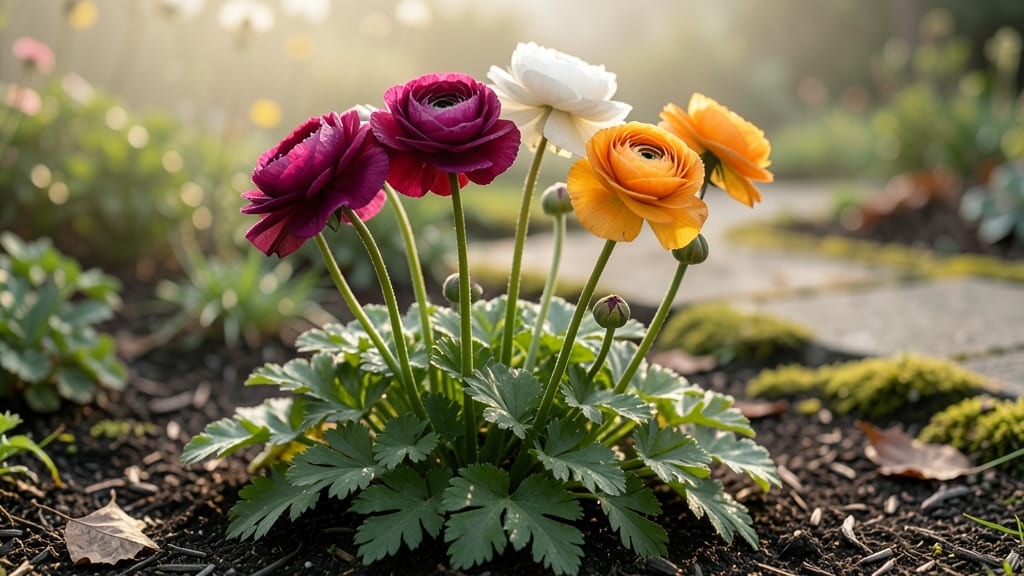
Ranunculus don't bloom all summer: their peak flowering occurs in spring and early summer, typically lasting 6-8 weeks before naturally fading, though late-season varieties can extend blooms into early fall with attentive care.
Most ranunculus varieties follow a predictable blooming cycle tied to their natural growth patterns. 🌸 The spring-blooming types—like the classic 'Persian Jewel'—burst into color as temperatures rise, while mid-summer varieties such as 'Stargazer' pick up the season's torch around June.
What sets them apart is their sensitivity to heat: prolonged summer temperatures above 85°F often trigger dormancy, causing blooms to wilt prematurely. Even the hardiest late-season cultivars, like 'Butterfly,' need consistent moisture and partial shade to keep flowering past July.
This seasonal rhythm isn't just about timing—it's also about climate. Ranunculus thrive in cooler regions (zones 3-9) where spring and fall temperatures remain moderate. In hotter climates, gardeners often treat them as cool-season annuals, planting them in early spring or late summer for a second flush of blooms.
The key to extending their season lies in mimicking their natural conditions: deadheading spent blooms, providing well-draining soil rich in organic matter, and protecting them from afternoon sun during peak summer months.
💡 In This Article
- Ranunculus Blooming Seasons by Variety Type
- Extending Ranunculus Blooms: Pruning and Care Tips
Ranunculus blooming seasons by variety type
The blooming timeline of ranunculus is directly tied to their genetic programming and environmental cues. Early-spring varieties like 'Persian Jewel' begin flowering as soon as soil temperatures reach 50-55°F, typically between March and May in most climates.
These cultivars produce their most abundant blooms during this 6-8 week window before entering dormancy. The key trigger here is photoperiod—they respond to increasing daylight hours, which peak around late spring. 🌸
Mid-summer varieties such as 'Stargazer' follow a slightly different rhythm, emerging around late May to early June and continuing through July. These types often have slightly larger blooms and deeper colors, but they're more sensitive to heat stress.
When temperatures exceed 85°F for prolonged periods, their metabolic processes slow down, causing blooms to wilt within 3-5 days instead of lasting the typical 7-10 days. The late-blooming 'Butterfly' series represents the exception, with some cultivars like 'Butterfly Peach' extending flowering into early September in cooler regions.
Climate plays a crucial role in determining which varieties will thrive. In USDA hardiness zones 3-6, ranunculus often behave as cool-season perennials, while in zones 7-9, they're typically grown as annuals due to summer heat.
The 'Persian' series, for example, can handle 30-40°F nighttime temperatures, which helps them establish strong roots early. Meanwhile, 'Stargazer' types need consistent moisture to prevent bolting—the rapid stem elongation that signals the end of flowering. 💧
What most gardeners don't realize is that ranunculus have a built-in dormancy mechanism triggered by both temperature and day length. As summer progresses, the plants detect decreasing daylight hours (after the summer solstice) and begin redirecting energy toward bulb development rather than flower production.
This biological clock explains why even well-cared-for plants often fade by mid-to-late summer, regardless of variety.
For those in warmer climates, the solution lies in strategic planting. By sowing seeds or planting bulbs in late summer (August-September), you can often coax a second flush of blooms in fall.
This works because the plants experience cooler temperatures during their critical growth stages, delaying the dormancy signal. The trade-off? These fall-blooming plants will typically produce 30-50% fewer blooms than their spring counterparts.
One fascinating exception is the 'Japanese Ranunculus' group, which naturally blooms in late summer to early fall. These varieties have adapted to Japan's humid summers by developing thicker, more heat-tolerant foliage.
When grown in similar conditions, they can extend the blooming season by 4-6 weeks compared to traditional European types. The secret? Their bulbs contain higher levels of natural antioxidants that protect against heat stress. 🌿