
Blooming
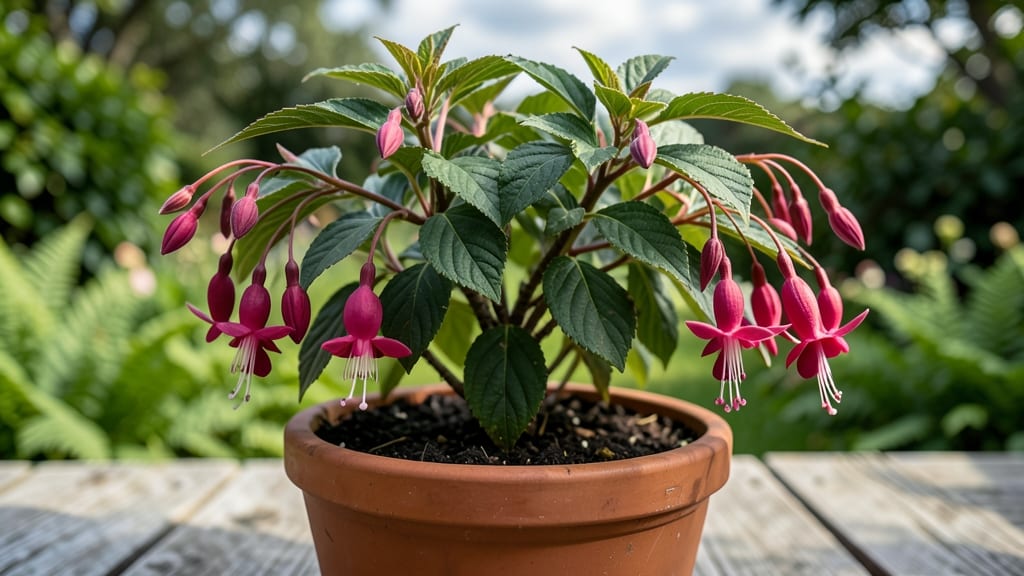
Fuchsias typically don't bloom all summer continuously, as extreme heat and drought stress cause most varieties to pause flowering, though heat-tolerant types like 'Graceland' or 'Vesuvius' can extend blooms into late summer with proper care and afternoon shade. Most fuchsias thrive and flower best during spring and fall when temperatures stay moderate.
Fuchsias are tropical plants at heart, which means they naturally slow down their flowering when temperatures rise above 85°F. 🌡️ The stress from heat causes hormonal shifts that redirect energy away from blooms and toward survival—think of it like your own body conserving energy during a heatwave.
Even heat-tolerant varieties need consistent moisture to keep blooming, as drought triggers the same protective response. That's why I always recommend morning watering and afternoon shade for extended summer flowers, especially in southern climates where temperatures stay high.
What many gardeners don't realize is that even the hardiest fuchsias won't bloom continuously—they need periodic rest. The 2-3 week breaks between bloom cycles are actually healthy, allowing the plant to rebuild energy.
This is why you'll often see fuchsias putting on their best show in spring and fall, when temperatures are perfect for flowering but not extreme enough to stress the plant.
💡 In This Article
- Heat Tolerance in Fuchsias: Why Summer Blooms Fade
- Best Heat-Tolerant Fuchsia Varieties for Extended Summer Flowers
Heat tolerance in fuchsias: why summer blooms fade
Fuchsias originate from tropical and subtropical regions where temperatures rarely exceed 80°F during their natural growing season. When exposed to prolonged heat above 85°F, their flowering mechanism triggers a survival response called "thermo-inhibition."
This occurs when high temperatures disrupt the plant's natural production of florigen—a hormone responsible for initiating flower buds. 🌡️ Think of it like a biological thermostat: once temperatures climb too high, the plant conserves energy by halting non-essential functions like blooming, redirecting resources to root and leaf development instead.
The intensity of sunlight also plays a critical role in bloom longevity. While fuchsias need 4-6 hours of sunlight daily for optimal growth, direct afternoon sun—especially when combined with heat—accelerates moisture loss through transpiration.
This creates a double stress scenario: the plant both loses water rapidly and struggles to produce flowers. Native tropical fuchsias from regions like South America have evolved to handle intermittent heat, but their hybrid counterparts often lack this adaptation.
For example, Fuchsia magellanica (a native species) can tolerate brief heatwaves better than many garden hybrids bred for ornamental appeal rather than heat resistance.
What's fascinating is how fuchsias manage water stress differently based on their origin. Tropical varieties often have thicker, waxier leaves that reduce water loss, while temperate hybrids may wilt more dramatically under heat.
The key difference lies in their stomatal density—the number of tiny pores on leaves that regulate gas exchange. Tropical fuchsias have fewer stomata, meaning they lose water more slowly.
This biological adaptation explains why some varieties can continue blooming in 90°F heat if given consistent moisture, while others shut down completely. 💧
Another critical factor is the plant's photoperiod sensitivity—the way light duration affects flowering. Many fuchsias are "short-day" plants, meaning they flower best when daylight hours shorten (like in spring and fall).
During summer's long days, even heat-tolerant varieties may reduce blooming because their internal clocks perceive the conditions as unsuitable for reproduction. This is why you'll often see fuchsias putting on their best show in early morning or late afternoon when temperatures are cooler, even during peak summer months.
For gardeners in hot climates, understanding these biological triggers can make all the difference. The secret to extending summer blooms lies in mimicking the plant's natural environment—providing afternoon shade to reduce heat stress while maintaining consistent soil moisture.
Mulching with 2-3 inches of organic matter helps retain moisture and regulate soil temperature, creating conditions where fuchsias can continue flowering despite the heat. This approach works because it addresses both the hormonal and environmental stressors that typically halt summer blooms.
One common misconception is that all fuchsias respond the same way to heat. In reality, there's a spectrum of tolerance levels. For instance, 'Graceland' (a heat-tolerant hybrid) can handle 95°F with proper care, while 'Lady Thumb' (a classic variety) may struggle above 88°F.
The difference comes down to selective breeding—modern hybrids are being developed specifically to push these temperature thresholds, but they still require attentive care to perform optimally. 🌿