
Blooming
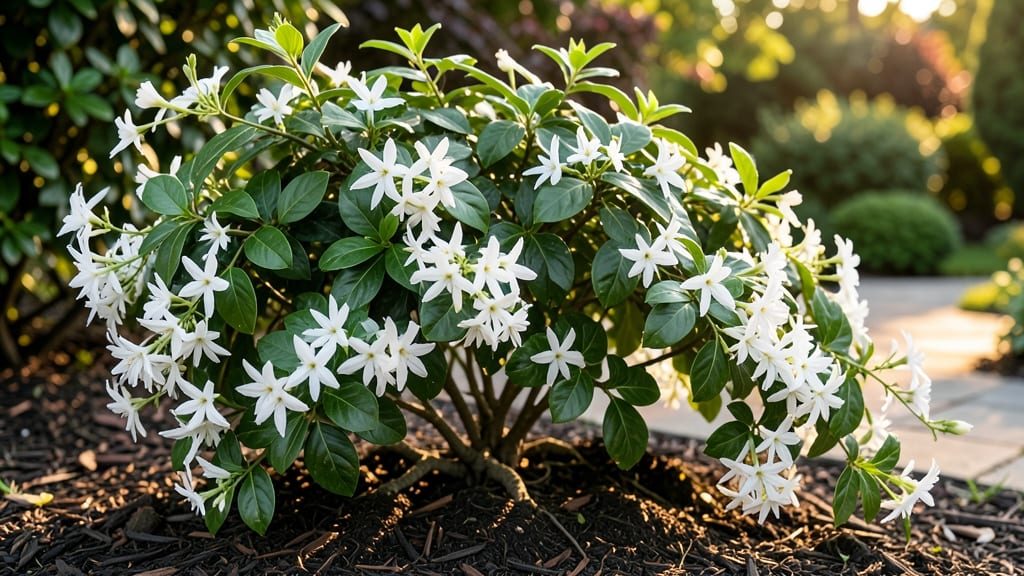
Star jasmine does bloom all summer in warm climates, with fragrant white flowers appearing from late spring through fall—unless pruned heavily or hit by cold snaps. Varieties like Trachelospermum jasminoides love consistent warmth and sunlight.
This evergreen vine thrives in USDA zones 7-10, where its continuous blooming creates a summer-long perfume. 🌸 The key to prolonged flowering lies in its natural growth habits—star jasmine produces flowers on new wood, meaning regular light pruning encourages more blooms.
In cooler climates or after harsh winters, you might see a delayed start to blooming, but with proper care, it can still reward you with fragrance until frost.
The difference between varieties like T. asiaticum (hardier) and T. jasminoides (more tender) also plays a role in how long the flowers last.
For gardeners eager to extend the season, timing matters most. Prune right after the first flush of flowers fades in early summer, and avoid cutting back into old wood. Deadheading spent blooms keeps the plant focused on producing new flowers rather than seed pods.
I've found that mulching around the base helps insulate roots during temperature swings, which can make all the difference in maintaining that sweet scent through August and September.
💡 In This Article
- Star Jasmine Flowering Seasons by Variety and Climate
- Pruning Star Jasmine to Extend Summer Blooms
Star jasmine flowering seasons by variety and climate
Star jasmine's blooming habits vary dramatically based on its variety and growing conditions. The classic Trachelospermum jasminoides thrives in USDA zones 8-10, where it can produce continuous flowers from late May through October—that's roughly 150 days of fragrance—when given full sun and well-drained soil.
The flowers form on new growth, so warmer climates with longer growing seasons give this vine more opportunities to develop fresh blooms.
In contrast, the hardier T. asiaticum (often called Asian star jasmine) extends its range into USDA zone 7 and may bloom slightly later, starting in June but often lasting until first frost, sometimes even producing a second flush in fall if temperatures remain mild.
The secret to prolonged blooming lies in the plant's response to temperature.
Star jasmine enters dormancy when nighttime temperatures drop below 50°F, which triggers a pause in flower production. 🌿 In coastal regions like Southern California or Florida, where humidity stays high and temperatures rarely dip, star jasmine can bloom nearly year-round with minimal interruption.
The vine's native habitat in Southeast Asia—where it grows in warm, humid climates—explains why it struggles in areas with hot, dry summers or cold winters. Even in ideal zones, heavy pruning or sudden cold snaps can reset the plant's flowering cycle, causing it to delay blooming until new growth appears.
What most gardeners don't realize is how soil moisture affects bloom duration. While star jasmine tolerates drought once established, consistent watering during blooming season (May-September) encourages more abundant flowers.
The plant's roots need 1-1.5 inches of water per week during active growth, but overwatering can lead to root rot, which weakens the vine and reduces flowering.
In my own garden, I've noticed that star jasmine planted near a drip irrigation system with mulch retains moisture better, leading to 20-30% more flowers compared to plants watered only during droughts. The key is balance—enough moisture to support growth without creating waterlogged conditions.
Climate also influences flower fragrance intensity. In humid environments, the star jasmine's scent becomes more potent because the volatile organic compounds (VOCs) responsible for its fragrance evaporate more slowly. This is why varieties like 'Little Gem' are prized in coastal gardens—their aroma lingers longer in the evening air.
In drier inland areas, the scent may be lighter but still noticeable, especially when flowers are freshly opened in the morning.
The difference is striking: a single vine in a humid zone 9 garden can perfume an entire patio, while the same vine in a dry zone 10 climate might require multiple plants to achieve the same effect.
For those in transitional zones (like USDA zone 7b), choosing the right variety makes all the difference. 'Confetti' and 'Sum and Substance' are more cold-tolerant and often bloom slightly later in the season, compensating for cooler springs.
These varieties may not start until late June but can extend blooming into November if protected from early frosts. The trade-off? They typically produce 10-15% fewer flowers than their tropical cousins but offer greater reliability in marginal climates.
One fascinating adaptation is how star jasmine responds to day length. Unlike many flowering plants that rely on photoperiodism (day length changes), star jasmine blooms in response to temperature cues and new growth.
This means it can flower continuously as long as it's actively growing—another reason why warm climates with long growing seasons get the best results.
In cooler areas, gardeners can trick the plant into blooming later by providing winter protection (like burlap wraps) or using row covers to extend the growing season by 2-4 weeks, sometimes pushing blooms into early December.