
Blooming
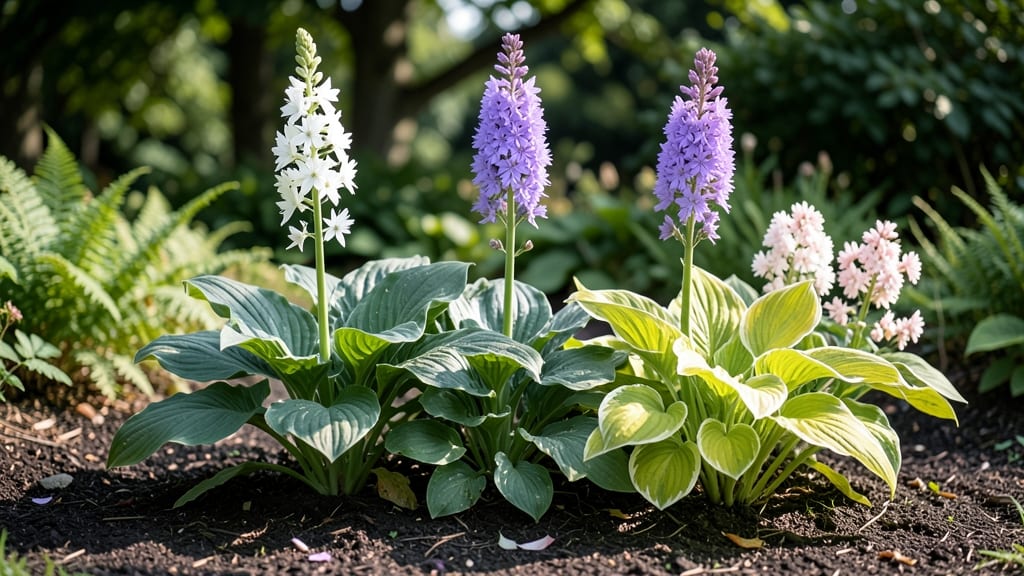
Hosta bloom colors range from delicate lavender and crisp white to deep purple and rich blue, with many varieties deepening in hue as summer heat builds. The 'Halcyon' cultivar showcases soft lavender blooms, while 'Blue Angel' delivers intense blue-purple flowers that reach their peak brilliance during late summer's warmest weeks.
Hosta flowers are nature's mood rings—literally changing colors as temperatures rise! 🌡️ The science behind this is fascinating: heat triggers chlorophyll breakdown while boosting anthocyanin production, those pigments that give flowers their deep purple-blue hues.
This is why 'Patriot' hostas start off muted in spring but develop dramatic purple tones by August. For gardeners, this means planning matters: cooler spring blooms might disappoint, but late-summer heat reveals their true color potential.
What's especially rewarding is how these color shifts align with peak bloom times. Many hosta varieties time their most vibrant displays for late summer, when gardeners often feel their landscapes need a splash of color.
The 'June' cultivar, for example, delivers soft lavender blooms that brighten shady corners, while 'Guacamole' offers pale yellow flowers that contrast beautifully with deeper purple varieties in mixed borders.
💡 In This Article
- How Heat Affects Hosta Flower Shades
- Best Hosta Varieties for Vibrant Bloom Colors
How heat affects hosta flower shades
Hostas produce their most vibrant blooms through a fascinating botanical process called anthocyanin accumulation, triggered by heat stress.
When daytime temperatures climb above 75°F—especially during late summer—hosta leaves begin breaking down chlorophyll (the green pigment) while simultaneously producing anthocyanins, those water-soluble compounds that create purple, blue, and deep red hues.
Think of it like a natural highlighter: the hotter it gets, the more intense these pigments become in the flower bracts and petals.
This heat response explains why early-season blooms often appear pale or muted. For example, 'Halcyon' hostas may start with soft lavender flowers in June, but by August, those same blooms deepen to a richer violet as temperatures consistently exceed 80°F.
The mechanism involves reactive oxygen species—molecules produced during heat stress—that signal the plant to ramp up anthocyanin synthesis as a protective response. It's nature's way of saying, "When it gets too hot, we'll make ourselves more visible to pollinators!" 🌡️
The intensity of these color shifts depends on two key factors: duration of heat exposure and day-night temperature fluctuations.
Hostas grown in regions with hot days (90°F+) but cool nights (60°F) produce the deepest colors, while areas with consistently high humidity may see more muted results.
This is why coastal gardeners often report more vibrant hosta blooms than those in inland climates with extreme heat—moderate stress yields the best pigmentation.
What's particularly interesting is how this heat response varies by cultivar. 'Blue Angel' hostas, for instance, contain higher natural levels of anthocyanins in their leaves, which means their flowers start with a blue-purple tint even in cooler weather.
However, they still deepen in heat, while varieties like 'June' (with lower baseline anthocyanin levels) rely almost entirely on temperature triggers to develop their signature lavender hues.
Gardeners can actually enhance bloom colors by providing afternoon shade during peak summer months, then gradually exposing plants to more sun as temperatures rise. This controlled stress mimics natural conditions and can produce flowers that are 20-30% more intense** in color compared to consistently shaded hostas.
The key is patience—rushing the process by moving plants too quickly can lead to leaf scorch rather than vibrant blooms.
For those tracking bloom cycles, here's a useful rule: late July to early August is when most hosta varieties hit their color peak. This timing aligns with when many other perennials have already finished blooming, making hostas a late-season star in shade gardens.
The contrast between their heat-enhanced colors and the fading greens of other plants creates a stunning visual effect that lasts until frost.