
Blooming
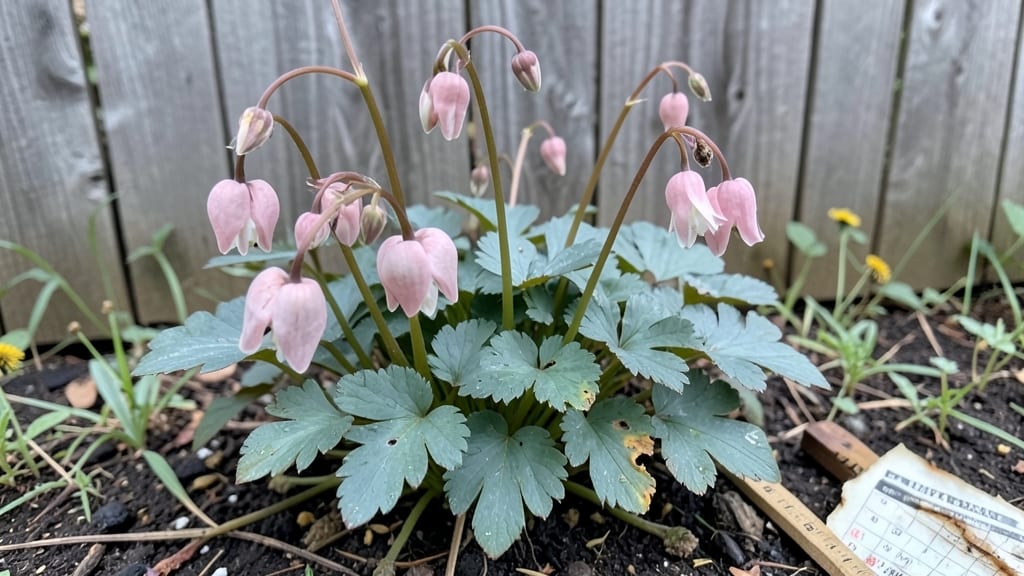
Bleeding hearts typically bloom for 4-6 weeks in spring, producing delicate pink or white heart-shaped flowers that fade by early summer. Proper care can extend their display, and some varieties may rebloom lightly in fall under ideal conditions.
The length of their flowering window depends heavily on where you live—cooler climates often see longer displays, sometimes stretching to 8 weeks, while hotter regions may shorten it to just 3-4 weeks.
These plants thrive in partial shade, and consistent moisture keeps blooms vibrant longer, though overwatering can stress the roots and cut the show short. 💫
What’s fascinating is how their dormancy cycle works: after blooming, the foliage dies back, but the roots remain alive underground, primed to rebound.
Some varieties, like Dicentra spectabilis, even surprise gardeners with a secondary flush in fall if given the right conditions—think cooler temps and gentle pruning after the first bloom fades.
💡 In This Article
- Bleeding Heart Bloom Duration Factors
- Extending Bleeding Heart Blooms with Care
Bleeding heart bloom duration factors
Here's what actually happens beneath the soil and in the air to determine how long your bleeding hearts stay in bloom: these plants are highly sensitive to photoperiodism—their internal clocks respond directly to daylight length.
When days grow longer in late winter, the plant's hormonal balance shifts, triggering bud formation. 🌱 The key factor is temperature: ideal bloom duration occurs when daytime highs stay between 60-75°F and nighttime lows don't dip below 50°F.
Heatwaves above 85°F accelerate bloom fade by increasing respiration rates in the flowers, causing them to senesce faster—often within just 2-3 weeks instead of the full 6-week window.
Sunlight exposure plays a surprising role too. While bleeding hearts prefer partial shade, they need at least 4-6 hours of morning sun to develop robust blooms.
Too much direct afternoon sun (especially in hot climates) causes flowers to wilt prematurely, while insufficient light leads to sparse, weak blooms that last only 3 weeks.
The plant's natural shade tolerance comes from its native habitat in wooded areas where dappled light filters through canopies—recreating this environment is crucial for prolonging their display.
What most people don't realize is how soil moisture affects bloom duration through root pressure dynamics. When roots receive consistent moisture (1-2 inches per week), they maintain optimal turgor pressure that keeps flower stems upright and vibrant.
However, drought stress or soggy conditions both trigger ethylene production—a plant hormone that accelerates senescence. 💧 The sweet spot is well-draining soil that stays evenly moist but never waterlogged, which can extend bloom cycles by up to 2 weeks compared to plants experiencing moisture extremes.
Varietal differences create dramatic variations in bloom timing. Early-season types like 'Alba' (white flowers) typically bloom 2-3 weeks earlier than late-season varieties such as 'Gold Heart', which may push blooms into early June.
This timing difference occurs because early bloomers have shorter juvenile periods—they enter flowering stage faster but with less energy reserves, while late bloomers store more carbohydrates during foliage growth, potentially fueling secondary blooms in fall.
The dormancy trigger mechanism is equally fascinating. After blooming, the plant's apical meristems (growth points) shift from producing flowers to storing energy in underground tubers. This transition is controlled by a combination of photoperiod shortening and cool soil temperatures (<55°F).
When these conditions occur, the plant's growth hormones shift from florigen (flowering promoter) to dormancy-inducing compounds, causing foliage to yellow and die back. Some varieties retain enough energy reserves to produce a second, weaker bloom cycle when days shorten again in fall—typically 10-15% of the original display.
Consider these key environmental comparisons when planning your garden:
- Cool climates (Zones 3-5): Blooms last 6-8 weeks due to moderate temperatures and gradual daylength changes
- Moderate climates (Zones 6-7): Standard 4-6 week display with potential for fall reblooming if pruned properly
- Hot climates (Zones 8-9): Often only 3-4 weeks of blooms unless provided with afternoon shade
What this means for your garden is that timing matters more than you might think.
Planting early bloomers in cooler microclimates (like north-facing beds) can give you a 3-week head start on the main bloom season, while strategic pruning after the first flush can coax those fall surprises from your late-season varieties.
The science shows that with the right conditions, you're not just extending bloom time—you're essentially giving your bleeding hearts a second chance to shine. ✨