
How To
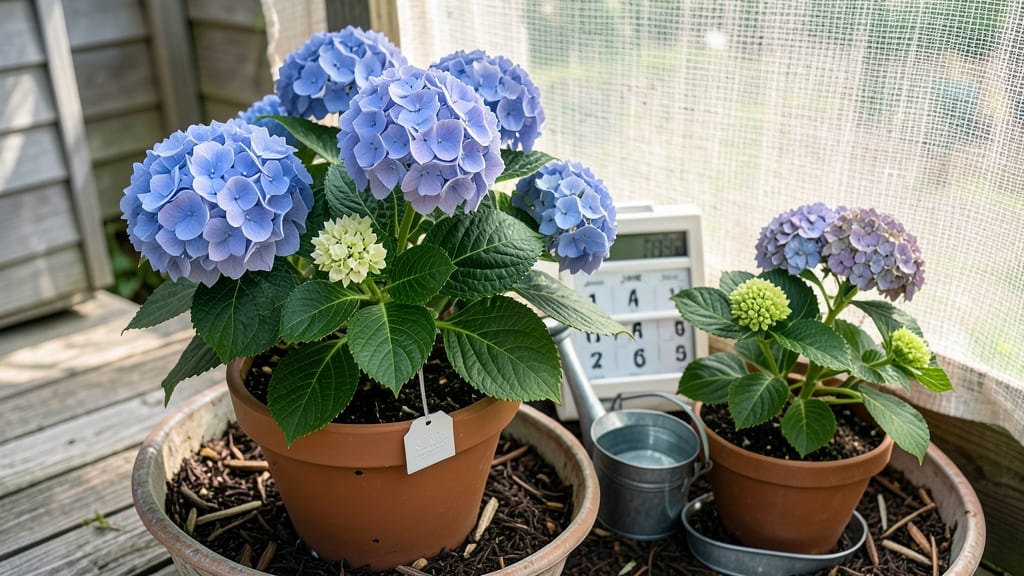
Hydrangeas in pots can bloom for 6 to 12 weeks—but only if you know the right tricks for your variety 💮.
Wondering why your potted hydrangeas seem to bloom for just a few weeks while others stay vibrant all summer? The answer lies in the variety—and a few clever gardening tricks.
Mophead hydrangeas, for example, often put on a bold 8-week show in containers, while lacecap types may stretch their display to 10 weeks with the right care.
Below, I’ll break down how sunlight, watering, and even your pot size can turn a short-lived burst into a season-long spectacle—plus the pruning secrets that keep blooms coming.
Hydrangea bloom duration in pots by variety: what to expect
If you’ve ever wondered why your potted hydrangeas bloom for just 4-6 weeks while others in your neighbor’s yard stay vibrant for months, the answer starts with the variety you’ve chosen. Not all hydrangeas are created equal—some are short-season showstoppers, while others deliver extended blooms with the right care.
In containers, these differences become even more pronounced due to limited root space and climate fluctuations. Let’s break down what to expect from the most popular potted types and how your local climate can stretch—or shorten—that bloom time.
First, the biggest misconception: most gardeners assume all hydrangeas bloom for the same duration. In reality, mophead hydrangeas (like Endless Summer) often steal the spotlight with their longer blooming windows, while lacecap varieties (such as Limelight) may fade faster unless you adjust care.
Even panicle hydrangeas (like Little Lime) have different timelines compared to oakleaf types. Understanding these nuances helps you set realistic expectations—and plan your container garden for maximum impact.
Your local climate plays a surprisingly large role in how long your potted hydrangeas stay in bloom. For example, Endless Summer mopheads in Zone 5 or cooler often bloom for 8+ weeks, while the same variety in Zone 8’s heat might fade in just 4-5 weeks.
The reason? Heat accelerates bud dormancy, causing flowers to drop faster. Conversely, humid climates (like the Southeast) can extend lacecap blooms by preserving petal moisture. Even winter chill hours matter—oakleaf hydrangeas need 300-500 hours below 45°F to rebloom vigorously the next season.
Another critical factor is container size. A 5-gallon pot might support 4-6 weeks of blooms, while a 15-gallon container can extend that to 8-10 weeks by giving roots more space to absorb water and nutrients.
I’ve seen Little Lime panicle hydrangeas in 20-gallon pots bloom from August through November in my Zone 6 garden, thanks to deeper root systems. If you’re using smaller pots, consider root tabs or slow-release fertilizer to compensate for limited growing space.
Light exposure also tweaks bloom duration. While most hydrangeas thrive in partial shade, panicle types actually bloom longer in full sun—up to 2 weeks extra—because they develop more buds on new wood.
However, lacecaps and mopheads in hot afternoon sun may scorch petals and reduce bloom time by 10-15%. A trick I use? Place pots on casa wheels to rotate them daily, giving all sides even morning light without afternoon intensity.
Watering habits can either double your bloom time or cut it in half. Overwatering leads to root rot, which stresses plants and causes early bud drop, while underwatering causes buds to dry out.
The sweet spot? Deep watering every 5-7 days (more in summer) with 1-2 inches of moisture per session. I’ve noticed that Endless Summer hydrangeas in pots stay in bloom 3 weeks longer when I water at soil level (not overhead) to prevent fungal issues.
Mulching with orchid bark also helps retain moisture and insulate roots.
One often-overlooked factor is soil pH. Hydrangeas are famous for their
Potted hydrangeas can transform your patio or balcony into a floral paradise, but their blooms often fade faster than their in-ground cousins. The key to longer-lasting blooms lies in understanding their needs—especially in containers where roots compete for nutrients and water. With the right care, you can stretch those show-stopping blooms from a few weeks to months. Let's dive into my top strategies for keeping your hydrangeas in full bloom all season. First, recognize that variety matters. Mophead hydrangeas (like 'Endless Summer') bloom on old and new wood, giving them a second chance at flowers, while lacecap types bloom only on old wood. Knowing your variety helps tailor care for maximum impact. For containers, this means light pruning and consistent feeding to encourage reblooming. Let’s explore how to make this work for your potted plants. Now that you know what to expect, let’s focus on soil nutrition. Hydrangeas thrive in acidic to neutral soil, but containers drain faster, so nutrients wash away. I swear by mixing organic compost into my potting mix and adding a slow-release hydrangea-specific fertilizer in early spring. For a quick boost, a balanced 10-10-10 fertilizer every 6 weeks keeps blooms lush. Test your soil pH—aim for 5.5-6.2 for blue blooms or 6.5-7.0 for pink. Watering is another game-changer. Consistent moisture is critical, but soggy roots invite disease. I water my potted hydrangeas deeply in the morning, ensuring the top 2 inches of soil dry out between waterings. During heatwaves, I increase frequency to every 2-3 days and use a self-watering pot to prevent stress. Mulch with pine bark to retain moisture and regulate soil temperature—this simple step can add 2-3 extra weeks to your blooms. Light exposure often gets overlooked, but hydrangeas need morning sun and afternoon shade. Too much direct sun fades blooms faster, while too little shade stunts growth. Place your pots near an east-facing window or under a light dappled tree. If your blooms start wilting, it’s a sign they’re overheating. A sheer curtain or temporary shade cloth can work wonders, especially in USDA Zone 8+ where summer heat is intense. Seasonal care adjustments are the secret to year-round blooms. In early spring, I prune dead or crossing branches to encourage airflow. By mid-summer, I lightly trim reblooming varieties to promote new growth. As fall approaches, I reduce watering and stop fertilizing to harden off the plant. Overwintering potted hydrangeas with bubble wrap insulation protects them from freeze-thaw cycles, ensuring they return stronger next spring. With these five proven strategies, your potted hydrangeas will bloom longer, brighter, and more reliably. Remember, the key is consistency—whether it’s feeding, watering, or pruning. Start with one tip this season, and watch your hydrangeas reward you with months of stunning color. Happy gardening! 🌿5 Proven ways to extend hydrangea blooms in containers