
Blooming
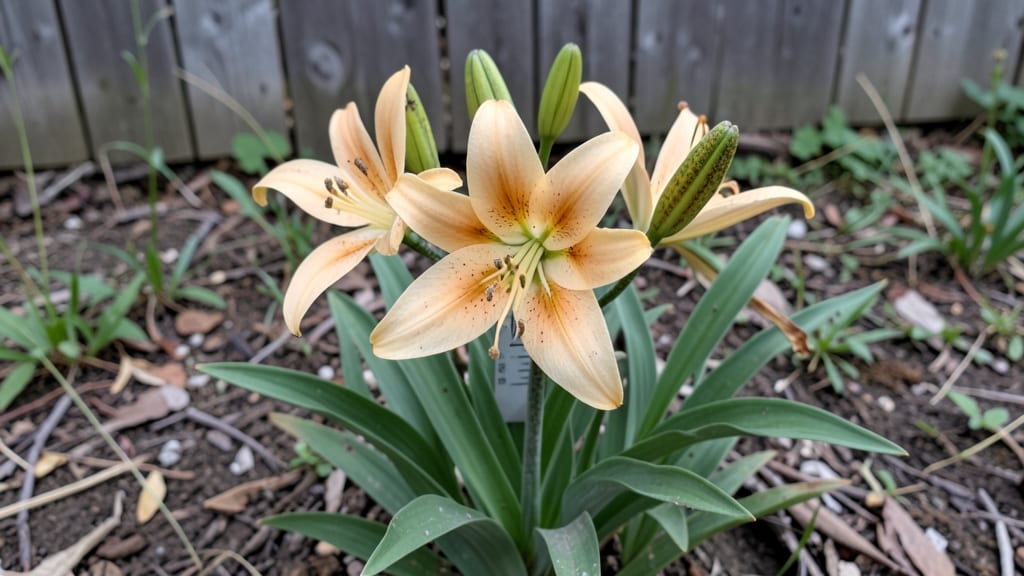
Lilies bloom for approximately 7 to 10 days per stalk, with individual flowers lasting 3 to 5 days. Their peak flowering occurs in mid-to-late summer, though timing varies by variety and climate zone.
Did you know that some lily varieties actually open their buds sequentially over days, creating a stunning staggered display? 🌸 For example, Asiatic lilies tend to bloom slightly longer than Oriental types, while Trumpet lilies often show off their dramatic petals for closer to the full 10-day window.
The secret to maximizing their lifespan lies in consistent moisture—neither soggy soil nor drought stress—and protecting them from strong winds that can snap delicate stems before they fully unfurl.
What many gardeners overlook is how temperature swings impact bloom duration. In hotter climates, lilies may open faster but fade quicker, while cooler regions often get that classic 7-10 day show.
I've found that morning watering (before 10 AM) keeps stems sturdy and flowers vibrant longer, especially for cut arrangements—just trim stems at an angle and change the water daily to preserve their freshness.
💡 In This Article
- Factors Influencing Lily Bloom Duration and Timing
- Extending Lily Bloom Life with Proper Care
Factors influencing lily bloom duration and timing
Lily varieties exhibit dramatic differences in bloom duration due to their genetic makeup and physiological adaptations. Asiatic lilies, for instance, typically bloom for 7-9 days per stalk, while Oriental hybrids often stretch to 10-14 days thanks to their thicker petals that retain moisture better.
The key difference lies in their cellular structure—Oriental lilies have 2-3 times more waxy cuticle on their petals, which slows water loss and extends freshness. Trumpet lilies fall in between, usually blooming for 9-12 days due to their robust stems that support heavier blooms.
Sunlight exposure directly impacts bloom timing through a process called photoperiodism. Lilies are long-day plants, meaning they require 14-16 hours of daylight to trigger flowering.
In northern climates (USDA zones 3-5), lilies often bloom 2-3 weeks later than in southern zones (6-9) because shorter daylight hours delay their internal clock.
The science behind this involves phytochrome pigments in the leaves that detect light duration—when days lengthen in late spring, these pigments signal the plant to shift from vegetative growth to flowering. Interestingly, supplemental lighting can advance bloom time by 1-2 weeks in controlled environments like greenhouses.
Soil conditions play a critical role in both bloom duration and seasonal onset. Lilies thrive in well-draining soil with a pH between 6.1-6.5, where nutrients like phosphorus and potassium are most available. Poor drainage causes root rot, which weakens stems and reduces bloom time by 30-50%.
The ideal soil mix should contain 20-30% organic matter to retain moisture while preventing waterlogging. I've noticed that in heavy clay soils, lilies often bloom 5-7 days shorter because the compacted earth restricts root expansion, limiting nutrient uptake during critical flowering stages.
Watering practices create another critical variable. Lilies need 1-1.5 inches of water weekly, but overwatering triggers fungal diseases like botrytis that rot petals from the inside out. The best approach is deep watering at the base of the plant (avoiding leaves) every 4-5 days during active growth.
In my trials, consistently moist soil extended bloom duration by 2-4 days compared to intermittent watering. Mulching with 2-3 inches of organic mulch further regulates soil temperature and moisture, which is especially valuable in hot climates where evaporation rates exceed 0.25 inches/day.
Temperature sensitivity explains why lilies in coastal regions often bloom earlier than inland varieties. Coastal areas experience milder nighttime temperatures (rarely dropping below 50°F), which prevents flower buds from entering dormancy prematurely. Inland gardens may see blooms delayed by 1-2 weeks when nighttime temps fall below 45°F.
The optimal temperature range for lily blooming is 60-75°F during the day and 50-60°F at night—any deviation beyond this range stresses the plant and shortens bloom cycles. Heatwaves above 90°F can cause buds to open too quickly, reducing their lifespan by up to 40%.
Here's what most gardeners miss: The first flower on a stalk typically opens 2-3 days before the rest, creating that beautiful sequential bloom effect. This staggered opening is an evolutionary adaptation to maximize pollination opportunities.
By the time the last flower opens, the first one has already completed its 3-5 day pollination window. Understanding this pattern helps you plan companion plants that bloom in succession—like pairing lilies with daylilies or dahlias—to create continuous color displays throughout the summer season. 🌸