
Blooming
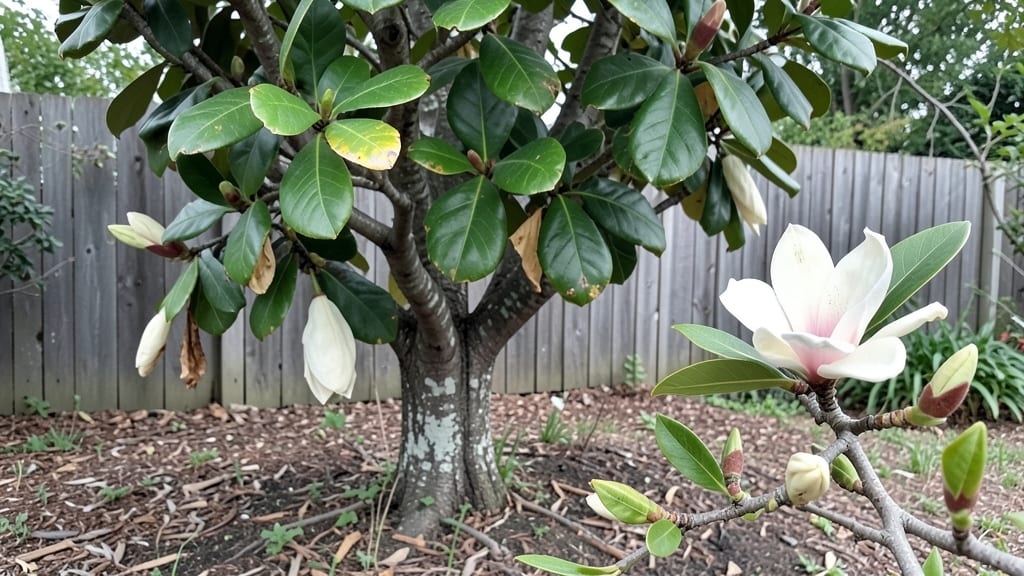
Magnolias bloom for 3 to 12 days, depending on the species, with early varieties like Magnolia stellata lasting 5–7 days and later bloomers such as Magnolia grandiflora extending to 2 weeks. Peak flowering occurs in late winter to early spring, with some reblooming cultivars extending the season.
Timing isn’t the only factor—environment plays a huge role in how long your magnolia stays in bloom. 🌸 Cooler climates often push flowering earlier, while heatwaves can shorten the display by stressing the tree.
I’ve noticed that well-drained soil with a slightly acidic pH (around 5.0-6.5) helps sustain blooms longer, especially for varieties like Magnolia 'Black Tulip' which can push past the typical 7-day window with proper care.
For gardeners eager to see magnolias multiple times a year, choosing reblooming hybrids like Magnolia 'Elizabeth' is a game-changer. These cultivars can produce secondary blooms in summer if given consistent moisture and protection from late frosts.
The trade-off? They often require more maintenance than single-bloom varieties, but the extended show makes it worth it.
💡 In This Article
- Magnolia Flowering Duration by Species
- Extending Magnolia Bloom Seasons with Care
Magnolia flowering duration by species
Magnolia blooms vary dramatically by species, with some varieties like Magnolia stellata (star magnolia) showcasing a delicate 5–7 day display of star-shaped blossoms. These early bloomers often open in late winter, sometimes even under snow, thanks to their ability to tolerate 20°F temperatures.
The key difference lies in their genetic programming—stellata prioritizes early flowering to capitalize on pollinators before spring competition, while later bloomers like Magnolia grandiflora (southern magnolia) focus on larger, 12-day displays with fragrant, creamy-white flowers that emerge in late spring.
Here's how temperature affects bloom duration: cooler nights (50–60°F) preserve flower moisture, extending displays by 2–3 days compared to hotter conditions. The Magnolia 'Jane' cultivar, for example, typically blooms for 9–12 days but can shrink to just 5 days during heatwaves above 85°F.
Humidity also plays a role—dry air causes petals to crisp faster, while 60%+ relative humidity maintains petal integrity. The star magnolia's thin petals are particularly sensitive to dehydration, which is why morning watering (before 10 AM) can add 1–2 extra days to its bloom.
Identifying early vs. late bloomers at nurseries requires checking three key details: flower timing labels, leaf emergence patterns, and bud formation stages.
Early bloomers like Magnolia 'Royal Star' develop buds in late summer that swell visibly by winter, while late bloomers like Magnolia 'Teddy Bear' keep buds dormant until spring.
Pro tip: Ask for second-flowering cultivars—these hybrids (like Magnolia 'Black Tulip') can produce two bloom cycles per year with proper care, though their initial blooms may only last 7–10 days.
The science behind these variations lies in photoperiodism—magnolias respond to daylight length changes. Early bloomers like Magnolia kobus (cucumber tree) flower when daylength reaches 12 hours, while late bloomers need 14+ hours of light.
This explains why northern climates often see shorter bloom durations (5–7 days) compared to southern regions where extended daylight maintains flowers for 10–14 days. The Magnolia 'Ann' cultivar exemplifies this adaptation, blooming for 10 days in the South but only 6 days in the Midwest.
For gardeners planning landscapes, consider these practical comparisons: Star magnolias offer 3–5 days of winter color but require protection from late frosts, while saucer magnolias (Magnolia × soulangeana) provide 7–10 days of spring spectacle with more frost tolerance.
The trade-off? Saucer magnolias often have 20% shorter individual bloom durations than their star counterparts but produce larger, more showy flowers. 🌸
One often-overlooked factor is root competition—magnolias planted too close to other trees can see bloom durations reduced by 30–50% due to nutrient stress. The Magnolia 'Alexandrina' cultivar, for instance, typically blooms for 10 days when isolated but may only last 5–6 days in crowded plantings.
This explains why mature specimens in botanical gardens often outperform younger nursery plants by 2–4 days in bloom length.