
Blooming
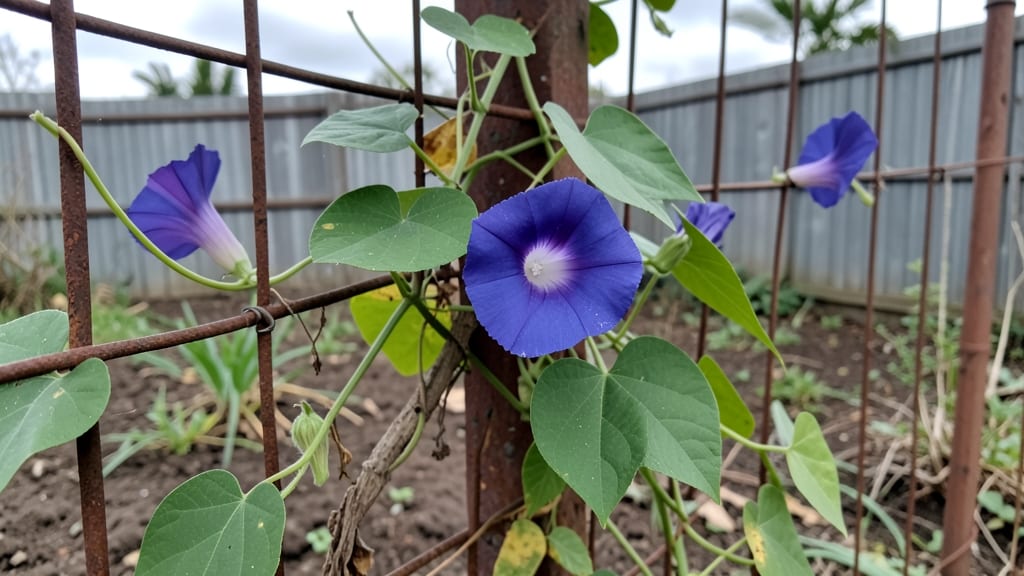
Morning glories bloom for 1-2 days per flower, with each vine producing 3-12 blooms daily in peak season. Their rapid opening (sunrise) and wilting (late afternoon) create a fleeting but prolific display, often lasting 4-8 weeks total depending on climate and care.
These vibrant flowers follow a strict daily rhythm—opening at dawn to attract pollinators and wilting by midday to conserve energy for seed production. 🌸 The trade-off is nature’s way of ensuring efficient reproduction, though it means gardeners must embrace their fleeting beauty or strategically prune to coax more blooms throughout the season.
In warmer climates, morning glories often stretch their display to 8 weeks, while cooler regions may see just 4-5 weeks of peak blooming. The key to maximizing their show lies in consistent moisture and morning sunlight, which keeps vines vigorous enough to produce new flowers daily.
💡 In This Article
- Morning Glory Flower Lifecycle: Why Blooms Last Just a Day
- Extending Morning Glory Blooms: Pruning and Care Tips
Morning glory flower lifecycle: why blooms last just a day
Here's what's actually happening inside those trumpet-shaped blooms: morning glories follow a built-in biological clock tied to pollination efficiency. Their 24-hour bloom cycle begins when light triggers the opening of buds at dawn, revealing nectar-rich centers that attract hummingbirds and bees within 1-2 hours.
The flowers' rapid wilting by afternoon isn't laziness—it's an energy-saving mechanism. Once pollinated, the plant redirects resources from maintaining petals to developing seed pods, which takes priority in its reproductive strategy.
The key factor is photoperiodism, where morning glories respond to daylight length. Unlike nasturtiums (which bloom for 3-5 days per flower) or clematis (with 5-7 day blooms), morning glories have evolved to maximize pollinator visits during their short window.
Their 3-12 daily blooms per vine create an illusion of abundance, though each individual flower lasts just 12-24 hours. The trade-off?
This rapid turnover ensures continuous food sources for pollinators while the vine focuses on seed production—morning glories can produce 100+ seeds per pod, prioritizing quantity over flower longevity.
What most people don't realize is how temperature affects this cycle. In 80°F+ climates, blooms may last only 8-12 hours due to accelerated metabolic processes, while cooler 65-75°F regions extend their lifespan to 24 hours.
This explains why morning glories in Zone 9 often bloom for 8 weeks versus just 4 weeks in Zone 5. The plant's internal clock also responds to humidity—dry conditions cause flowers to wilt faster as the vine conserves moisture for seed development.
Compare this to nasturtiums, which allocate energy more evenly between blooms and seed production. Their 3-day blooms result from a different evolutionary path where pollinators are less time-sensitive.
Morning glories, however, have perfected the "hit-and-run" pollination strategy: bright colors and early opening ensure quick visits, while rapid wilting prevents energy waste on maintaining petals once the reproductive goal is achieved.
The sensory experience reveals this adaptation: fresh morning glory blooms emit a sweet, honey-like fragrance at dawn that fades by noon as petals begin to droop.
The scent attracts pollinators during their most active morning hours, while the wilted flowers turn their energy toward developing the distinctive capsule-shaped seed pods that split open when dry, releasing seeds for next season's growth. This entire lifecycle happens in just 30-45 days from bloom to seed maturity!
For gardeners, understanding this cycle explains why morning glories thrive in full sun with consistent moisture—they need energy to produce new blooms daily. The rapid turnover means you'll see continuous color, but each flower's fleeting nature is hardwired into their DNA as a survival strategy. 🌟