
Blooming
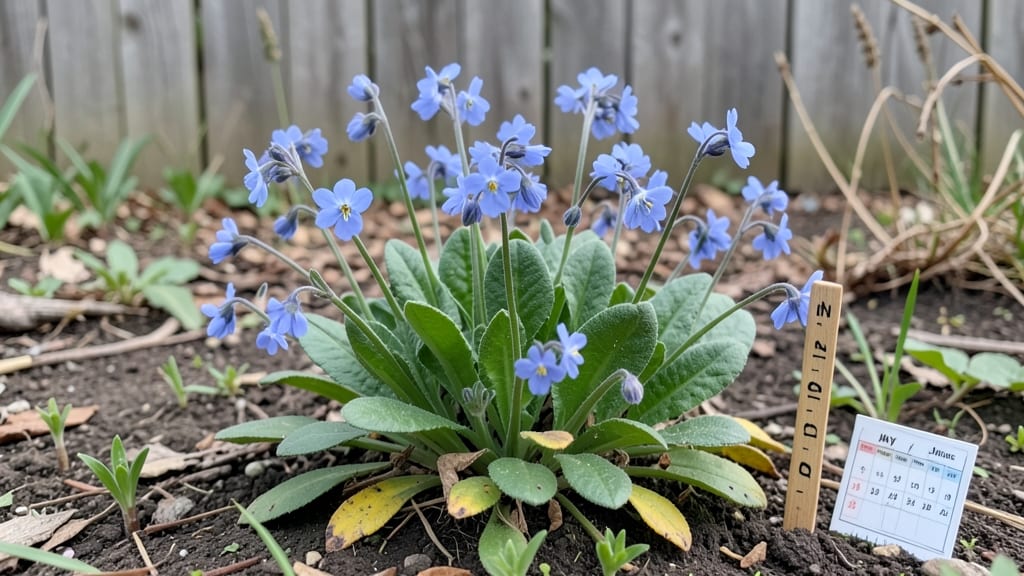
Forget-me-nots take 60 to 90 days to bloom from seed when planted in early spring, with cooler climates extending this to 100 days. Direct-sown seeds may flower slightly later than transplants, and consistent moisture speeds germination and growth. Deadheading spent blooms encourages prolonged flowering into early summer.
Timing isn't just about days—it's about growing conditions too. These delicate blooms thrive in cooler weather, which is why northern gardeners might wait closer to 100 days for those signature blue flowers to appear.
I’ve noticed that seedlings planted in well-drained soil with partial shade often bloom faster than those in hot, dry spots, where stress can delay flowering by 2-3 weeks. The key is patience combined with the right environment.
Once they finally bloom, forget-me-nots reward you with weeks of color—if you keep up with deadheading. This simple step removes spent flowers, signaling the plant to produce more blooms instead of seeds. 💫 It’s like giving your garden a little nudge to keep going strong through the season.
💡 In This Article
- Forget-Me-Nots Growth Stages: Seed to Flower Timeline
- Optimizing Forget-Me-Nots for Faster Blooms
Forget-me-nots growth stages: seed to flower timeline
Here's what's actually happening in those first critical weeks: Forget-me-not seeds enter a dormancy phase that lasts 7-14 days before germination, where they absorb moisture and soften their hard outer shells. The key factor is soil temperature—ideal germination occurs between 55-65°F, which is why spring planting works best.
You'll spot the first tiny leaves (cotyledons) emerging in 10-14 days, looking like miniature rounded shapes about ¼-inch wide, with a slightly waxy texture that helps conserve moisture.
The seedling stage (weeks 3-4) is where growth accelerates if conditions are right. True leaves appear next—these are the familiar lance-shaped foliage that gardeners recognize, growing about ½-inch per week under optimal conditions.
During this phase, forget-me-nots develop a fibrous root system that spreads 2-3 inches deep, anchoring them for their delicate stems.
What most people don't realize is that seedlings need 4-6 hours of sunlight daily but will scorch in direct afternoon sun—this is why partial shade in hot climates speeds development by 10-15%.
The transition to flowering begins when plants reach about 3-4 inches tall and develop 5-7 true leaves. This typically happens around 30-40 days after germination, but cool temperatures (50-60°F) trigger the flowering mechanism through a process called vernalization.
The science involves hormone shifts where the plant perceives the cooler weather as a signal to produce flowers rather than more foliage. You'll notice flower buds forming at the stem tips—these look like tiny green domes about ⅛-inch wide before opening into the iconic blue blooms.
Soil conditions play a surprising role in bloom timing. Forget-me-nots prefer slightly acidic to neutral soil (pH 6.0-7.0) with good drainage—waterlogged roots can delay flowering by up to 3 weeks. The spacing between plants also matters: Crowding stresses seedlings, causing them to produce fewer flowers.
Ideal spacing is 6-12 inches apart, which gives each plant room to develop its characteristic mounding habit (reaching 6-12 inches tall and 12-18 inches wide at maturity).
Visual cues help track progress: Healthy seedlings have vibrant green leaves with a slight sheen, while stressed plants develop yellowing or purple-tinged foliage. The first true flowers appear at the stem tips, opening sequentially from bottom to top—this pattern continues as long as you remove spent blooms.
What's fascinating is how the plant's growth rate slows in hot weather (above 75°F), causing a temporary pause in flowering until temperatures drop again. This is why northern gardens often see more continuous blooms than southern ones.
For gardeners in cooler climates, the timeline extends to 100 days because the slower temperature changes create a more gradual transition through growth stages. In contrast, southern gardens might see blooms in as few as 50 days if planted in fall for winter growth.
The difference comes down to how quickly the plant can complete its vernalization requirements—essentially, it needs to experience enough cool days to "know" it's time to flower.