
Blooming
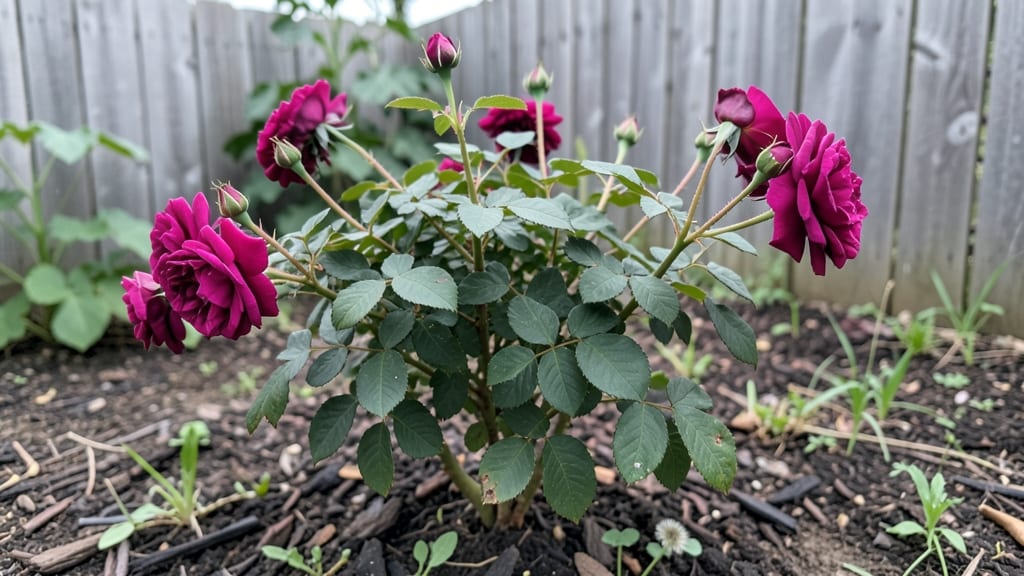
Knockout roses bloom continuously from early summer through fall, often producing nonstop flowers with minimal deadheading. Their repeat-blooming nature makes them ideal for long-season color in gardens.
Unlike traditional roses that take a summer break, these hybrids skip the dormant phase entirely—thanks to their hybridized genes that keep buds forming along stems instead of just at the tips. 🌿 This means you’ll see fresh blooms emerging every 5-7 days once they kick off in June, creating a nonstop floral display until frost.
The trade-off? They need consistent care to sustain this marathon performance, especially in hot climates where extra watering helps prevent stress-induced flowering slowdowns.
What sets them apart from other roses is their ability to bloom in waves rather than all at once, which gardeners love for their year-round visual interest.
I’ve seen them continue flowering well into November in mild zones, though heavy pruning in early spring gives them the best head start for another spectacular season.
💡 In This Article
- Knockout Roses' Unique Blooming Biology
- Maximizing Knockout Rose Flower Production
Knockout roses' unique blooming biology
The secret behind knockout roses' nonstop blooms lies in their hybridized genetics, specifically their parentage combining Rosa knoxiana (a Chinese rose) with Rosa bracteata (a disease-resistant species). This combination eliminated the traditional rose trait of summer dormancy, where plants pause blooming to conserve energy.
Instead, knockout roses produce flowers from lateral buds along their stems—not just terminal buds at the tips—creating a continuous bloom cycle.
Here's what makes this possible: Their stems develop 15-20 lateral buds per foot of growth, compared to traditional roses' 3-5 terminal buds. When you remove spent blooms, these lateral buds immediately activate, producing new flowers every 5-7 days during peak season.
This lateral bud formation is why they can sustain blooming for 4-5 months without rest, unlike hybrid teas that typically bloom in 2-3 week bursts twice per year.
Their disease resistance plays a crucial role too. Knockout roses inherit black spot and powdery mildew resistance from Rosa bracteata, allowing them to allocate more energy to flowering rather than fighting infections.
Most roses spend 20-30% of their energy on disease defense during hot, humid summers—knockouts redirect that energy to continuous bud formation. This is why they thrive in USDA zones 4-9 without the same care demands as traditional varieties.
Climate adaptability comes from their thick, waxy leaf coating that reduces water loss, and their deep root systems that access moisture during droughts. Unlike traditional roses that often struggle in 90°F+ temperatures, knockouts maintain blooming through heat waves because their genetic makeup prioritizes hydration efficiency over seasonal dormancy.
This is why they're often called the "low-maintenance superstars" of the rose world.
What most gardeners don't realize is that their continuous blooming actually follows a modified photoperiod response. While traditional roses rely on day length changes to trigger dormancy, knockouts ignore these signals and keep producing flowers as long as growing conditions remain favorable.
This genetic override is what makes them unique among roses—essentially, they've been bred to ignore nature's usual bloom-and-rest cycle.
For comparison, consider a Grandiflora rose that might produce 100 blooms per season in two flushes, while a knockout rose can produce 200+ blooms in the same timeframe through this continuous lateral budding process.
The trade-off? Their flowers are slightly smaller (typically 2-3 inches across) compared to hybrid teas' 4-6 inch blooms, but the volume more than makes up for it.