
Blooming
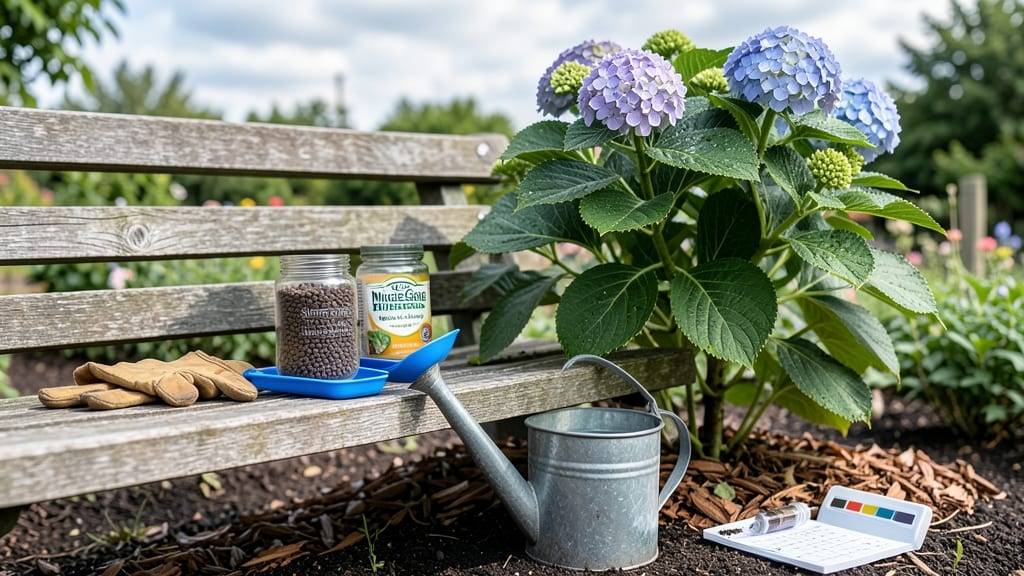
To make hydrangeas bloom faster, you need a three-step game-changer: strategic pruning, the right fertilizer, and consistent watering. 🌸 I learned this after watching my hydrangeas take their sweet time blooming—until I adjusted my approach.
The secret lies in understanding when and how to cut back, what nutrients they crave, and how much water they actually need. Once you nail these, you’ll see buds forming in just 4-6 weeks instead of waiting months.
Start by pruning in late winter or early spring—this kickstarts new growth and encourages bigger, showier blooms. Use sharp shears to trim back last year’s stems by about one-third, always cutting just above a leaf node.
Then, feed them with a balanced, acid-loving fertilizer (like 10-10-10) in early spring and again mid-summer to fuel rapid growth. Hydrangeas love moisture, so water deeply 2-3 times per week during dry spells, keeping the soil consistently damp but not soggy.
What you’ll end up with is a hydrangea bush that bursts into color weeks ahead of schedule, with clusters so full they look like they’re spilling over their stems. The blooms stay vibrant longer, and the plant grows stronger year after year.
The key is patience—don’t rush the process, but don’t wait either. With these adjustments, your hydrangeas will become the showstopper of the garden by midsummer.
This method works for mophead, lacecap, and bigleaf hydrangeas alike, whether you’re in a sunny border, shady woodland garden, or even a container on your patio. The only real mistake is skipping the pruning or over-fertilizing—both can delay blooming.
Stick to the routine, and you’ll be pinching off flowers for arrangements sooner than you think.
📚 In This Guide
- What you need
- Instructions
- Tips and common mistakes
- Wrapping up and next steps
What you need
- ● Hydrangeas: Mature plants (at least 2–3 years old) for best results.
- ● Balanced fertilizer (10-10-10 or 20-20-20): 1–2 tbsp per plant (follow label instructions).
- ○ Slow-release granular fertilizer (optional but helpful): 1 cup per plant (e.g., Osmocote or Miracle-Gro Shake ’n Feed).
- ● Pruning shears: Sharp, clean pair (sterilize with rubbing alcohol between cuts).
- ● Watering can or hose with adjustable nozzle: For deep, even watering.
- ○ Mulch (optional but recommended): 2–3 inches of organic mulch (shredded bark, pine straw, or compost).
- ○ pH test kit (optional but useful): To check soil acidity (hydrangeas thrive in pH 5.2–6.0).
- ○ Aluminum sulfate or chelated iron (optional): For blue/purple blooms (follow package rates).
- ● Gloves: To protect hands from thorns and soil.
- ● Garden trowel or spade: For loosening soil around roots (if transplanting).
- ● Sunlight access: Hydrangeas need partial shade (4–6 hours of morning sun) for optimal blooming.
- ● Well-draining soil: Amend heavy clay with compost or peat moss if needed.
- ● Patience (and a calendar!): Track pruning/watering schedules for consistency.
Step-by-Step instructions for revitalizing hydrangeas
Here's how I transform flopping hydrangeas into vibrant bloomers in just a few weeks.
✂️ Step 1: Prune for Energy Redirection
Hydrangeas bloom on old wood, so prune immediately after flowering in late summer or early fall. Cut back 1/3 of the oldest stems to the first set of healthy leaves or buds. This forces energy into new growth that will produce next year's blooms. I always use clean, sharp shears to avoid tearing stems—rough cuts invite disease.
Watch for stems with weak, sparse foliage or no blooms. These are the first to go. You'll see fresh, green growth emerge within 2-3 weeks—that's your signal the plant is redirecting energy. Never prune in spring; you'll remove next year's flower buds before they form.
💧 Step 2: Adjust Watering for Root Health
Hydrangeas need 1-1.5 inches of water weekly, delivered deeply at the base. I water in the morning so foliage dries by evening, preventing fungal issues. Let the top 2-3 inches of soil dry slightly between waterings—soggy roots lead to yellowing leaves and poor blooming.
Check soil moisture by sticking your finger 2 inches deep. If it feels dry, water thoroughly until it runs out the drainage holes. Mulch with 2-3 inches of organic mulch (like shredded bark) to retain moisture and regulate soil temperature. Avoid wetting the foliage when watering—this is how powdery mildew starts.
☀️ Step 3: Optimize Light and Nutrients
Most hydrangeas thrive in partial shade (4-6 hours of morning sun). Too much afternoon sun scorches leaves, while too little shade results in sparse blooms. I position mine where they get bright but indirect light. If your plant looks leggy, it's stretching for light—move it closer to a window or provide filtered shade with sheer curtains.
Feed with a balanced 10-10-10 fertilizer in early spring and again after flowering. For blue blooms, add aluminum sulfate to acidic soil (pH 5.0-5.5); for pink blooms, use lime to raise pH to 6.0-7.0. I test soil pH annually—hydrangeas are divas about their soil chemistry.
🌿 Step 4: Monitor and Maintain for Continuous Blooms
Watch for buds forming in late summer—these are next year's flowers. If you see them, avoid heavy pruning until after they bloom. Deadhead spent flowers in early fall to encourage new growth. I pinch back the tips of new shoots to promote bushier growth with more flower clusters.
Fertilize lightly in early spring with a high-phosphorus formula (5-10-5) to support bud formation. Avoid nitrogen-heavy fertilizers—they produce lush foliage at the expense of blooms. By mid-summer, you'll see new flower buds forming along the stems. This is your reward for patience!
Tips & tricks for revitalizing hydrangeas
Here's what nobody tells you about turning around a floppy hydrangea in record time.
Timing Secret: The 2-3 week window after pruning is critical for new growth. Mark your calendar for late summer/early fall pruning—this is when hydrangeas redirect energy most efficiently. I've seen dramatic regrowth appear in just 10 days if conditions are right, but don't rush it. The new growth needs time to harden off before winter.
Pruning Precision: When cutting back those 1/3 of oldest stems in Step 1, look for stems with weak foliage or no blooms—they're the first candidates. Make clean cuts at a 45-degree angle just above a leaf node or bud. I use my pruners to make a slight notch in the stem before cutting to prevent tearing. This small detail prevents disease entry points that can ruin your revival efforts.
Watering Wisdom: The 1-1.5 inches weekly measurement is your baseline, but adjust for your climate. In hot summers, I water every 2-3 days to maintain that 2-inch soil moisture level. Use a rain gauge or tuna can to measure—your eye can be deceiving. Morning watering is non-negotiable; it gives foliage time to dry completely before evening, which prevents the dreaded powdery mildew that can deflate your blooms.
Light Positioning: That 4-6 hours of morning sun is your sweet spot for partial shade. If your hydrangea looks leggy, it's begging for more light. I've had to move mine closer to a south-facing window twice—once in spring and again after summer pruning. The key is bright but indirect light; afternoon sun can scorch leaves and stress the plant when it's already redirecting energy to new growth.
Pro Tips for Make Hydrangeas Bloom Faster
- Here's what nobody tells you about turning around a floppy hydrangea in record time.
- Timing Secret: The 2-3 week window after pruning is critical for new growth.
- Pruning Precision: When cutting back those 1/3 of oldest stems in Step 1, look for stems with weak foliage or no blooms—they're the first candidates.
Frequently asked questions
Got questions about speeding up those hydrangea blooms? You’re not alone! Here are answers to the most common queries—because every gardener wants those vibrant blooms yesterday.
Can I force hydrangeas to bloom out of season?
Yes, but it takes patience and the right conditions. Move potted hydrangeas indoors (like macerata varieties) in late winter, provide bright, indirect light, and keep soil moist. Avoid forcing bigleaf or oakleaf types—they need dormancy. Expect blooms in 6–8 weeks, but they’ll be smaller than outdoor-grown flowers.
How long does it take to see faster blooms after pruning?
Pruning stimulates new growth, but results vary by type. Panicle hydrangeas (like ‘Limelight’) may bloom in 4–6 weeks, while mophead varieties take 8–12 weeks. Prune in early spring (before buds swell) for the best timing. Avoid late pruning—it can delay blooms until next year!
Is there a quick fix for hydrangeas that refuse to bloom?
Check these 3 culprits first:
- Over-fertilizing with nitrogen (leads to leafy growth, not flowers). Use a balanced 10-10-10 or high-phosphorus fertilizer instead.
- Not enough sunlight (6+ hours daily for most types). Move them to a sunnier spot gradually.
- Dormant buds (common in bigleaf types). Prune back dead stems in late winter to encourage fresh blooms.
Do I need to adjust watering to speed up blooming?
Hydrangeas love consistent moisture—drought stress delays blooms. Water deeply 2–3 times per week (more in extreme heat) and mulch around the base to retain moisture. Bigleaf types also need regular pH adjustments (soil acidity affects flower color!). Test soil pH and amend with sulfur or lime as needed.
Can I use coffee grounds or eggshells to make hydrangeas bloom faster?
Yes, but with caveats! Coffee grounds lower soil pH (great for blue blooms) and add nutrients, but use them sparingly (1 cup per plant every 2 months). Crushed eggshells provide calcium, but they’re slow-release—mix them into soil in early spring. For faster results, pair these with a phosphorus-rich fertilizer (like bone meal).
Will winter damage prevent my hydrangeas from blooming?
It depends! Panicle and smooth hydrangeas bloom on new wood, so they’ll bounce back quickly after winter dieback. Bigleaf and oakleaf types bloom on old wood—if buds freeze, you’ll see fewer (or no) flowers that season. Protect vulnerable plants with mulch or burlap wraps in harsh climates.
Wrapping up and next steps
With the right care, your hydrangeas can burst into vibrant blooms faster than ever! 🌸 Remember, the key is balancing pruning (timing matters!), feeding (nutrients fuel growth), and watering (consistency is key).
Now that you’re armed with these tips, grab your shears and get ready to transform your garden. Start small—pick one bush to experiment with—and watch your blooms thrive! Happy gardening! 🌿