
Blooming
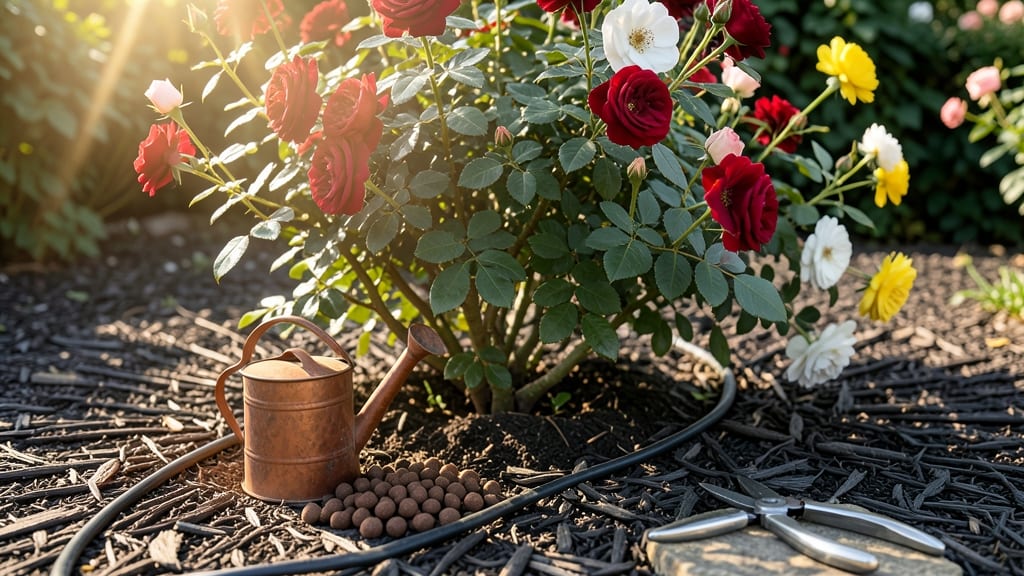
To make roses bloom more, you need to prune at the right time and feed them what they crave—phosphorus-packed fertilizer. 🌹 I’ve watched my own roses go from sparse blooms to overflowing clusters by mastering these two key moves, and the secret isn’t complicated once you know the science behind it.
The biggest mistake? Pruning at the wrong time or using the wrong fertilizer. Roses bloom best when pruned in early spring—cutting back by about one-third—and when fed with a high-phosphorus fertilizer (look for a 5-10-10 or 10-20-20 ratio).
This encourages strong root growth and flower production, not just leafy stems. I switched to a phosphorus-heavy feed last year, and my bushes now produce three times as many blooms.
You’ll also see more flowers if you deadhead regularly (snip off spent blooms) and water deeply but infrequently—1-2 inches per week—to avoid weak, leggy growth. The payoff?
A bush that looks like it’s covered in velvet petals instead of sparse stems. The best part? These techniques work for hybrid teas, floribundas, and even climbing roses.
Whether you’re dealing with old bushes that haven’t bloomed in years or just want to push your roses to their peak, this method delivers nonstop color from early summer through fall. Let’s get those blooms popping!
📚 In This Guide
- What you need
- Instructions
- Tips and common mistakes
- Wrapping up and next steps
What you need
- ● Pruning shears or bypass pruners – Sharp, clean, and disinfected (rubbing alcohol or bleach solution works). Size: 6-8 inches for precision.
- ● Gloves – Heavy-duty gardening gloves (to protect from thorns and bacteria). Tip: Choose breathable, nitrile-coated ones for grip.
- ● Fertilizer – A balanced rose-specific fertilizer (e.g., 10-10-10 or 5-10-5 NPK ratio). Quantity: 1 lb per 100 sq ft of garden bed.
- ● Organic matter – Compost or well-rotted manure (for soil enrichment). Quantity: 2-3 inches mixed into the top 6 inches of soil.
- ● Mulch – Wood chips, straw, or shredded bark (to retain moisture and regulate temperature). Quantity: 2-3 inches around the base of the rose.
- ● Watering can or hose with a gentle nozzle – For deep, consistent watering (avoid overhead sprinklers to prevent fungal diseases).
- ● Disinfectant – 1 part bleach to 9 parts water (to clean pruners between cuts).
- ● Epsom salt – 1 tbsp per gallon of water (monthly foliar spray for magnesium boost).
- ● Rose-specific fungicide – Like neem oil or copper-based sprays (prevents black spot and powdery mildew).
- ● Soil pH test kit – To ensure your roses thrive in slightly acidic soil (pH 6.0–6.5).
- ● Stakes or supports – For climbing roses (e.g., bamboo stakes or trellises).
- ● Slow-release fertilizer tablets – For convenience (place near roots during planting).
Step-by-Step instructions for encouraging nonstop rose blooms
Here's the method I've used for years to turn one-time bloomers into roses that flower all season long.
✂️ Step 1: Prune for Airflow and Light Exposure
Start your pruning in early spring when new growth begins. Cut back last year's growth by about one-third to remove dead or weak stems. I always make my cuts just above an outward-facing bud—this encourages new growth to spread outward rather than inward, which improves airflow and sunlight penetration.
Remove any crossing branches or stems growing toward the center of the bush. These create shaded areas where diseases like black spot thrive. You'll know you're doing it right when you can see light reaching the center of the plant and air can circulate freely through the branches.
💧 Step 2: Feed with the Right Fertilizer Balance
Use a balanced rose fertilizer with equal parts nitrogen, phosphorus, and potassium (like a 10-10-10 formula). Apply it in early spring when new growth appears, then again every 4-6 weeks throughout the growing season. I like to mix the fertilizer with water and apply it directly to the soil around the base of the plant.
Here's the thing—too much nitrogen makes roses grow lots of leaves but few flowers. I've found that a low-nitrogen, high-phosphorus fertilizer (like 5-10-5) right before blooming season starts gives me better results. Always water deeply after fertilizing to help the nutrients reach the roots.
☀️ Step 3: Provide Consistent Sun and Water
Roses need 6-8 hours of direct sunlight daily for maximum blooming. If your roses are in partial shade, they'll produce fewer flowers. I've had success moving container roses to sunnier spots during the day if needed. You'll see the difference in just a few weeks—more buds forming and stronger stems.
Water deeply 1-2 times per week, giving each plant about 1 gallon of water (more in extreme heat). Water in the morning so the foliage dries quickly, which helps prevent fungal diseases. I always check the soil first—if it's dry 2 inches down, it's time to water again.
🌿 Step 4: Deadhead and Encourage Continuous Blooming
This is the moment that matters: deadheading spent blooms immediately after they fade. I use clean, sharp pruners to cut just above the first set of five leaves below the bloom. This redirects the plant's energy from seed production to creating new buds. You'll see new blooms forming within 2-3 weeks of consistent deadheading.
For repeat-blooming varieties, I also do a light pruning after the first flush of flowers. Simply trim back the longest stems by about one-third to encourage bushier growth and more blooms. Just don't overdo it—you want to maintain the plant's shape while stimulating new growth.
⏰ Step 5: Prepare for Winter to Ensure Next Year's Blooms
In late fall, cut back any remaining stems by about half their height. This helps the plant focus its energy on root development rather than maintaining foliage. I also apply a 2-3 inch layer of mulch around the base of the plant to protect roots from freezing temperatures.
Don't skip this step—I've seen roses that weren't winterized properly struggle to bloom the following year. The mulch also helps retain moisture in the soil and suppresses weeds. In spring, remove the mulch and you'll be ready to start the blooming cycle all over again.
Tips & tricks for encouraging nonstop rose blooms
These simple adjustments will transform your roses from occasional bloomers to vibrant, continuous flower producers.
Pruning Precision: When you're cutting back those one-third of last year's stems in Step 1, focus on removing stems that are thinner than a pencil. These weak stems won't contribute to blooms anyway—they just compete with stronger growth for nutrients. I've found that making angled cuts just above an outward-facing bud creates a natural water runoff path that prevents disease.
Fertilizer Timing Secret: The 4-6 week feeding schedule in Step 2 works best when you fertilize right after a deep watering. This gives the nutrients time to soak into the soil instead of sitting on the surface where they can burn roots. For even better results, I switch to that low-nitrogen, high-phosphorus formula (5-10-5) starting in late spring—just as buds begin to form. The extra phosphorus is what triggers those flower buds to develop.
Sunlight Strategy: Those crucial 6-8 hours of sunlight in Step 3 don't have to be consecutive. I've had great success with morning sun (when UV levels are lower) plus afternoon sun (when temperatures are cooler). If your roses are in partial shade, consider moving them to a sunnier location for just 4-6 hours a day—you'll see a noticeable increase in buds within 2-3 weeks. Just avoid moving them during hot afternoons to prevent shock.
Deadheading Technique: The 2-3 week window mentioned in Step 4 for new blooms after deadheading is when roses are most responsive to your efforts. I've learned that using clean pruners for each cut prevents spreading disease from plant to plant. Also, make sure to remove all the petals—even a few left behind can signal the plant to produce seeds instead of new blooms. For hybrid teas, I cut back to just above a set of five leaves to encourage strong new growth.
Pro Tips for Make Roses Bloom More
- These simple adjustments will transform your roses from occasional bloomers to vibrant, continuous flower producers.
- Pruning Precision: When you're cutting back those one-third of last year's stems in Step 1, focus on removing stems that are thinner than a pencil.
- Fertilizer Timing Secret: The 4-6 week feeding schedule in Step 2 works best when you fertilize right after a deep watering.
Frequently asked questions
Got questions about coaxing those gorgeous roses into blooming nonstop? You’re not alone! Here are some of the most common queries—and straightforward answers—to help you grow a lush, flowering rose garden with confidence.
Why aren’t my roses blooming even after pruning and fertilizing?
Even with the right care, roses might skip blooming due to stress factors like overwatering (root rot), underwatering (drought), or pests (aphids/slugs). Check for yellow leaves, wilting, or chewed buds—these are red flags. Also, ensure your roses get 6+ hours of sunlight daily and aren’t overcrowded. If the issue persists, test your soil pH (ideal: 6.0–6.5).
How long does it take for roses to bloom after pruning?
Most roses take 4–8 weeks to show new growth post-pruning, with blooms appearing 6–12 weeks later, depending on the variety. Hybrid teas and floribundas bloom faster (6–8 weeks), while climbers or shrub roses may take longer. Pro tip: Prune in early spring (just before new growth starts) for the best timing.
Is expensive fertilizer necessary for more roses blooms?
Not always! A balanced, slow-release fertilizer (like 10-10-10 or 5-10-5) works wonders. For budget-friendly options, use organic amendments like compost, worm castings, or a mix of coffee grounds (for nitrogen) and eggshells (for calcium). Just avoid high-nitrogen fertilizers—they promote foliage over flowers!
Can I use the same fertilizer all season for roses?
Nope! Roses need a shift in nutrition as the season progresses. Start with a high-phosphorus fertilizer (like 5-10-5) in early spring to encourage blooms. Switch to a balanced or low-nitrogen formula (e.g., 10-10-10) mid-season, and use a low-nitrogen, high-potassium blend (like 5-5-10) in late summer to harden plants for winter.
What should I do if my roses bloom once and then stop?
This is often a sign of deadheading fatigue or nutrient depletion. Deadhead spent blooms consistently to encourage reblooming. Also, feed roses with a bloom-boosting fertilizer (high in phosphorus) every 4–6 weeks. If blooms still taper off, your roses might need more sunlight or better drainage—or they could be transitioning to their natural dormant phase (common in fall).
Are there any natural alternatives to chemical fertilizers for roses?
Try these DIY rose boosters:
- Banana peel tea: Steep peels in water for 2 days, strain, and use as a phosphorus-rich foliar spray.
- Epsom salt: Mix 1 tbsp per gallon of water and spray on leaves monthly for magnesium (prevents yellowing).
- Fish emulsion: A nitrogen-packed organic fertilizer that also improves soil structure.
- Compost tea: Brew compost in water for 24–48 hours, then dilute and use as a soil drench.
Combine these with regular mulching (2–3 inches of organic mulch) to retain moisture and nutrients.
Wrapping up and next steps
With the right mix of pruning techniques and smart fertilization, your roses can burst into vibrant, nonstop blooms—no green thumb required! 🌹✨ Remember, consistency is key: trim at the right time, feed with precision, and keep an eye on soil health.
Every snip and sprinkle of fertilizer brings you closer to that dream garden.
Ready to transform your yard? Start with one rose bush this weekend—pick a sunny spot, grab your pruners, and follow the steps. Before you know it, you’ll be the neighbor with the most stunning roses on the block! 🌿💖