
Pruning
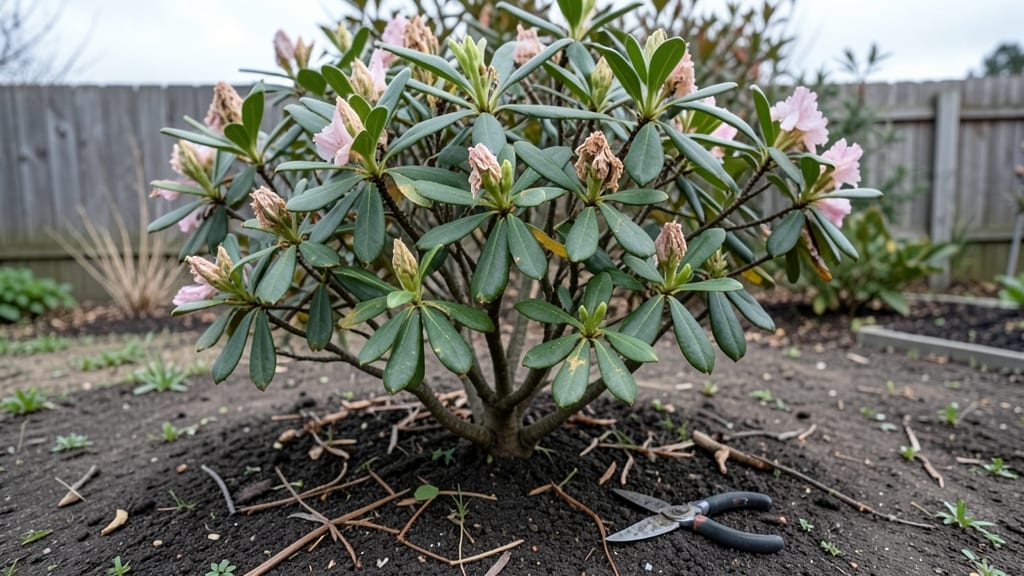
Pruning rhododendrons after blooming isn’t just about keeping them tidy—it’s the secret to thicker growth and next year’s showstopping flowers. ✨ I’ve watched my own bushes go from ragged to lush just by cutting at the right time, and I’ll show you exactly how to do it without sacrificing next season’s blooms.
The best time to prune is late spring or early summer, once the flowers fade but before new buds form. Grab sharp pruners and focus on removing only the dead or crossing branches—never cut into old wood, or you’ll stunt future blooms.
A little patience here means a bush that stays full and vibrant for years.
You’ll end up with a rhododendron that looks neater now and puts on an even bigger flower show next spring. The key is gentle cuts and watching for new growth—no harsh trimming, no guesswork. After pruning, give your plant a light drink of water to help it recover quickly.
This method works for all rhododendron varieties, whether they’re small shrubs or towering specimens. The same principles apply whether you’re in a humid climate or a drier one—just adjust your watering slightly. Ready to transform your bushes?
📚 In This Guide
- What you need
- Instructions
- Tips and common mistakes
- Wrapping up and next steps
What you need
- ● Pruning shears: Bypass pruners (sharp, clean, and capable of cutting up to ¼-inch thick stems). Quantity: 1 pair.
- ● Loppers: Long-handled bypass loppers (for thicker branches, up to ¾-inch thick). Quantity: 1 pair.
- ● Hand saw: Pruning saw with a curved blade (for branches over ¾-inch thick). Quantity: 1.
- ● Gloves: Heavy-duty gardening gloves (to protect against thorns and sap). Quantity: 1 pair.
- ● Disinfectant: Rubbing alcohol (70% or higher) or bleach solution (1 part bleach to 9 parts water) (to sterilize tools between cuts).
- ● Trash bags or bucket: Heavy-duty bags or a large bucket (for collecting pruned branches). Quantity: 1-2.
- ● Pruning sealant: Wound dressing (for large cuts, though many experts argue it’s unnecessary for rhododendrons).
- ● Knee pad or stool: (for comfort if your rhododendron is tall or the ground is uneven).
- ● Magnifying glass: (to spot tiny buds or pests you might miss with the naked eye).
- ● Notebook & pen: (to jot down notes on your plant’s shape or growth patterns for future reference).
- ● Weather check: Choose a day with overcast or light cloud cover (avoid pruning in direct sun or extreme heat).
- ● Timing: Wait until 2-3 weeks after blooming (when flower buds for next year are visible).
- ● Plant health: Ensure your rhododendron is well-watered (but not soggy) before pruning.
Step-by-Step instructions for pruning rhododendrons after blooming
Here's the method I've used for years to keep my rhododendrons lush and blooming reliably.
✂️ Step 1: Wait for the Right Time
Never prune until after the flowers fade completely and new growth appears. I wait until mid-to-late summer when the spent blooms turn brown and drop naturally. This timing ensures you don't accidentally cut off next year's flower buds, which form on old wood during late summer and fall.
Look for fresh, green growth emerging from the stems—this is your signal that the plant has finished its blooming cycle. If you prune too early, you risk removing next season's flowers entirely. The ideal window is typically July through early August, but this varies slightly by climate.
✂️ Step 2: Remove Dead and Damaged Growth
Start by cutting away any dead, diseased, or crossing branches using clean, sharp pruning shears. I always work from the bottom up, removing any stems that are brown, mushy, or showing signs of fungal infection. These dead branches won't regrow and can harbor pests or diseases that might spread to healthy growth.
Make cuts just above a leaf node or outward-facing bud where new growth can emerge. Avoid cutting into the main stem unless absolutely necessary—rhododendrons are sensitive to heavy pruning. For larger branches, I use loppers to make clean cuts at a 45-degree angle, about ¼ inch above a bud to encourage proper healing.
✂️ Step 3: Thin Out Overcrowded Branches
Next, focus on thinning the center of the shrub to improve airflow and light penetration. I remove about 20-30% of the oldest, thickest branches that are growing inward or rubbing against each other. This step prevents future problems like mildew or pest infestations while giving your rhododendron a more open, natural shape.
Look for branches that are growing straight up or crossing over others—these are prime candidates for removal. Make your cuts just outside the branch collar where it meets the main stem. Never leave stubs; always cut back to a healthy bud or node. You'll notice the plant's center opens up immediately, allowing sunlight to reach the inner foliage.
✂️ Step 4: Shape Lightly for Balance
For final shaping, I make only light adjustments to maintain the natural form of the shrub. Rhododendrons have a beautiful, rounded shape, so I avoid heavy pruning that would alter their silhouette. Focus on trimming just the tips of branches that are growing too long or leggy, cutting back to just above a leaf node.
Step back frequently to check your progress—this helps you see the overall shape without getting too close. The goal is to create a balanced, open shrub that will bloom abundantly next year. Avoid cutting more than ¼ of the plant's total volume in one session, as this can stress the shrub and reduce flowering.
💧 Step 5: Clean Up and Mulch
After pruning, remove all cuttings and debris from the area to prevent disease. I always sterilize my tools with rubbing alcohol between cuts to avoid spreading pathogens. Once the area is clean, apply a 2-3 inch layer of organic mulch around the base of the plant, keeping it 3-4 inches away from the trunk to prevent rot.
Water the plant deeply after pruning to help it recover. You'll see fresh, green growth emerging from the cut areas within a few weeks—that's your sign the pruning was successful. Avoid heavy fertilization right after pruning, as new growth needs time to establish before it can handle extra nutrients.
Tips & tricks for pruning rhododendrons after blooming
Real talk: Pruning rhododendrons seems intimidating, but these key insights will help you avoid common mistakes and keep your shrubs thriving for years.
Timing is Everything: The July-through-early-August window in Step 1 is non-negotiable for rhododendrons. I learned this the hard way after accidentally pruning too early and nearly losing next year's blooms. Look for those fresh green shoots emerging from the stems—this is your definitive signal. If you're unsure, wait another week rather than risk cutting off flower buds that form on old wood during late summer.
Cutting Technique Matters: In Step 2, those precise cuts at a 45-degree angle about ¼ inch above a bud make all the difference. I used to make sloppy cuts that left stubs, which created entry points for disease. Sterilize your tools between cuts with rubbing alcohol—this simple step prevents spreading pathogens that can devastate your shrub. For larger branches, loppers give you the leverage to make clean cuts without crushing the branch.
Thinning Strategy: When you're thinning in Step 3, focus on removing those oldest, thickest branches growing inward. I typically target about 20-30% of the center growth to improve airflow. The key is to step back frequently—you'll notice immediately when the center opens up. This isn't about drastic reshaping; it's about creating space for sunlight to reach all parts of the plant, which prevents mildew and encourages healthy new growth.
Post-Pruning Care: After you've finished shaping in Step 4, don't skip the cleanup in Step 5. I can't emphasize enough how important it is to remove all cuttings and debris—this prevents disease from taking hold. That 2-3 inch layer of organic mulch (kept 3-4 inches from the trunk) works wonders for moisture retention while preventing rot. Watering deeply after pruning gives your rhododendron the boost it needs to recover and show those fresh green shoots within weeks.
Pro Tips for Prune Rhododendrons After Blooming
- Real talk: Pruning rhododendrons seems intimidating, but these key insights will help you avoid common mistakes and keep your shrubs thriving for years.
- Timing is Everything: The July-through-early-August window in Step 1 is non-negotiable for rhododendrons.
- Cutting Technique Matters: In Step 2, those precise cuts at a 45-degree angle about ¼ inch above a bud make all the difference.
Frequently asked questions
Got questions about pruning your rhododendrons after they’ve finished blooming? You’re not alone—this step can feel tricky! Here are answers to the most common concerns, so you can tackle it with confidence.
When should I prune my rhododendrons if I missed the ideal window?
If you skipped the immediately after blooming window (late spring to early summer), don’t panic! Light pruning is still safe in early fall—just avoid heavy cuts. Wait until next spring for major trimming to prevent stress. Focus on removing dead wood or crossing branches instead.
Can I prune rhododendrons in the fall, or will it harm them?
Fall pruning is risky because new growth may not harden off before winter. If you must trim, limit it to removing only dead or diseased branches—never more than 25% of the plant. Wait until late winter or early spring for full pruning to avoid frost damage.
What if my rhododendron has no new growth after pruning?
If your rhododendron seems dormant post-pruning, check for root health first. Poor growth could signal over-pruning, disease, or compacted soil. Fertilize lightly with acid-loving plant food and ensure proper drainage. New growth should appear by next spring—patience is key!
Is it okay to prune rhododendrons to shape them like a hedge?
While you can lightly shape rhododendrons, avoid heavy hedging—they prefer a natural, bushy look. Use selective pruning to open the center for airflow and sunlight. For formal hedges, opt for evergreens like boxwood instead.
What tools should I use to avoid damaging rhododendrons?
Always use sharp, clean pruning shears or loppers to prevent tearing. Disinfect tools with rubbing alcohol between cuts to avoid spreading disease. Avoid dull blades—they crush stems, inviting rot. For thick branches, use a pruning saw with a fine-tooth blade.
Wrapping up and next steps
Pruning your rhododendrons after blooming is a simple yet powerful way to keep them thriving for years to come! 🌿 By removing spent flowers, shaping the plant, and encouraging new growth, you’re setting the stage for vibrant blooms and lush foliage next season.
Remember, timing, technique, and patience are key—your rhododendrons will thank you with stunning displays and robust health.
Now that you’re armed with the know-how, grab your pruners and get to work! If you’re feeling inspired, why not explore other late-summer gardening tasks—like mulching or fertilizing—to give your plants an extra boost? Happy pruning! ✂️💚