
Blooming
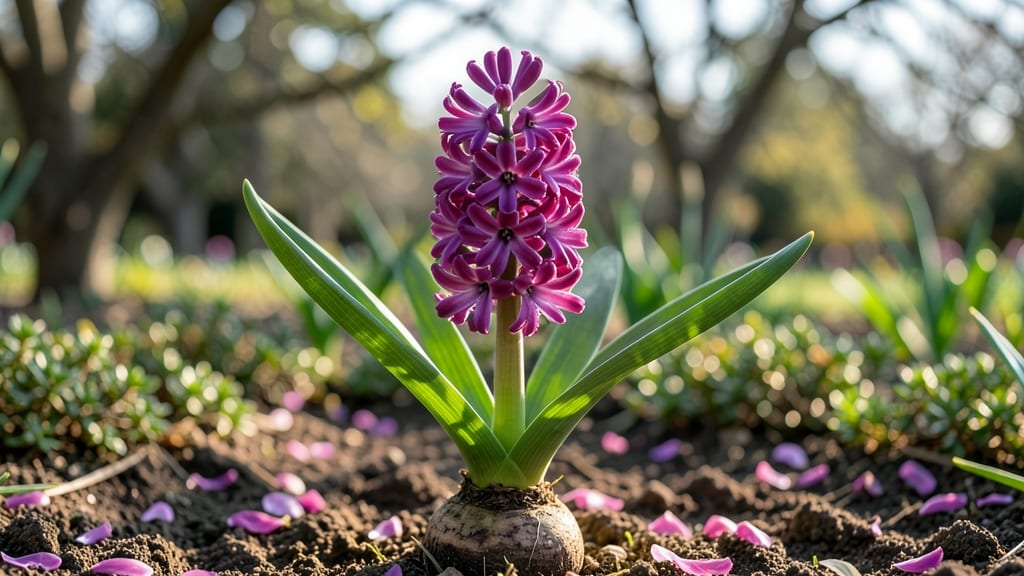
The hyacinth bloom season in spring—typically between April and May—but the exact timing depends on when you planted the bulbs and your local climate.
If you’ve ever wondered why your hyacinth bulbs refuse to bloom on schedule—or how to sync their flowering with your garden’s peak beauty—timing is everything.
These fragrant 🌸 flowers are finicky about climate, variety, and planting depth, yet mastering their bloom season can transform your spring landscape into a fragrant, colorful masterpiece.
In Zone 6, where most gardeners plant hyacinths in fall, bulbs need 6–8 weeks of chilling before they’ll push up those signature spikes. Too little cold?
They’ll sit dormant. Too much? They might bolt early. The secret lies in matching your variety—like the early-blooming 'Woodstock' or the late 'Delft Blue'—to your frost dates.
Below, I’ll break down the exact bloom windows by variety, how to adjust planting for earlier or later flowers, and the three key care steps to keep your hyacinths looking their best once they arrive.
When do hyacinths bloom? Exact timing by variety and hardiness zones
Hyacinths are famous for their intense fragrance and vibrant spring blooms, but their exact bloom time depends on variety and USDA hardiness zone.
Most gardeners plant hyacinth bulbs in fall (6–8 weeks before frost), but the timing of their spring emergence varies wildly—from early March in Zone 9 to late May in Zone 3. Understanding these differences lets you plan your garden for maximum impact and avoid disappointment when bulbs fail to bloom.
Hyacinths need a chilling period (typically 12–16 weeks below 50°F) to trigger flowering. Soil temperatures and daylight exposure after planting also play critical roles. For example, 'Delft Blue' often blooms 2–3 weeks earlier than 'Woodstock' in the same zone because of its earlier chilling sensitivity.
Let’s break down the exact bloom windows for popular varieties across USDA Zones 3–9.
In USDA Zone 3, where winters are harsh, hyacinths like 'Annette' often bloom in late April or May because the ground stays frozen longer. The 12–14 week chilling requirement is fully met by late winter, but soil thaw delays emergence.
In contrast, Zone 9 gardeners in Southern California can see 'Delft Blue' blooming as early as February if planted in fall (October–November) and given consistent moisture.
Soil temperature is just as critical as air temperature. Hyacinth bulbs need 40–50°F soil to break dormancy. If your area experiences warm winters (e.g., Zone 8–9), plant bulbs deeper (8–10 inches) to insulate them from heat and encourage deeper rooting.
Shallow planting (4–6 inches) in warm zones can lead to premature sprouting or even no blooms if the bulb doesn’t get enough chill.
Light exposure after planting also shifts bloom timing. Hyacinths planted in full sun (6+ hours/day) tend to bloom 1–2 weeks earlier than those in partial shade. For example, 'Woodstock' in Zone 6 might bloom in mid-April with full sun but linger until early May in dappled shade.
If you’re forcing hyacinths indoors for holiday blooms, place pots in a cool (40–50°F), dark location for 8–10 weeks before moving to bright light to trigger flowering.
Watch for foliage emergence as your first clue that blooms are coming. Once green shoots appear (usually 4–6 weeks after soil thaw), count 6–8 weeks until buds swell.
If your hyacinths fail to bloom, check for these common issues: overcrowded bulbs, poor drainage, or insufficient chilling. In Zone 7–9, some gardeners plant bulbs in winter (December–January) to ensure they get the required cold snap before spring warmth arrives.
For a prolonged display, mix early, mid
How to extend your hyacinth bloom season: proven gardening hacks
Hyacinths are nature’s fragrant clock—blooming reliably when conditions align. But what if you want Christmas blooms or a summer rebloom? The secret lies in planting depth, light exposure, and strategic timing.
With these proven hacks, you can coax your hyacinths to flower weeks earlier or later than their natural schedule.
First, understand that hyacinths need 6–8 weeks of chilling (40–50°F) to trigger blooms. In warmer climates, this means planting earlier in fall or using container forcing. Meanwhile, cooler zones can extend blooms by planting deeper or choosing late-blooming varieties like 'Pink Pearl.' Let’s break down the exact techniques.
-
1
Force Indoor Blooms
Plant bulbs in containers 6 weeks before your target bloom date (e.g., Christmas). Use potting mix and chill at 40–50°F for 8–10 weeks. Move to bright light (6+ hours) to trigger flowering. -
2
Adjust Planting Depth
Deeper (8–10 inches) = later blooms (cooler soil delays growth). Shallow (4–6 inches) = earlier blooms (warmer soil speeds up sprouting). Test with 3 bulbs at different depths. -
3
Choose Late-Blooming Varieties
Skip early bloomers like 'Jan Bos' (February). Opt for 'Pink Pearl' (May) or 'Woodstock' (April–May) for extended seasons. Mix varieties to stagger blooms over 4–6 weeks. -
4
Use Companion Plants
Plant lavender or rosemary nearby to deter pests and reduce heat stress. Avoid competitive perennials like hostas, which steal nutrients. -
5
Troubleshoot Non-Bloomers
No blooms? Check for overcrowding, poor drainage, or lack of sunlight. Dig up bulbs to inspect for rot or pests. Replant in well-draining soil with full sun.
For holiday blooms, start forcing bulbs in late September for Christmas or early October for Valentine’s Day. Place containers in a cool basement (40–50°F) with indirect light until shoots appear. Then, move them to a bright window or under grow lights to encourage flowering.
If your hyacinths bloom too early and fade before your garden party, try planting in partial shade (e.g., under dwarf trees) to delay sprouting. Pair this with deeper planting (8–10 inches) to push blooms into late spring.
Just remember: shallow soil = early blooms, deep soil = delayed blooms.
Don’t forget to fertilize lightly after blooming with a 5-10-10 bulb fertilizer to encourage next year’s flowers. Mulch with straw or pine needles to protect bulbs from freeze-thaw cycles, which can damage roots.
With these tricks, your hyacinths will bloom on demand—whether it’s Valentine’s Day or a summer rebloom!