
Blooming
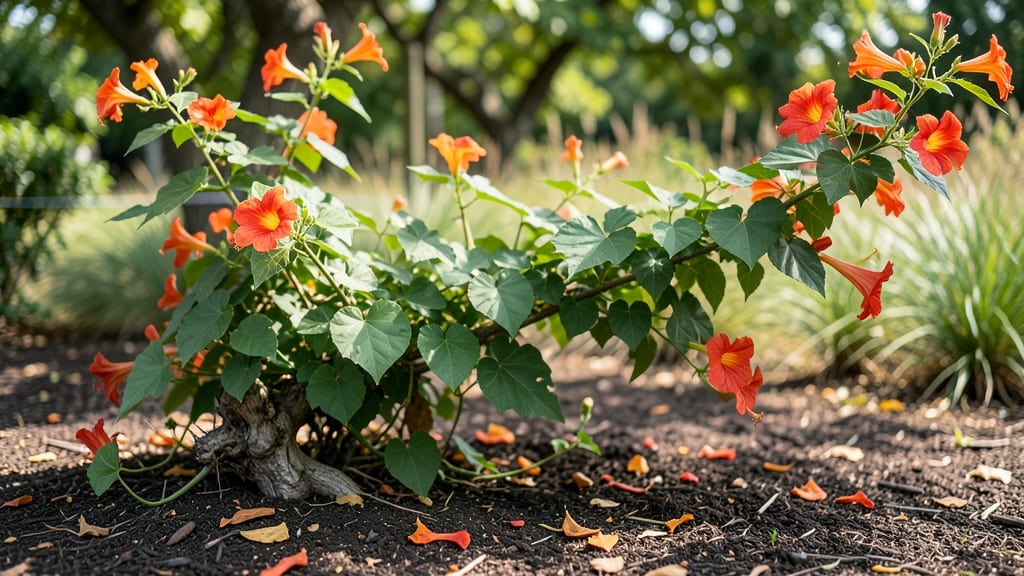
Trumpet vines bloom in late summer through early fall 🌸, but the exact timing depends on your climate zone and growing conditions.
If you’re dreaming of vibrant orange trumpet flowers cascading over your trellis or fence, timing is everything—planting too early or late can leave you waiting years for that showstopping bloom. But how do you know when trumpet vines (Campsis radicans) will burst into color in your climate zone?
In USDA Zone 6a, like many northern gardens, blooms typically kick off in July and last until September, while warmer zones like Florida or Texas see flowers as early as June. Sunlight, soil health, and even last year’s pruning can shift those dates by weeks—sometimes even months.
Here’s how to predict your trumpet vine’s bloom time, adjust care for peak color, and troubleshoot delays before they happen.
Trumpet vine bloom time by USDA climate Zone: exact months for peak flowers
Timing your trumpet vine (Campsis radicans) for peak blooms depends entirely on your USDA climate zone. In cooler zones like 4-5, expect a late spring show, while zones 9-11 may see year-round blooms with proper care.
The key difference? Soil temperature triggers bud formation, and daylight hours determine peak flowering intensity.
Trumpet vines are late bloomers compared to many climbers, often waiting until June or July in northern regions. However, in warmer zones, they can bloom as early as April or even multiple times per year.
Understanding these patterns helps you plan trellises, pruning schedules, and even companion plantings for maximum impact.
🌱
| USDA Zone | Peak Bloom Months | Secondary Blooms | Key Trigger |
|---|---|---|---|
| Zones 4-5 | Late June - August | None (single flush) | Soil temp 60°F+ |
| Zones 6-7 | June - July | Late August (light) | 14+ daylight hours |
| Zones 8-9 | April - May | September - October | Warm winters |
| Zones 10-11 | February - March | Year-round (light) | No frost periods |
In USDA zones 4-5, trumpet vines wait until late June or July to bloom because they need consistent soil temperatures above 60°F. The short growing season means they focus all energy on one prolonged bloom cycle rather than multiple flushes.
If you're in Zone 5, plant near a south-facing wall to capture extra heat and encourage earlier blooms.
Zones 6-7 offer the most dramatic peak bloom windows from June to July, but you might catch a second, lighter flush in late August. This happens because the vine senses declining daylight hours and produces a smaller batch of blooms.
To maximize this, prune lightly in early spring to redirect energy toward flowers rather than foliage.
Southern gardeners in zones 8-9 get two distinct bloom periods: spring (April-May) and fall (September-October). The fall blooms are often more vibrant because the vine isn't competing with new growth.
In Zone 9, I've seen trumpet vines bloom year-round with minimal care, though the flowers are smaller during cooler months.
For zones 10-11, trumpet vines are tropical perennials that bloom February-March and may produce occasional flowers year-round. The lack of frost means they don't experience the same dormancy triggers as northern vines. However, they still need 6+ hours of sunlight daily to maintain consistent blooming.
Regional variations matter too. In Pacific Northwest Zone 8, expect blooms to start 2-3 weeks later than in Southern California Zone 10 due to cooler ocean breezes.
Similarly, Appalachian Zone 6 vines may bloom 3 weeks earlier than those in Midwest Zone 6 because of warmer spring soil.
🌿
To adjust bloom timing in your garden, focus on soil temperature and sunlight exposure. For example, in Zone 5, I use black plastic mulch in early spring to warm the soil faster and trigger earlier blooms.
In Zone 10, I prune lightly in winter to encourage spring flushes rather than scattered blooms.
Remember, trumpet vines are notoriously aggressive and will bloom more prolifically in ideal conditions. If your vine isn't flowering as expected, check for shade issues, poor soil drainage, or over-pruning—all of which can delay or reduce blooms.
How to predict trumpet vine bloom time in your garden (without guessing)
Predicting when your trumpet vine (Campsis radicans) will bloom doesn’t require a crystal ball—just a few key observations and a little planning. Unlike annuals with fixed schedules, trumpet vines adjust their bloom time based on climate cues like soil temperature and daylight hours.
By tracking these signals, you can estimate bloom windows with surprising accuracy, even for first-time growers.
Start by noting your last frost date—this is your vine’s unofficial "go" signal. Trumpet vines typically need 60–90 days of warm soil (above 50°F) before they’ll produce buds.
In cooler zones (like USDA 5–7), blooms often arrive in late June or July, while warmer climates (zones 8–10) may see flowers as early as May or even April.
- 🌱 Track leaf emergence: Trumpet vines sprout heart-shaped leaves in spring. Count 3–4 sets of leaves—this signals active growth and primes the plant for blooming.
- 🌡️ Monitor soil temperature: Use a soil thermometer (6" deep). Blooms typically appear when soil stays above 60°F for 2+ weeks.
- ☀️ Note daylight hours: Trumpet vines bloom when days exceed 14 hours of light. Check your local sunrise/sunset times—this often aligns with peak bloom windows.
- ⏰ Use frost-free calculators: Plug your USDA zone and last frost date into tools like the Old Farmer’s Almanac to estimate a 90-day growth window for blooms.
- ✂️ Avoid over-pruning: Heavy cuts in early spring can delay blooms by 4–6 weeks. Limit pruning to late winter (before buds swell).
One of the biggest mistakes first-time growers make is assuming trumpet vines bloom on a fixed calendar. In reality, young vines (under 2 years old) often produce fewer flowers because they’re focusing on root and vine establishment.
If your vine is 2+ years old but still not blooming, check for low sunlight (they need 6+ hours of direct sun) or poor drainage—waterlogged roots stress the plant and delay flowering.
For a more precise estimate, combine these methods: Start tracking leaf sets in early spring, then cross-reference with your soil thermometer readings. If you’re in Zone 7 or warmer, add 2–3 weeks to your frost-free date to predict bloom time.
For example, if your last frost is April 15, expect blooms around June 15–July 1. In cooler zones (like Zone 5), push that window to July 15–August 1.
Pro tip: If you want to encourage earlier blooms, fertilize with a balanced 10-10-10 mix in early spring (when new leaves appear) and again in late spring. Avoid high-nitrogen fertilizers—they promote leafy growth at the expense of flowers.
Water deeply once a week during dry spells, but let the soil dry slightly between waterings to prevent root rot, which can stunt blooming.
Remember, trumpet vines are perennials, so once established, they’ll bloom year after year with minimal effort. By mastering these prediction methods, you’ll transform guesswork into a reliable schedule—so you can sit back and enjoy those showstopping orange trumpets at exactly the right time. 🌸