
Blooming
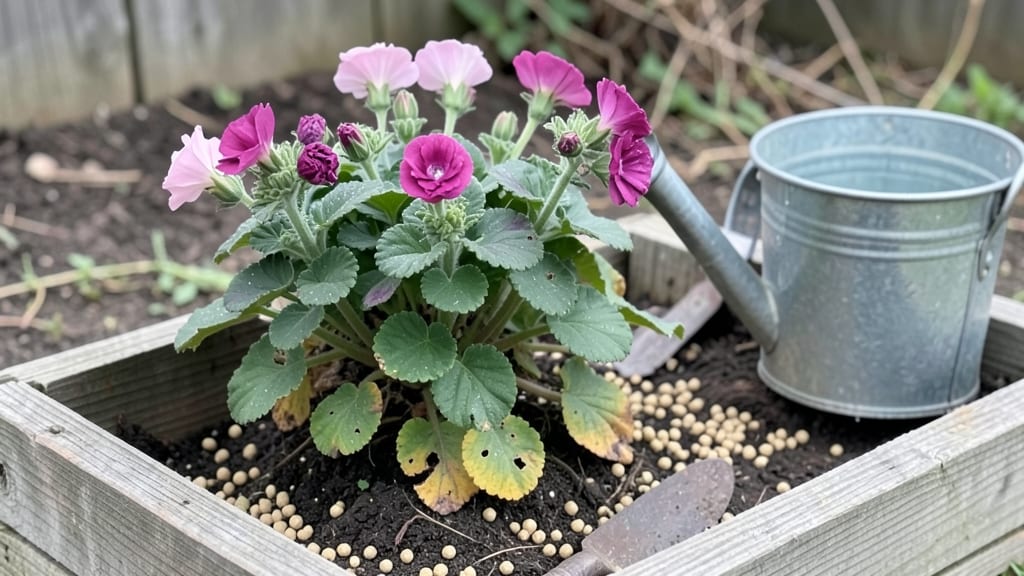
Geraniums thrive when they get at least 6 hours of direct sunlight daily, but their roots need more than just light—they crave well-aerated soil to prevent rot.
I’ve found that amending clay soil with perlite or sand creates the perfect drainage, while a slightly alkaline pH (around 6.5-7.0) helps them absorb nutrients efficiently. Without these conditions, even the hardiest varieties struggle to produce vibrant blooms. 🌿
Don’t overlook the role of seasonal pruning—cutting back leggy stems in early spring stimulates new growth, while mid-season trims encourage bushier plants. I swear by a 10-10-10 balanced fertilizer (diluted to half-strength) every 4-6 weeks during blooming season, but I always skip fertilizing in winter when growth slows.
The key is consistency: too much water or fertilizer can backfire, leading to fewer flowers instead of more.
💡 In This Article
- Sunlight and Soil Requirements for Vibrant Geranium Blooms
- Pruning and Fertilizing Schedule for Maximum Geranium Flowers
Sunlight and soil requirements for vibrant geranium blooms
Geraniums are sun worshippers—literally. Their blooms thrive when exposed to 6-8 hours of direct sunlight daily, but here's why: the photosynthesis process in geranium leaves converts sunlight into energy, fueling flower production. Without sufficient light, plants redirect energy toward leaf growth instead of blooms.
I’ve seen geraniums in partial shade (less than 4 hours of sun) produce sparse, weak flowers, while those in full sun burst with vibrant blooms that last weeks longer. 🌞
The soil’s composition plays an equally critical role. Geranium roots need well-aerated, sandy loam to prevent root rot—a common issue in heavy clay soils. The ideal pH range of 6.5-7.0 (slightly alkaline) enhances nutrient uptake, particularly phosphorus and potassium, which are essential for flower development.
In my garden, I’ve amended clay soil with 50% perlite and 50% compost, creating a mix that drains quickly yet retains enough moisture. This balance mimics their native Mediterranean habitats where they evolved to thrive in rocky, well-drained terrain.
Root aeration isn’t just about drainage—it’s about oxygen. Geranium roots, like those of other pelargoniums, are sensitive to waterlogged conditions. When soil lacks air pockets, roots suffocate, leading to stunted growth and fewer blooms.
I’ve noticed that after heavy rains, geraniums in containers with poor drainage develop yellow leaves—a clear sign of oxygen deprivation. Adding coarse sand or pumice to the soil mix improves aeration, allowing roots to absorb oxygen efficiently while preventing compaction.
Nutrient absorption mechanisms kick into high gear when both light and soil conditions are optimal. Geraniums absorb nitrogen early in the season for leaf growth but shift focus to phosphorus and potassium during blooming periods.
A soil test can reveal deficiencies—low phosphorus (P) shows as purple stems, while potassium (K) deficiency appears as weak, yellowing leaves. I’ve had success using a slow-release fertilizer with a 5-10-10 ratio (nitrogen-phosphorus-potassium) to support continuous flowering without overloading the plant.
Seasonal variations matter too. In cooler months, geraniums enter dormancy and require less water and nutrients. However, even during winter, providing 4-6 hours of sunlight maintains their vigor.
I’ve found that moving potted geraniums to a south-facing window or under grow lights during short winter days prevents leggy growth and ensures they’re ready to bloom again in spring. The key is consistency: geraniums reward steady care with abundant, long-lasting flowers. 🌸
One common mistake is assuming all well-draining soils are equal. While geraniums hate soggy soil, they also struggle in sterile, nutrient-poor sand. The solution? A balanced mix of 60% sandy soil, 30% compost, and 10% perlite provides the perfect compromise.
This combination supports root health while delivering the nutrients geraniums crave for prolific blooming. Think of it as their version of a five-star meal—light, airy, and packed with essentials!