
Orchid Care
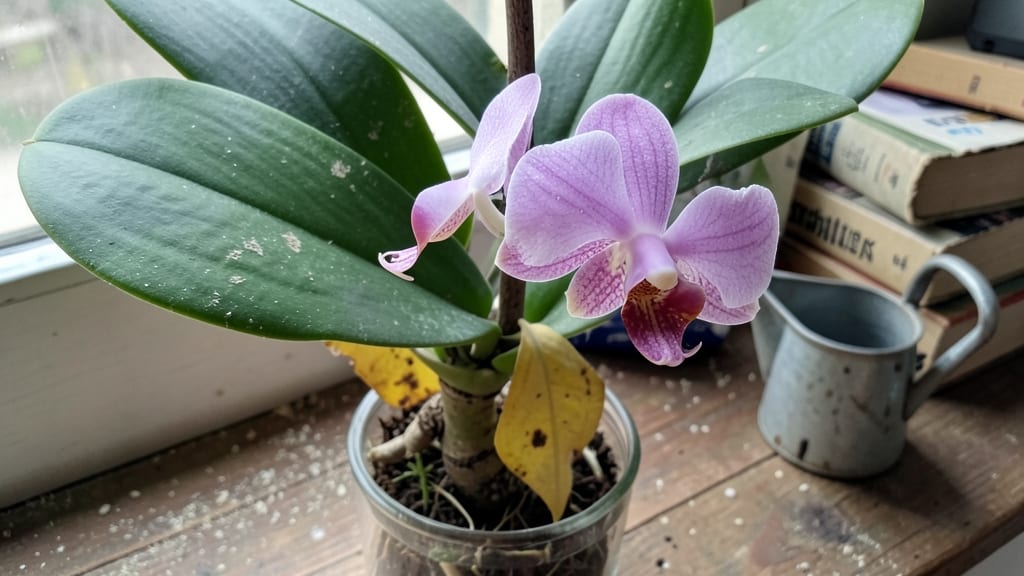
Understanding orchid blooming seasons helps you anticipate their stunning displays, but it’s also about creating the right conditions. 🌸 Many orchids rely on cooler temperatures and shorter daylight hours to signal their bodies to produce flowers, much like how deciduous trees prepare for winter.
For example, Dendrobiums often need a period of rest with reduced watering to break dormancy and trigger blooms, while Phalaenopsis may respond better to a slight temperature drop at night during their growth phase.
What’s fascinating is how some varieties have adapted to bloom outside these typical windows. Oncidiums, often called "dancing lady" orchids, frequently flower in fall, aligning with their natural tropical rainy seasons. Meanwhile, Paphiopedilums—also known as slipper orchids—thrive in winter’s cooler air, making them a popular choice for holiday decor.
Adjusting care routines, like providing bright but indirect light and consistent humidity, can even coax some orchids to bloom slightly off-season.
💡 In This Article
- How Light and Temperature Trigger Orchid Blooming Seasons
- Best Orchid Varieties for Year-Round or Season-Specific Blooms
How light and temperature trigger orchid blooming seasons
Orchids use a sophisticated biological clock tied to photoperiodism—the plant’s response to changing daylight hours. When daylight shortens in late summer and fall, orchids like Dendrobiums detect this shift through specialized proteins called phytochromes in their leaves.
These proteins act like molecular switches, signaling the plant to enter a dormancy-like state. Meanwhile, a 10-15°F drop in nighttime temperatures (from 70°F to 55°F) acts as a secondary trigger, mimicking the cooler conditions of their native tropical highland environments.
This dual cue—shorter days plus temperature dip—tells the orchid it’s time to redirect energy from leaf growth to flower production. 🌡️
The science gets even more fascinating when we look at ethylene gas, a natural plant hormone that orchids release during stress periods. Ethylene accumulates in the plant’s tissues when exposed to temperature fluctuations or reduced watering, acting like a chemical messenger that prompts flower buds to form.
For example, Phalaenopsis orchids often bloom in spring because their ethylene production peaks when nighttime temperatures dip below 60°F while days remain mild.
This hormone also explains why some growers use ethylene-releasing products (like fruit ripening sprays) to encourage blooming in non-seasonal periods—though this should be done cautiously to avoid stressing the plant.
What most people don’t realize is that orchids also use a process called "vernalization"—a cold treatment that prepares the plant for flowering. Some varieties, like Cattleyas, require a 4-6 week period at 50-55°F to break their dormancy cycle.
Without this chill period, the flower spikes may form but remain stunted or fail to open properly. This is why orchid growers in warm climates often use refrigeration units to simulate winter conditions.
The key here is consistency: abrupt temperature swings can shock the plant, while gradual changes (like a 5°F drop over 2 weeks) create the ideal stress signal. 🌱
Light quality matters just as much as quantity. Orchids respond best to bright, indirect light with a high blue spectrum (400-500nm wavelength), which they use to regulate their circadian rhythms.
In nature, this light pattern changes with the seasons—shorter days in winter mean less blue light exposure, which orchids interpret as a signal to flower. Growers can replicate this by moving plants to a south-facing window in winter or using grow lights with a 12-hour photoperiod during fall.
Too much direct sunlight (especially in summer) can actually inhibit blooming by overheating the plant, while insufficient light leads to weak flower spikes. The sweet spot is about 1,000-2,000 foot-candles of light intensity.
Here’s a critical nuance: not all orchids follow this exact script. Epiphytic orchids (like Cattleyas) often bloom in response to summer rains in their native habitats, while terrestrial orchids (like Paphiopedilums) may prefer the cooler, damper conditions of winter.
The key is observing your specific variety’s natural cues—some may need a dry rest period, while others respond better to increased humidity during their blooming window. For instance, Dendrobiums often require a 6-8 week dry period with temperatures below 70°F to trigger their spectacular spring blooms. 🌸
To put this into practice, think of orchid blooming as a three-act play: Act 1 is the environmental stress (temperature drop or daylength change), Act 2 is the hormonal response (ethylene production and phytochrome activation), and Act 3 is the physical result (flower spike emergence).
By understanding this sequence, you can time your care routines perfectly—like reducing fertilizer in late summer to prepare the plant for its dormancy phase or increasing humidity in early spring to support bud development. The goal isn’t to force blooms but to work with nature’s timing. ✨