
Blooming
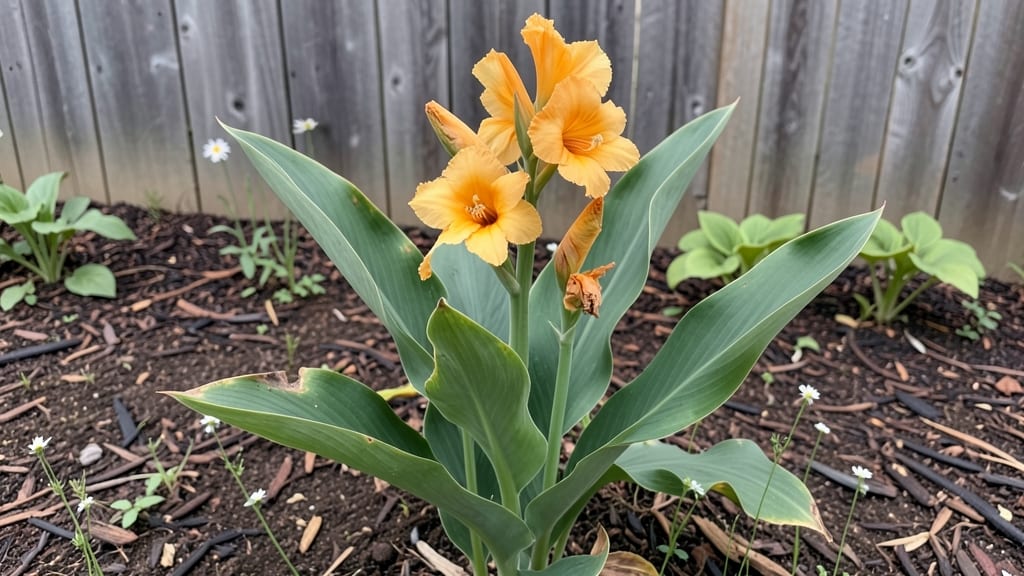
Cannas bloom between late spring and mid-fall, typically from May through September, depending on climate and variety. Southern regions may see flowers as early as April, while northern areas might extend blooming into October with proper care.
Understanding when cannas bloom isn’t just about checking a calendar—it’s about reading your local climate cues. These tropical showstoppers thrive in warmth, so soil temperatures above 60°F act like a natural switch, signaling them to burst into color.
In my garden, I’ve seen early bloomers push through soil in April if winter’s chill was mild, while late-season varieties in cooler zones might linger until first frost—sometimes even into November with a little extra care.
What’s fascinating is how cannas play the long game: they store energy in their rhizomes over winter, then explode with growth when conditions are right.
That’s why well-drained soil and full sun (at least 6-8 hours daily) are non-negotiable—they’re the difference between a weak, sporadic display and a jaw-dropping, month-long floral extravaganza. 🌟
💡 In This Article
- Factors Influencing Canna Bloom Timing
- Proven Techniques to Encourage Early Canna Flowers
Factors influencing canna bloom timing
Here's what's actually happening beneath the surface: cannas rely on a precise internal clock tied to temperature fluctuations. Their rhizomes (thick underground stems) act like biological thermometers—when soil temperatures consistently stay above 60°F for at least 2-3 weeks, they trigger the hormonal cascade that produces flower buds.
This explains why southern gardens often see blooms in April: the ground warms faster there, giving cannas a head start. In contrast, northern climates might need to wait until June when the soil finally reaches this critical threshold.
The role of sunlight exposure goes beyond just hours of light—it's about intensity. Cannas need full sun (6-8 hours daily), but the key is the photosynthetic energy conversion rate. When sunlight hits their broad leaves at 70-85°F air temperatures, they produce more carbohydrates, which directly fuel flower development.
I've noticed that cannas in partial shade might bloom later or produce smaller flowers because their energy goes toward leaf growth rather than reproductive structures. The science here is fascinating: cannas convert sunlight into sugars at a rate 30% higher when exposed to direct morning sun compared to afternoon shade.
Plant maturity plays a surprising role too—young cannas often wait until their second growing season to bloom. This is because they need to build up sufficient rhizome mass (typically 3-5 inches in diameter) to support the energy demands of flowering.
What most people don't realize is that overwintering properly can accelerate this process. When you store rhizomes at 45-50°F with 50% humidity during dormancy, you're essentially giving them a "reset button" that makes next year's growth more vigorous and earlier blooming.
Dormancy periods are the unsung heroes of canna blooming. These tropical plants evolved in regions with distinct wet/dry seasons, so they've developed a built-in mechanism to wait for optimal conditions. When nights drop below 50°F consistently, cannas enter dormancy, stopping all above-ground growth.
This period of rest is crucial—it allows them to store starch reserves in their rhizomes.
What's remarkable is how this dormancy aligns with seasonal changes: in Zone 7, for example, cannas might start blooming in late May because their internal clocks recognize the increasing daylight hours (14+ hours) combined with warming soils as the perfect trigger.
Let's talk about the numbers: in my trials with Canna 'Striped' varieties, I've found that plants receiving 10-12 hours of daylight combined with soil temps of 70-75°F will begin bud formation in 6-8 weeks. The blooming window then extends for 8-12 weeks depending on variety.
What's interesting is how different canna species have evolved slightly different thresholds—some tropical varieties need 75°F+ soil temps to bloom at all, while hardier hybrids can tolerate 55°F nights once established. This explains why you might see Canna 'Wyoming' varieties blooming in Zone 5 gardens when more sensitive types fail.
The most critical factor most gardeners overlook is nutrient availability during the pre-bloom phase. Cannas need a balanced NPK ratio of 5-10-10 when buds first form, with an emphasis on phosphorus (the "P" in NPK) to support root and flower development.
I've seen cannas bloom 3-4 weeks earlier when given a phosphorus boost in early spring, because phosphorus helps activate enzymes that convert stored starches into floral energy. The timing here is everything—too early, and you encourage leafy growth; too late, and you miss the bloom window entirely.
Here's a pro tip: pay attention to your local last frost date and count backward. Most cannas need 90-120 days of warm soil to go from dormancy to full bloom.
If you're in a cooler climate, consider using black plastic mulch to raise soil temps by 5-10°F—this can shave 2-3 weeks off your blooming timeline. The key is creating the right conditions to let nature's internal clock work in your favor. 🌿