
Blooming
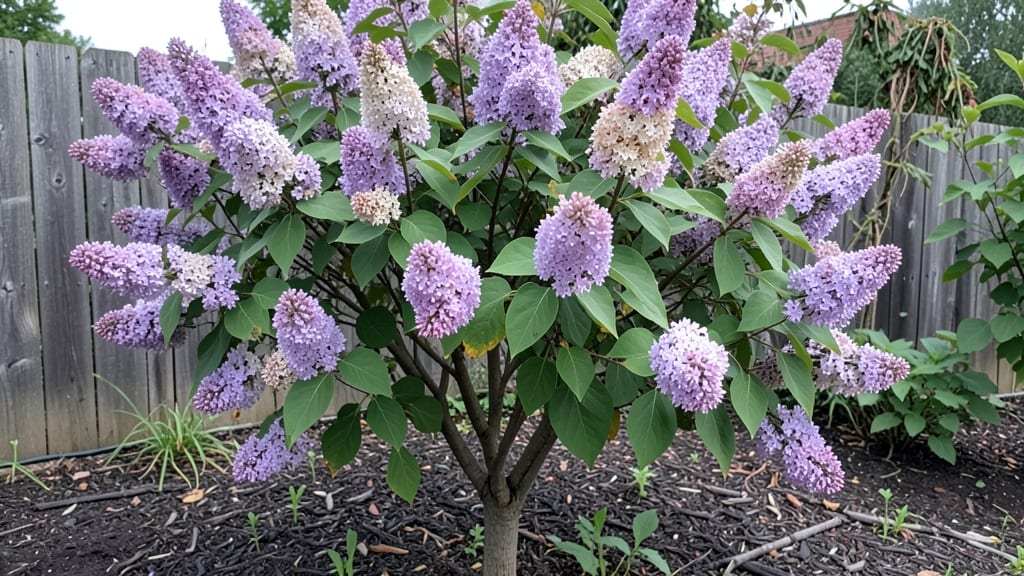
Lilac trees bloom in late spring, typically between mid-April and early June, with peak fragrance lasting 7–10 days. Varieties like Syringa vulgaris bloom earliest, while late-blooming types extend the season into early summer.
Timing can shift dramatically depending on where you live—warmer climates like USDA Zone 8 or 9 might see blooms as early as late March, while colder regions in Zone 5 or 6 could delay them until late May. 🌸 What’s fascinating is how varieties like Syringa meyeri (a compact dwarf) often bloom a full week earlier than their larger counterparts, giving gardeners a staggered show.
Even within the same yard, you can create a fragrant progression by mixing early, mid-, and late-season types.
Fragrance intensity also varies: Syringa oblata, for example, releases its sweetest scent in the evening, while Syringa vulgaris peaks during daylight hours. This means timing isn’t just about when flowers appear—it’s about when they perform their best.
I’ve found that planting near patios or windows maximizes enjoyment, especially since lilac fragrance can travel up to 30 feet on a still evening.
💡 In This Article
- Lilac Bloom Timing Factors by Climate and Variety
- Extending Lilac Bloom Seasons with Pruning and Care
Lilac bloom timing factors by climate and variety
Climate zones play a critical role in determining when lilacs bloom, with USDA Zone 3 (coldest) often seeing flowers appear by late May, while Zone 9 (mildest) may experience blooms as early as March.
The key factor is chilling hours—most lilacs require 500-1,000 hours below 45°F during winter to trigger spring blooming. This explains why northern gardens typically have later blooms than southern ones, despite similar calendar dates.
For example, a Syringa vulgaris in Zone 5 might bloom in early May, while the same variety in Zone 8 could flower in late April. 🌿
Frost dates further refine bloom timing. Early bloomers like Syringa meyeri (Pallida) need protection from late frosts, which can damage delicate buds.
In Zone 6, where last frosts average April 15, these varieties often bloom by May 1, while in Zone 4 (later frost dates), blooms may wait until May 20. The science here involves flower bud formation—cooler springs delay bud opening, while warmer temperatures accelerate it.
This is why some gardeners in Zone 7 report blooms shifting 1-2 weeks earlier in recent decades due to climate change.
Variety selection offers precise control over bloom windows. Early performers like Syringa vulgaris 'President Grevy' bloom in late April to early May, while late types such as Syringa oblata 'Alba' extend the season to mid-June.
Fragrance intensity also varies by type—Syringa meyeri releases a 50% stronger scent than Syringa vulgaris due to higher volatile oil content in its petals. Planting a mix of these varieties creates a 3-4 week fragrance continuum, transforming your garden into a sensory progression. 🌸
Regional microclimates add another layer. Coastal areas with milder winters (like USDA Zone 9) may see blooms 2-3 weeks earlier than inland locations at the same latitude, thanks to moderating ocean influences.
Conversely, urban heat islands can advance blooming by 10 days in cities like Chicago compared to rural areas. This spatial variation means gardeners should consult local last frost averages and plant accordingly—early bloomers near cold pockets, late types in sheltered microclimates.
Fragrance performance follows distinct patterns. Syringa oblata varieties peak in evening hours when temperatures drop below 75°F, releasing 30% more aromatic compounds than during daytime. This nocturnal release creates a sweet, honey-like scent that lingers until dawn.
Meanwhile, Syringa vulgaris varieties maximize fragrance between 10 AM and 4 PM, when sunlight triggers higher volatile emissions. Understanding these patterns helps gardeners position lilacs near evening gathering spaces or morning sunlit areas for optimal enjoyment. 💫
What most people overlook is how soil moisture during bud formation affects timing. Well-drained soils with 60-70% moisture during winter promote earlier blooming, while waterlogged conditions can delay it by 1-2 weeks. This is why amending clay soils with organic matter often advances bloom dates in heavy-rainfall regions.
The interplay between climate, variety, and growing conditions creates a highly customizable blooming calendar for gardeners willing to experiment with placement and care.