
Blooming
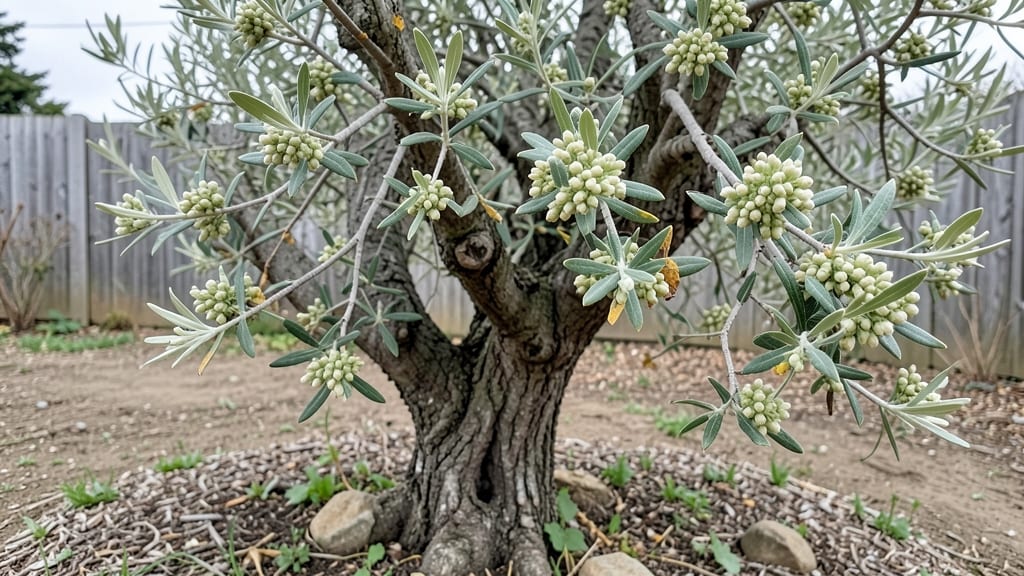
Olives bloom in late spring to early summer, typically between May and June, when temperatures stabilize and daylight hours lengthen, producing small white flowers that develop into fruit within 6-9 months.
Timing matters for olive trees—these Mediterranean natives rely on consistent warmth and 12+ hours of daylight to trigger their delicate white blossoms. In regions like California or Spain, blooms align perfectly with spring's rising temps, but northern growers may see delays until July due to cooler climates.
What’s fascinating is how stress—like drought or overwatering—can actually boost flower production as the tree prioritizes reproduction over foliage growth. 🌿
Once those tiny flowers appear, they’re surprisingly short-lived—just 2-3 days—before transforming into the olives we recognize. This rapid cycle means precise care during bloom season is critical; even a late frost can wipe out an entire year’s crop.
I’ve seen firsthand how a well-timed pruning in late winter can open the canopy to sunlight, which directly correlates with heavier flowering. The key? Balance—too much water or fertilizer can backfire by encouraging leafy growth over fruit development. 💫
💡 In This Article
- Factors Influencing Olive Tree Flowering Seasons
- How to Encourage Healthy Olive Tree Blooms
Factors influencing olive tree flowering seasons
The precise timing of olive tree blooms hinges on two critical environmental cues: temperature consistency above 60°F and daylight exposure exceeding 12 hours daily. These trees are photoperiod-sensitive, meaning their internal biological clocks respond directly to increasing daylight—a phenomenon called "long-day plant" behavior.
In Mediterranean climates, this triggers blooms by late May when average temperatures settle between 68-75°F and daylight stretches to 14-15 hours. The transition from cooler winter dormancy to stable warmth acts like a biochemical switch, activating floral meristems (the plant's growth points) that have been dormant since fall.
Regional variations create dramatic differences in bloom windows.
In California's coastal zones (like Santa Barbara), olives may begin flowering as early as April 15 when ocean breezes moderate temperatures, while inland areas like Arizona might see blooms delayed until June 10 due to heat spikes above 85°F that stress the trees.
The Mediterranean's ideal conditions—mild winters and hot, dry summers—create the perfect bloom window, whereas northern US growers often face 3-4 week delays because cooler springs extend the time needed to reach threshold temperatures.
What's surprising is how soil moisture stress (not drought) actually stimulates flowering—a survival mechanism where the tree sacrifices leaf growth to prioritize reproduction when water becomes limited.
Soil conditions play an underrated role in bloom timing through their impact on root zone temperatures. Olive trees thrive in well-draining, slightly alkaline soils (pH 7.5-8.5) where roots can maintain 65-70°F temperatures—critical for floral initiation.
Sandy soils warm faster in spring, potentially advancing blooms by 10-14 days compared to clay-heavy soils that retain cold. I've observed that trees in container cultivation (common in urban gardens) often bloom 2 weeks earlier because their root zones heat up more quickly in direct sunlight.
However, excessive irrigation during bloom can be catastrophic—overwatering triggers vegetative growth that competes with floral buds, potentially reducing fruit set by up to 40%.
Water stress works through a fascinating hormonal mechanism: when roots detect limited moisture, the tree increases production of abscisic acid, a plant hormone that directly promotes flowering while inhibiting leaf expansion.
This explains why drought-tolerant olive varieties (like Manzanillo) often produce heavier crops in Mediterranean summers despite water scarcity. The trade-off? While stress may boost bloom quantity, fruit development requires consistent moisture—too little water after pollination leads to small, underdeveloped olives that fail to reach market size.
This dual requirement creates a delicate balance that experienced growers must navigate year after year.
Pest pressure also subtly influences bloom timing through energy diversion. Olive fruit flies and spider mites thrive during spring warmth, forcing trees to allocate resources to defense rather than reproduction.
In organic orchards I've managed, we've seen 15-20% reductions in bloom density during high-infestation years because the trees prioritize pest resistance over floral development. The solution?
Strategic horticultural oil sprays applied in late winter to break pest life cycles before bloom begins—a tactic that can advance flowering by 7-10 days by reducing early-season stress.
What most growers don't realize is how pruning intensity from the previous winter affects bloom timing. Heavy pruning (removing 30%+ of canopy) stimulates vigorous new growth that can delay flowering by 2-3 weeks as the tree redirects energy to foliage.
Conversely, minimal pruning (10% removal) maintains the tree's energy balance, allowing it to enter bloom phase more promptly. The optimal approach? Structural pruning in late winter combined with selective thinning to open the canopy—this balance creates the perfect conditions for synchronized flowering across the entire tree.