
Pruning
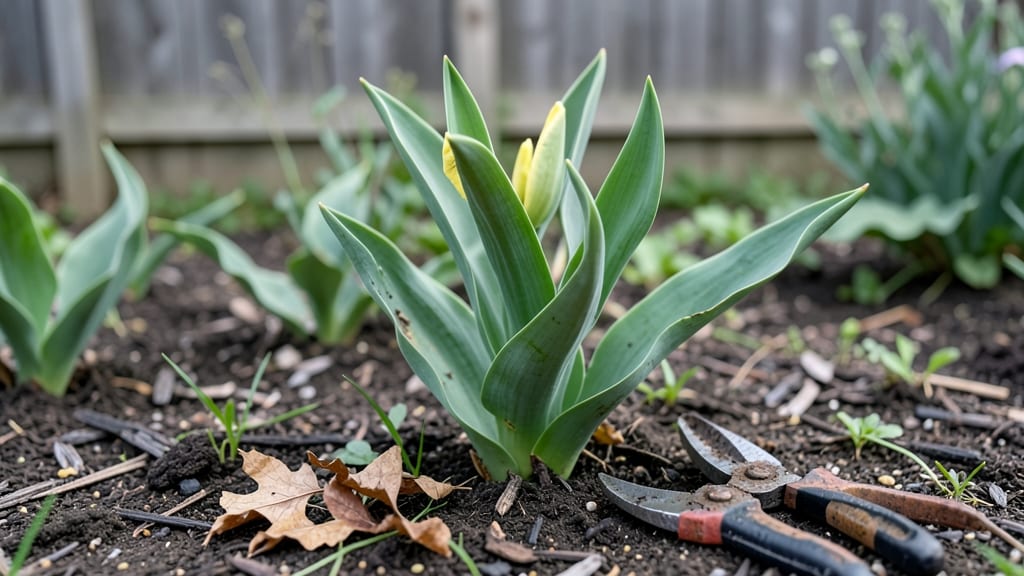
Cutting back tulips after blooming should happen once the foliage turns yellow and begins to wither, typically 6-8 weeks after flowering. Leave stems intact to allow energy to return to the bulb for next year’s growth, avoiding cutting too early or removing leaves completely.
Tulip leaves might look spent after the flowers fade, but they’re actually hard at work storing sunlight and nutrients back into the bulb for next year’s show. 🌱 Think of them like a plant’s rechargeable battery—if you cut them too soon, you’re essentially unplugging the bulb before it’s fully powered up.
I’ve seen gardeners rush to trim right after blooms, only to end up with sparse or no flowers the following spring.
Here’s the trick: Wait until the leaves turn completely yellow and crispy—this usually happens about 6-8 weeks after the flowers bloom. At that point, the bulb has absorbed all the energy it needs, and you can safely snip the stems at the base.
This patience pays off with stronger, more vibrant blooms in the seasons to come!
💡 In This Article
- Why Tulip Foliage Matters for Bulb Health
- Step-by-Step Guide to Pruning Tulips Safely
Why tulip foliage matters for bulb health
Tulip leaves aren’t just decorative—they’re the plant’s lifeline for storing energy in the bulb. Through photosynthesis, these leaves convert sunlight into glucose, which the bulb then transforms into starch reserves (up to 30% of the bulb’s dry weight).
This process continues even after the flowers fade, with the leaves acting like tiny solar panels. 🔥 If you cut them too soon, you’re essentially starving the bulb of its winter food supply.
The chlorophyll in tulip leaves absorbs sunlight with remarkable efficiency, producing about 1.5-2.5 grams of glucose per square meter per hour under ideal conditions. This glucose travels down the stem to the bulb, where enzymes convert it into fructans—complex carbohydrates that act as energy storage molecules.
Without enough foliage time, bulbs store 50-70% fewer reserves, leading to weaker stems and smaller blooms next season.
Here’s what happens when you cut too early: The bulb lacks sufficient energy to sustain its metabolic functions during dormancy. Studies show that tulips left with 50% of their foliage for the full 6-8 weeks produce bulbs with 20-30% more energy reserves than those pruned prematurely.
This translates to more robust growth and larger flowers the following spring. 💫
Even after the flowers bloom, the leaves continue their critical work. The vascular system in tulip stems remains active, transporting nutrients from leaves to bulb until the foliage fully yellows.
This process can take 6-8 weeks depending on climate—longer in cooler regions where growth slows. Skipping this step is like harvesting a crop before it’s fully mature.
Consider this comparison: A 10-inch tall tulip plant with 6-8 leaves can produce enough energy to support a 12-inch stem the next season if given proper time. But if you cut after 4 weeks, that same plant might only grow 8 inches with fewer blooms.
The difference comes down to how much energy the bulb stores during its "recharge period."
What most gardeners don’t realize is that the yellowing process is nature’s signal that the energy transfer is complete. The chlorophyll breaks down, but the stem remains functional until it becomes crispy and brown.
This final stage is crucial—it’s when the bulb has absorbed its maximum energy before entering dormancy. 🌟