
Blooming
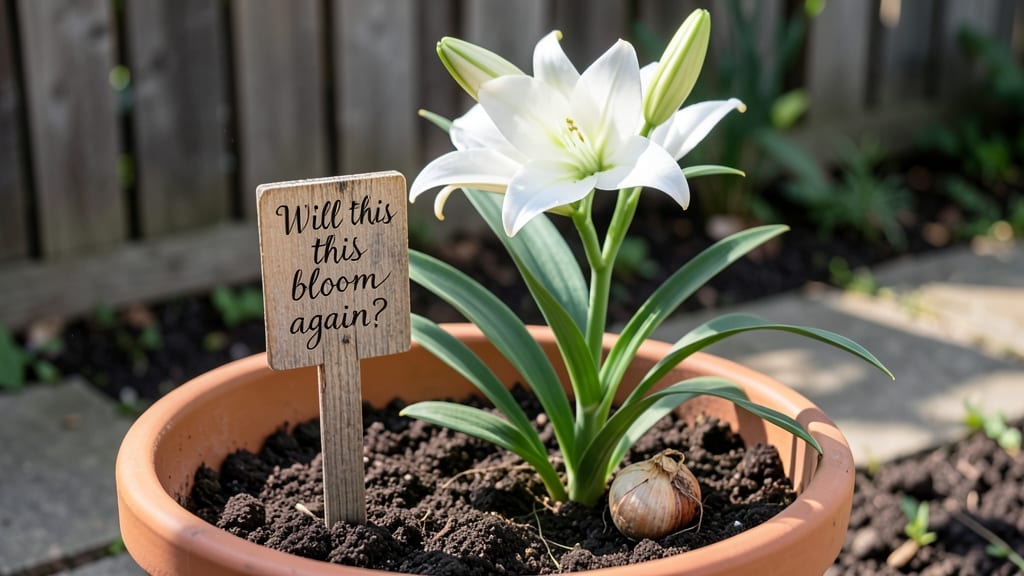
Will Easter lily bloom again? Typically, Easter lilies bloom just once per season because they're summer-dormant perennials that depend on seasonal triggers. However, with targeted care—like removing spent blooms, maintaining consistent moisture, and protecting the bulb through winter—they may produce a second bloom cycle the following year under ideal conditions.
Most Easter lilies follow a strict seasonal pattern where they focus their energy on blooming once in spring, then enter dormancy. 🌱 The challenge is convincing them to redirect that energy for a second round.
I've seen reblooming succeed most often when gardeners mimic natural conditions—like providing balanced fertilizer after the first bloom fades and ensuring the bulb stays cool but not frozen during winter.
The key is patience: it can take a full year of consistent care before you see those familiar trumpet-shaped flowers reappear.
What's interesting is how these lilies "decide" whether to rebloom. They're sensitive to daylight length and temperature shifts that signal spring's return. When you provide the right conditions—like well-draining soil rich in organic matter—you're essentially giving the plant permission to try again.
I recommend testing your soil pH around 6.0-6.5 and using a slow-release bulb fertilizer in early spring to give it the nutrients it needs for a second attempt.
💡 In This Article
- Why Most Easter Lilies Skip Reblooming
- Step-by-Step Guide to Encouraging Easter Lily Reblooms
Why most Easter lilies skip reblooming
The primary reason Easter lilies (Lilium longiflorum) typically bloom just once per season lies in their natural growth cycle.
These summer-dormant perennials allocate nearly all their energy to producing those iconic trumpet-shaped flowers during spring, then enter a prolonged rest period. 🌱 The plant's biological clock prioritizes reproduction over multiple blooming cycles, as each flower requires significant resources—up to 20% of the bulb's stored energy reserves—to develop properly.
Light exposure plays a crucial role in this decision-making process. Easter lilies are long-day plants, meaning they respond to increasing daylight hours (typically 14+ hours of light) as a signal to bloom.
However, once they've expended their energy on the first bloom cycle, the remaining foliage must photosynthesize enough to sustain the bulb through dormancy. If you remove leaves too early after blooming, the plant won't have enough energy to attempt a second round.
The leaves should remain green and functional for at least 6-8 weeks after flowering.
Temperature fluctuations also influence reblooming potential. These lilies thrive in USDA zones 3-9 but require distinct seasonal temperature shifts to trigger blooming. The ideal blooming temperature range is 60-70°F during the day, while cooler nights (50-55°F) help set flower buds.
If summer temperatures exceed 85°F for extended periods, the plant may enter premature dormancy, halting any chance of reblooming until the following spring.
Soil conditions create another major hurdle. Easter lilies prefer well-draining soil with a pH between 6.0-6.5, rich in organic matter. Poor soil quality forces the plant to divert energy toward root development rather than flower production.
I've noticed that containers often produce reblooms more reliably than garden beds because they allow better control over moisture and nutrient levels. The key is maintaining consistent moisture without waterlogging—Easter lilies hate soggy roots, which can lead to bulb rot and wasted energy.
Nutrient availability is the final piece of the puzzle. These lilies are heavy feeders that require balanced nutrition to attempt reblooming. A deficiency in phosphorus (the middle number in NPK ratios) is particularly problematic, as phosphorus is crucial for flower development.
Without adequate phosphorus, the plant may produce leaves but skip flowering entirely. This is why many gardeners swear by applying a 10-10-10 fertilizer in early spring and again after the first bloom cycle fades.
What most people don't realize is that Easter lilies actually produce flower buds in the fall, but these buds require consistent energy input to mature. If the plant enters winter with depleted reserves, those buds won't develop into blooms.
This biological timing explains why reblooming attempts often fail—the plant simply doesn't have the energy to complete the cycle twice in one season. 💫