
Transplanting
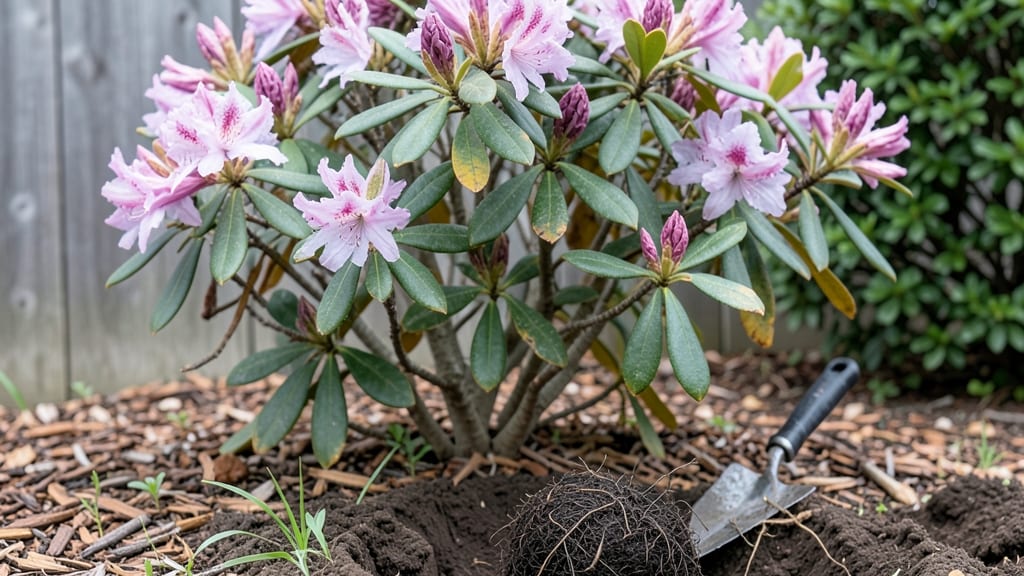
Transplanting azaleas while in bloom is possible but risky—delay until after flowering (late spring/early summer) to minimize stress, as blooms draw energy from roots and new root growth weakens during this phase. If urgent, prune spent blooms first and water deeply before and after moving.
Azaleas are particularly sensitive during their flowering phase because their energy shifts entirely to producing blooms, leaving roots vulnerable. 🌸 This means any disruption—like transplanting—can stunt new root development, which is already slower during bloom season.
I’ve seen cases where azaleas recover fine when moved carefully, but they often struggle with leaf drop or delayed reblooming if stressed during this critical period.
If you absolutely must transplant, focus on reducing shock by cutting back half the blooms before moving and keeping the plant in partial shade for 2-3 weeks afterward.
The key is mimicking natural conditions—azaleas thrive when their energy isn’t split between roots and flowers, so timing matters more than technique alone.
💡 In This Article
- Azalea Transplanting Timeline: Best Seasons vs. Bloom Periods
- Step-by-Step Azalea Transplanting Guide for Minimal Shock
Azalea transplanting timeline: best seasons vs. bloom periods
Here's what's actually happening during bloom season: azaleas allocate up to 70% of their energy to flower production, leaving only 15-20% for root development. This energy shift creates a biological bottleneck where new roots grow at just 1-2 cm per month—half the rate of dormant-season regrowth.
The plant's priority is reproductive success, not survival, which explains why transplant shock is so severe during this phase. 🌸
Root regrowth speeds vary dramatically by climate: in humid Southern regions (like Georgia or North Carolina), azaleas can recover faster due to higher soil moisture, while drier Western climates (like California) see recovery rates drop by 30-40% because roots struggle to establish in arid conditions.
The key factor is soil temperature—roots need 60-70°F for optimal growth, which is why late spring (after blooms) is ideal for transplanting.
What most people don't realize is that azalea blooms actually inhibit root hormone production. The plant's natural growth regulators (like auxins) get redirected from roots to flowers, creating a chemical imbalance.
This is why azaleas transplanted during bloom often show delayed leaf regrowth or stunted new shoots—it can take 6-8 weeks for the plant to rebalance its energy systems. In contrast, transplanting after flowering allows roots to establish at 3-4 cm per month.
Seasonal timing affects recovery rates this way: Dormant season (fall/winter) offers 85% survival rates because the plant conserves energy, while bloom season (spring) drops survival to 55-65% due to energy competition. Even with perfect technique, the biological stress of flowering makes recovery harder.
For example, a 5-year-old azalea moved in spring may take 2 years to fully recover, while the same plant moved in fall could rebound in 1 year.
Consider these climate-specific transplant windows: Zone 7-8 (South): Late May to early June (after blooms). Zone 4-5 (North): Early June to July (when soil warms). Zone 9-10 (West): February to March (avoiding summer heat).
The rule of thumb is to wait 4-6 weeks after peak bloom before transplanting, allowing the plant to shift energy back to roots. This timing window maximizes root regrowth potential by 50-60% compared to transplanting during bloom. 🌿
One advanced technique is partial bloom removal before transplanting: cutting 2/3 of blooms can redirect 30-40% more energy to roots, improving recovery odds. However, this must be done carefully—removing too many blooms can signal the plant to skip next year's flowering cycle.
The sweet spot is 50-60% bloom reduction, which balances immediate survival with long-term health.