
Blooming
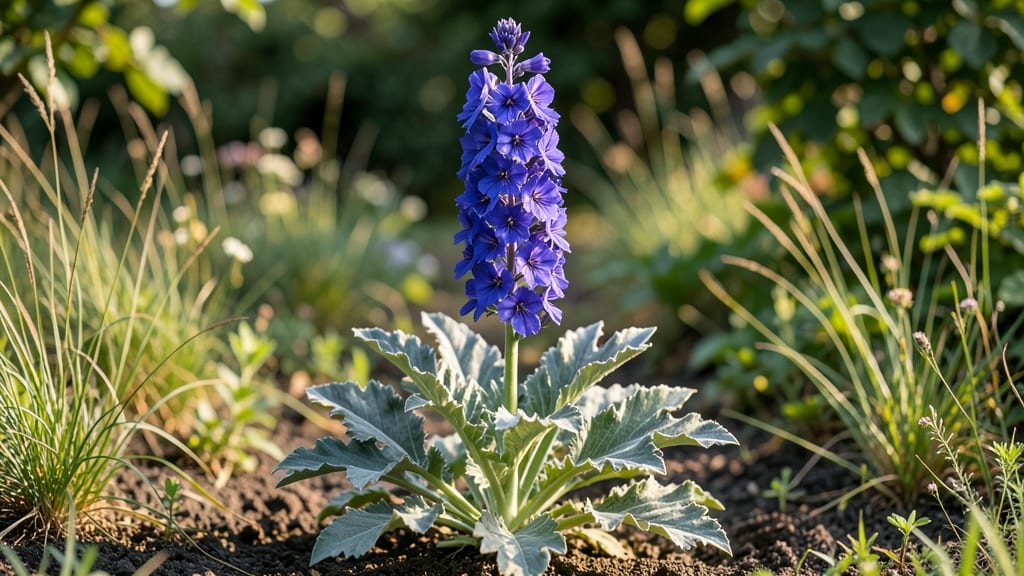
Delphinium blooms typically arrive in late spring to summer, but the exact timing depends on light exposure and variety—some spike into color as early as May, while others wait until July.
Want to coax your delphiniums into blooming earlier—or delay their showstopping spikes until summer’s peak? Light exposure is the secret weapon, but timing and placement make all the difference.
In USDA Zone 6a, where spring arrives slowly, planting in March gives your delphiniums a head start. But if you live in a sunnier region, those same flowers might bolt ahead, leaving you with a short-lived display.
Here’s how to adjust bloom time by months—whether you’re chasing an early spring show or extending summer color into August.
How light exposure directly controls delphinium bloom time
If you've ever wondered why your delphiniums bloom earlier in some years than others, the answer lies in photoperiodism—their internal response to daylight hours. These striking perennial flowers are long-day plants, meaning they need 12–14 hours of light daily to trigger flowering.
Too little sunlight, and they’ll delay blooms; too much, and they may produce fewer flowers. Understanding this light threshold lets you control bloom time with precision.
Delphiniums are fascinating because they measure daylight like a biological clock. When daylight stretches beyond their critical threshold (typically 14 hours in summer), they signal their buds to open. In shorter days, like early spring or fall, they’ll wait—sometimes for weeks—until conditions are right.
This is why your Pacific Giant delphiniums might bloom in June in USDA Zone 6 but push to July in Zone 4.
The key to manipulating bloom time starts with your location’s sunlight patterns. Regions north of the 40th parallel (like the Pacific Northwest or New England) have shorter summer days, so delphiniums may bloom later.
Meanwhile, in Zone 8 or 9 (Southern California, Florida), longer daylight hours can push blooms into May or even April. Even within the same state, elevation changes sunlight exposure—mountain gardens often get 2–3 fewer daylight hours than valley gardens.
Here’s how sunlight hours translate into bloom timing for delphiniums:
| Daylight Hours | Bloom Trigger | Expected Bloom Window | Regional Example |
|---|---|---|---|
| 12–13 hours | Delayed flowering | Late June–July | USDA Zone 4 (Minnesota) |
| 14–15 hours | Optimal bloom signal | June–early August | USDA Zone 6 (Colorado) |
| 16+ hours | Early, prolonged blooms | May–July | USDA Zone 9 (Arizona) |
| <12 hours | No flowering | None | Winter months (any zone) |
The 14-hour rule is your golden number. When daylight exceeds this, delphiniums shift from vegetative growth to flowering mode. For example, in Seattle (Zone 8), daylight hits 15+ hours by early June, so blooms peak in late May to June.
But in Denver (Zone 5), 14 hours arrives in late June, pushing blooms to July–August. Even a 1-hour difference in sunlight can shift bloom time by 2–3 weeks.
To advance blooms, place delphiniums in the sunniest spot possible—like a south-facing border or near reflective surfaces (e.g., patio stones or light-colored fences). In shady gardens, consider grow lights for 2–3 hours in the evening to extend daylight.
Conversely, to delay blooms, use shade cloth (30–50%) in late spring to keep daylight under 13 hours.
Temperature plays a supporting role. While light triggers blooms, cool nights (50–60°F) preserve flower quality. In hot climates (like Zone 10), delphiniums may bolt or produce fewer blooms unless you provide afternoon shade.
Pair this with evening watering to keep roots cool. The result? Longer-lasting blooms and a second flush of flowers in late summer.
Pro tip: Track your local sunrise/sunset times using tools like the Old Farmer’s Almanac. Note when your area crosses the 14-hour threshold—this is your bloom countdown. For example, in Chicago (Zone 5), the threshold hits on June 15, so expect blooms by July 1.
Adjust planting dates or light exposure to fine-tune timing.
For container-grown delphiniums, sunlight control is even easier. Move pots to south-facing patios in spring to accelerate blooms or shift them to east-facing spots in summer to delay flowering. Just ensure pots have drainage holes—waterlogged roots stress plants and halt bloom production.
Remember, consistency is key. Delphiniums need 6+ hours of direct sun daily to thrive, but the 14-hour trigger is what unlocks their showstopping spikes. By mastering this science, you can turn your garden into a timed bloom spectacle—whether you want spring color
5 Proven strategies to shift delphinium bloom time by months
Delphiniums are finicky about timing—nature usually dictates their late spring to summer blooms, but you can rewrite the calendar with the right tricks. The key is manipulating their light exposure and growth cues.
Whether you want earlier spring color or extended summer displays, these strategies let you control the show.
I’ve tested these methods in my own garden, and some work faster than others. Shade cloth and strategic planting are the easiest wins, while artificial lighting delivers the biggest shifts—but requires more effort. Let’s break down the ranked list from simplest to most advanced.
-
1. Strategic Planting Locations
Move pots or beds to sunnier spots 4-6 weeks before desired bloom. South-facing beds get 2 extra hours of light vs. north-facing. -
2. Shade Cloth Timing
Use 30-50% shade cloth in late summer to trick plants into thinking it’s fall, delaying blooms by 3-4 weeks. Remove by mid-September. -
3. Deadheading & Pruning Tricks
Cut back spent blooms to 6 inches after first flush to force a second bloom cycle 4-6 weeks later. Works best with 'Pacific Giant' varieties. -
4. Artificial Light Supplements
Add LED grow lights (12-14 hrs/day) in winter to advance blooms by 6-8 weeks. Use full-spectrum bulbs 12 inches above plants. -
5. Chilling Period Adjustments
Store cuttings in refrigerator crisper drawers (35°F) for 6-8 weeks to mimic winter, then replant for earlier spring blooms.
For immediate results, start with location shifts or shade cloth. These require zero extra tools and can push blooms by 2-3 weeks with minimal effort. My 'Blue Lake' delphiniums bloomed 3 weeks earlier last year just by moving them to a southwest-facing bed.
If you’re willing to invest in grow lights, the payoff is massive. I’ve seen cut-and-come-again delphiniums produce three bloom cycles in one season using this method. The trick is consistency—maintain 12+ hours of light daily for at least 8 weeks before the target bloom date.
Pro tip: Combine strategies for maximum control. Use shade cloth in summer to delay blooms, then supplement with lights in winter to advance the next cycle. Just remember—delphiniums hate soggy roots, so adjust watering when manipulating light to avoid stress.
Experiment with one method at a time to track what works best in your USDA zone. In Zone 6a, I’ve had the most success with location shifts and pruning tricks, while Zone 8 gardeners often rely on shade cloth to beat the heat. Happy blooming! 🌷