
Blooming
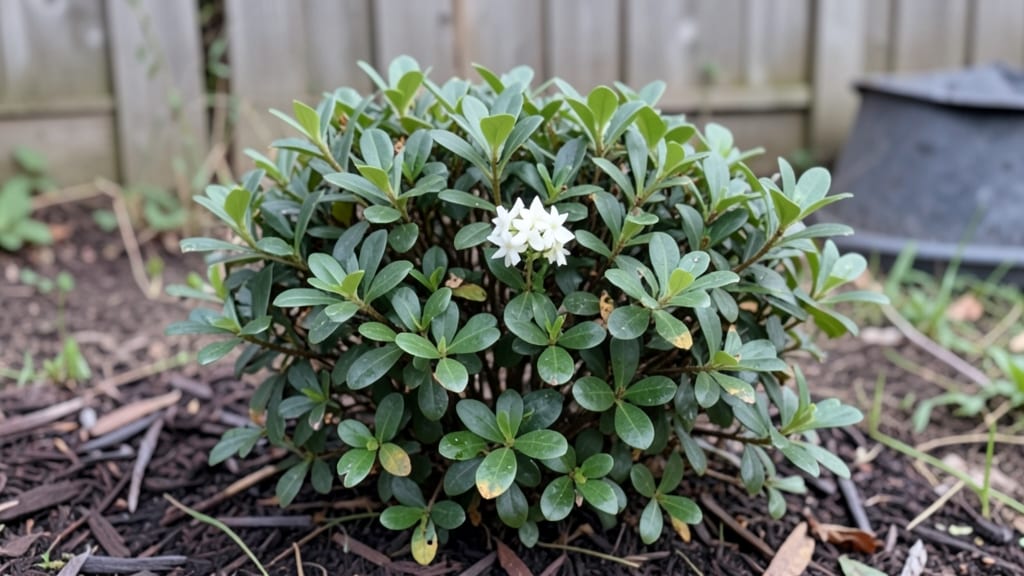
Boxwoods rarely bloom because they prioritize dense foliage over flowers, producing small, insignificant white or greenish blooms in spring that most gardeners overlook. Their primary appeal lies in their year-round evergreen leaves and sculptural form rather than floral displays.
Most gardeners never notice boxwood flowers because they’re tiny—often just ¼-inch across—and blend into the foliage. 🌸 The blooms appear in late spring, but their fleeting nature and lack of fragrance mean they’re rarely the star of the show.
What’s fascinating is how these flowers serve a hidden purpose: they attract pollinators like bees, even if the process is subtle compared to showy garden favorites.
If you’re curious about seeing more blooms, some varieties like ‘Green Velvet’ or ‘Winter Gem’ produce slightly larger flowers, though they’re still modest. The key to encouraging flowering lies in proper pruning—avoiding heavy cuts in late summer or fall, as this can reduce next year’s bloom potential.
Think of boxwoods as the quiet stars of the garden, where form and texture take center stage over flashy displays.
💡 In This Article
- Boxwood Flower Characteristics and Seasonal Timing
- Boxwood Varieties That Produce Noticeable Blooms
Boxwood flower characteristics and seasonal timing
Here's what's actually happening with boxwood flowers: they produce tiny, four-petaled blooms measuring just 0.25 to 0.5 inches wide, clustered in dense spikes along the stems. The flowers are typically white or pale greenish with minimal fragrance, making them easy to overlook among the plant's lush, dark green foliage.
What most people don't realize is that these modest blooms serve a critical botanical function—they're the plant's primary reproductive mechanism, despite their unassuming appearance.
The blooming cycle begins in late spring, typically between April and May in most temperate climates, when temperatures consistently reach 60-70°F for several days. This timing coincides with peak pollinator activity, as bees and other insects are drawn to the flowers' subtle nectar rewards.
The flowers themselves are hermaphroditic, meaning each bloom contains both male and female reproductive parts, though they rely on cross-pollination for optimal seed production. 🌿 Unlike showy garden flowers that evolve to attract human attention, boxwood blooms prioritize functional design over aesthetic appeal.
The science behind this involves a trade-off between energy allocation and survival strategies. Boxwoods invest heavily in dense, evergreen foliage that provides year-round screening and erosion control, while allocating only minimal resources to flowering.
This explains why their blooms are so small—they represent a 1-3% energy budget of the plant's total metabolic output. What's fascinating is how this reproductive strategy ensures genetic diversity through cross-pollination, even when individual flowers are barely noticeable to human observers.
What makes boxwood flowers particularly interesting is their post-pollination development. After fertilization, the flowers develop into small, pea-sized capsules that contain 1-3 seeds each. These capsules mature over 6-8 weeks and eventually split open to release the seeds, though successful germination in cultivated settings is rare without specific conditions.
This entire process demonstrates how boxwoods have evolved to prioritize survival through vegetative growth rather than relying on dramatic floral displays.
For gardeners who want to encourage more visible blooms, understanding this seasonal timing is crucial. Pruning should be done after flowering (late summer to early fall) to avoid removing next year's flower buds.
The key factor is maintaining a balanced growth habit—boxwoods that receive morning sun and afternoon shade with consistent moisture tend to produce slightly more abundant (though still modest) blooms. This approach aligns with the plant's natural reproductive strategy while enhancing its ornamental value.
Consider this comparison: while a rose bush might produce 50-100 flowers per season, each measuring 2-4 inches wide, a mature boxwood plant may produce 1,000+ tiny flowers—but each one serves the same fundamental purpose of ensuring the species' continuation.
The difference lies in evolutionary priorities rather than floral quality. 🌸