
Blooming
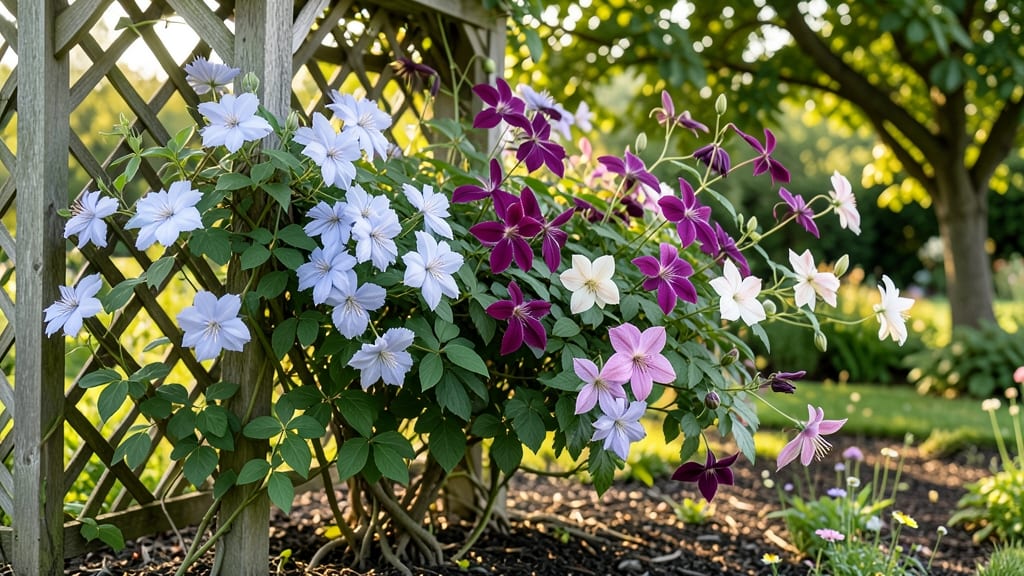
Whether clematis bloom all summer depends entirely on the variety you grow—some like 'Jackmanii' peak early and fade by mid-summer, while others such as 'Nelly Moser' or 'Perle d'Azur' keep flowering until frost. The secret to summer-long blooms lies in variety selection, precise pruning, and consistent care.
Clematis plants are famous for their dramatic blooms, but their flowering seasons vary wildly depending on the type.
Early bloomers like 'Jackmanii' (Group 3) typically produce their best flowers in spring and early summer, then taper off by July. 🌸 Meanwhile, late-season varieties such as 'Nelly Moser' (Group 2) wait until late summer to burst into color, often continuing until frost.
The key to extending their season is understanding each group's growth habits and adjusting your care routine accordingly.
For example, Group 1 clematis (early bloomers) should be pruned lightly after their first flush of flowers, while Group 3 varieties (late bloomers) benefit from aggressive summer pruning to encourage new growth. Deadheading spent blooms consistently and maintaining even moisture—especially during dry spells—can push many varieties to produce secondary blooms.
I've found that adding a balanced fertilizer in early summer gives my 'Perle d'Azur' that extra boost it needs to keep flowering until fall.
💡 In This Article
- Clematis Bloom Cycles by Variety Group
- Extending Clematis Blooms: Pruning and Care Tips
Clematis bloom cycles by variety Group
Clematis plants are divided into three pruning groups, each with distinct bloom cycles tied to seasonal cues like temperature shifts and daylight hours. Group 1 varieties, such as 'Early Sensation' or 'Comtesse de Bouchard', bloom on previous year's growth in late spring to early summer.
Their flowers appear before new shoots emerge, which is why they're called early bloomers. These plants typically finish flowering by mid-summer, around July 4th, when daylight hours begin to shorten noticeably.
The magic happens with Group 2 and Group 3 clematis. Group 2 varieties like 'Nelly Moser' (a famous late bloomer) and 'Perle d'Azur' produce flowers on current year's growth, often waiting until mid-to-late summer (around August) to burst into color.
Group 3 clematis, including 'Jackmanii', bloom repeatedly throughout the season on new growth, but their first flush appears in early summer.
What makes Group 2 and 3 varieties special is their ability to respond to temperature fluctuations—when nights cool slightly in late summer, they often trigger new flower buds that continue blooming until frost.
Identifying your clematis' blooming window starts with observing when flowers appear. Early bloomers (Group 1) will have buds forming on last year's stems in late winter, while late bloomers (Group 2 and 3) show new growth from the base in spring.
The key is to note when your plant first flowers—this tells you which pruning group it belongs to and when to expect its main bloom period.
For example, if your clematis flowers in June, it's likely a Group 1 variety, while flowers appearing in August suggest Group 2 or 3.
Daylight hours play a crucial role in extending blooms. Many clematis varieties respond to the gradual decrease in daylight after the summer solstice (around June 21st) by producing new flower buds.
This is why late-season varieties often bloom more prolifically in regions with cooler summers—the temperature drop triggers hormonal changes that stimulate flowering. In warmer climates, providing afternoon shade can mimic these conditions and encourage continued blooming.
Understanding these bloom cycles helps you time your care routine perfectly. For instance, Group 1 varieties benefit from minimal pruning after their initial bloom, while Group 2 and 3 plants thrive with regular deadheading to remove spent flowers and encourage new growth.
The difference in bloom timing also explains why some clematis appear to "disappear" mid-summer—they're simply waiting for their turn to shine!
Here's a quick reference for identifying your clematis' bloom window:
- Early summer (May-June): Likely a Group 1 variety—expect blooms to taper by July
- Mid-to-late summer (July-August): Probably Group 2 or 3—these are your late-season bloomers
- Repeated blooms all season: Almost certainly Group 3, which can flower from early summer until frost
The secret to summer-long blooms lies in matching your care to your specific variety's natural rhythm—this is how you unlock the full potential of your clematis garden! 🌿