
Blooming
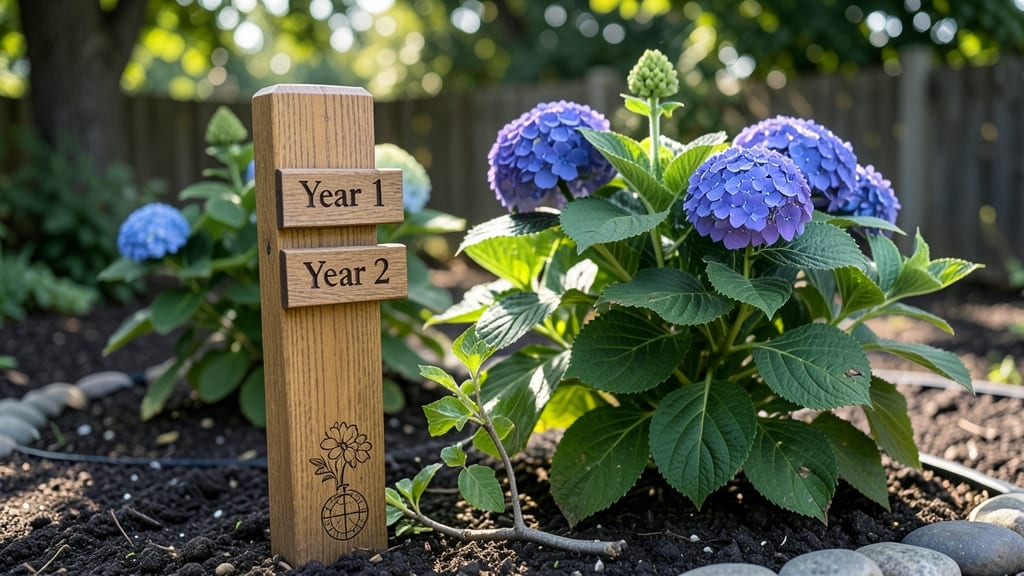
Hydrangeas bloom every year, but whether they produce flowers annually depends entirely on their variety—evergreen types like oakleaf hydrangeas set buds on last year's wood, while deciduous varieties such as bigleaf hydrangeas form blooms on new spring growth. Getting the pruning timing, sunlight exposure, and soil nutrients right makes all the difference for consistent seasonal displays.
Most gardeners assume hydrangeas will bloom reliably year after year, but the truth is more nuanced. 🌸 The key difference lies in when each variety produces flower buds: old-wood bloomers (like oakleaf) need careful pruning to avoid cutting off next year's blooms, while new-wood varieties (like bigleaf) can be pruned more aggressively in late winter.
I've seen many gardeners accidentally prune their oakleaf hydrangeas too late in spring, only to be left with no flowers that summer.
Beyond pruning, soil health plays a surprisingly big role. Hydrangeas need well-draining soil rich in organic matter and adequate phosphorus to support flower production. A quick soil test can reveal if your plants are missing key nutrients that might be stunting their blooms.
For example, bigleaf hydrangeas often struggle in alkaline soil because they prefer slightly acidic conditions—adding sulfur can make a noticeable difference in bloom quantity.
💡 In This Article
- Hydrangea Bloom Cycles: Old Wood vs New Growth Varieties
- Common Hydrangea Care Mistakes That Prevent Annual Blooms
Hydrangea bloom cycles: old wood vs new growth varieties
The fundamental difference between hydrangea varieties comes down to their bloom timing and where they set flower buds. Old-wood bloomers like oakleaf hydrangeas (Hydrangea quercifolia) and panicle hydrangeas (Hydrangea paniculata) form buds in late summer and early fall on stems from the previous growing season.
These buds then bloom the following spring, which means any pruning after the buds form (typically after October 1st) risks cutting off next year's flowers. The buds themselves are tiny, about 1/8-inch in size, and look like little green beads along the stems.
New-wood bloomers, such as bigleaf hydrangeas (Hydrangea macrophylla), produce flower buds on current season's growth during spring and early summer. This makes them more forgiving with pruning since you can trim back stems in late winter or early spring without affecting flowering.
The trade-off is that new-wood varieties often require more consistent care to produce abundant blooms, as their buds are more sensitive to temperature fluctuations.
For example, a late frost can damage emerging buds on bigleaf varieties, while oakleaf hydrangeas are more resilient due to their deeper root systems and evergreen foliage.
Temperature plays a crucial role in bloom development. Old-wood varieties need a period of dormancy—typically 4-6 weeks below 40°F—to set buds properly. Without this cold period, oakleaf hydrangeas may produce fewer flowers or none at all.
New-wood varieties, on the other hand, can bloom more reliably in warmer climates because their buds form later in the season. This is why bigleaf hydrangeas often thrive in USDA zones 5-9, while oakleaf varieties prefer zones 4-8 where they get adequate winter chill.
Here's what happens under the surface: Flower buds on old-wood varieties develop from axillary meristems (growth points) that form in late summer. These meristems remain dormant through winter and swell in spring when temperatures rise. In contrast, new-wood varieties rely on apical meristems (tip growth) that form in spring.
This biological difference explains why oakleaf hydrangeas can sometimes bloom twice in a season—once on old wood in spring and again on new growth later in summer—while bigleaf varieties focus their energy on a single flush of blooms.
Visual cues can help you identify which type you're dealing with. Old-wood varieties like oakleaf have smooth, reddish-brown bark and large, lobed leaves that turn stunning shades of burgundy in fall. New-wood varieties like bigleaf have softer, green stems and broader, rounder leaves that stay green longer.
The placement of flower clusters also differs: old-wood bloomers often have flowers at the ends of stems, while new-wood varieties may have clusters along the length of the stem.
Understanding these differences is critical because pruning strategies vary dramatically. For old-wood varieties, the rule is "wait until after blooming" to prune, while new-wood varieties can be pruned in late winter.
Misidentifying your hydrangea type is a common mistake that can leave you with bare stems and no flowers the following season.
For instance, I once saw a gardener prune their oakleaf hydrangea in early spring, only to realize too late that they'd removed all the old wood where the buds were forming.