
Blooming
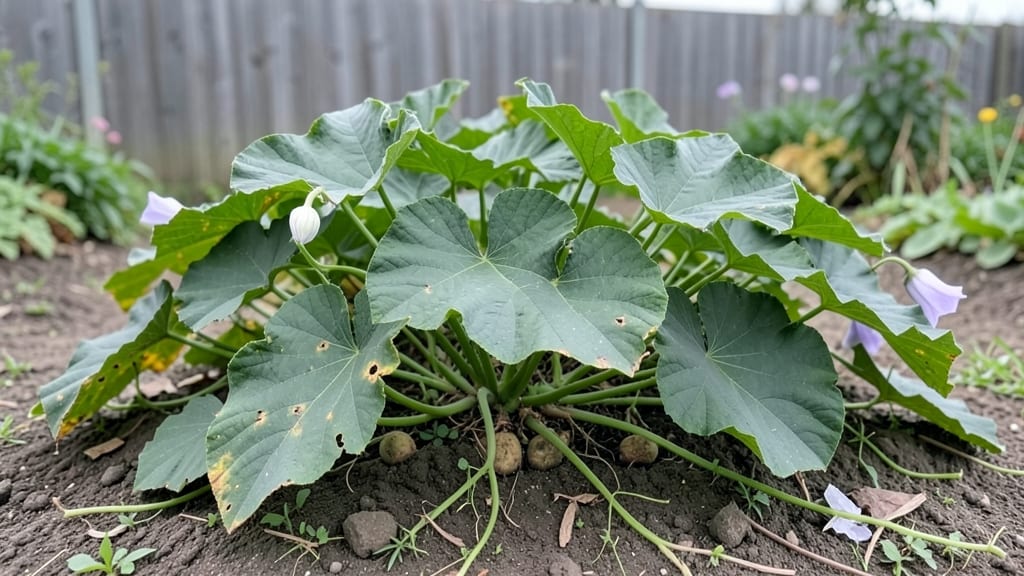
Sweet potato plants do bloom, producing delicate yellow or orange flowers that resemble morning glories. These blossoms appear mid-to-late summer, signaling the plant’s maturity and potential tuber development underground. However, the flowers are edible but not the primary harvest focus.
These vibrant blooms aren’t just pretty—they’re a visual cue that your plants are thriving! 🌸 The flowers appear when vines mature enough to produce energy for both blooms and tubers, typically needing full sun and well-drained soil to trigger this stage.
Interestingly, most commercial sweet potatoes are grown from cuttings rather than seeds, so you’ll rarely see seed pods form—though heirloom varieties occasionally produce them after pollination.
Gardeners often prune back vines to redirect energy toward larger tubers, but leaving some flowers can actually improve pollination for nearby plants (like squash) while adding edible garnishes to dishes.
Just beware—overly stressed plants may bloom early at the expense of tuber sweetness, so balance pruning with consistent moisture during the growing season.
💡 In This Article
- Sweet Potato Flower Biology and Growth Stages
- Culinary and Gardening Uses for Sweet Potato Flowers
Sweet potato flower biology and growth stages
Here's what's actually happening when those delicate blooms appear: sweet potato flowers develop from axillary buds along the vines, triggered by a combination of day length (photoperiodism) and temperature thresholds. Most varieties need 12-14 hours of daylight and soil temperatures above 70°F to initiate flowering.
The plant allocates about 10-15% of its energy to flower production during peak bloom, which occurs when vines reach 3-5 feet in length—this is why you'll rarely see flowers before mid-summer.
The flowers' trumpet-like shape (measuring 1.5-2 inches wide) evolved to attract pollinators like bees and hummingbirds, which transfer pollen between flowers. Interestingly, the flowers are perfectly bisexual (containing both male and female parts), but they still rely on external pollinators for optimal seed set.
This dual reproductive strategy explains why you might see both pollinated and unpollinated flowers on the same plant. The blooms' bright yellow or orange hue contains carotenoids that also contribute to the tuber's color—nature's way of repurposing pigments!
What most people don't realize is the flowers' direct relationship to tuber development. The plant's hormonal balance shifts during flowering: increased ethylene production (the same gas that ripens fruits) signals root cells to store more starch.
This is why gardeners often see larger tubers when some flowering occurs—though excessive blooming can divert too much energy away from storage roots. The ideal scenario is 30-40% vine maturity before flowering begins, which typically results in the best balance between flowers and tubers.
Stress factors like drought or nutrient deficiency can actually trigger premature flowering. When plants experience water stress, they produce more abscisic acid—a hormone that accelerates reproductive stages. This explains why you might see flowers appear earlier in sandy soils or during dry spells.
The trade-off? Stressed plants often produce smaller, less sweet tubers because their energy is divided between survival and reproduction. This is why consistent moisture (about 1-1.5 inches per week) is crucial during the first 60 days of growth.
Most commercial sweet potato varieties are asexually propagated from cuttings, which means they rarely produce viable seeds. However, heirloom varieties like 'Georgia Jet' or 'Beauregard' can develop 3-5 seed pods after successful pollination, each containing 1-2 seeds.
These seeds are technically edible (with a mild sweet potato flavor), but they're not used commercially because growing from cuttings produces more uniform tubers. The seed pods themselves form about 6-8 weeks after pollination and resemble small green beans.
Here's a pro tip: if you're growing sweet potatoes for both flowers and tubers, try light pruning to maintain about 3-4 main vines. This balances energy distribution while still allowing enough foliage to support photosynthesis.
The flowers' appearance is your plant's way of saying "I'm mature and ready to reproduce"—but don't let that fool you into thinking they're the main event. The real magic happens underground! 💫