
Blooming
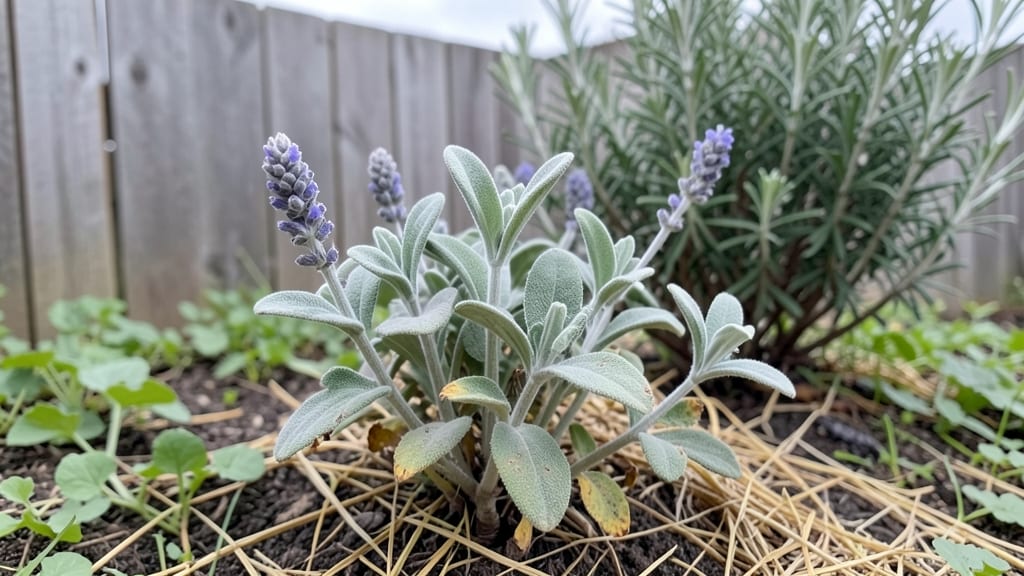
Sage does bloom, producing small, tubular flowers in spikes or whorls that appear in late spring to early summer, typically lasting 2-4 weeks. Culinary sage varieties like Salvia officinalis may bloom less prolifically than ornamental types, but flowers remain edible and add subtle floral notes to dishes.
If you've ever wondered why your kitchen sage plant suddenly sports delicate purple or blue spikes, that's its way of signaling it's ready to reproduce! 🌸 These blooms aren't just pretty—they're packed with concentrated flavor that's milder and more floral than the leaves, making them perfect for garnishes or infused vinegars.
The timing of blooms depends heavily on your climate, with northern regions seeing flowers slightly later in spring than warmer areas.
Here's the kicker: while culinary varieties like Salvia officinalis may produce fewer flowers, they're just as edible as their ornamental cousins. I've used them in everything from herb butters to floral teas, though I always recommend harvesting flowers in the morning when their essential oils are at peak potency.
Just be mindful that over-pruning can reduce leaf production—the plant's energy gets divided between flowers and foliage!
💡 In This Article
- Identifying Sage Flower Types and Their Growth Patterns
- Harvesting Sage Flowers for Cooking and Preservation
Identifying sage flower types and their growth patterns
The botanical differences between culinary and ornamental sage flowers start with their growth priorities. Culinary varieties like Salvia officinalis prioritize leaf production, so their blooms are often sparse—just enough to reproduce without sacrificing the aromatic foliage chefs rely on.
Ornamental types, however, go all-out with vibrant blue, purple, or white flower spikes that can reach 6-12 inches tall, making them garden favorites. This divergence happens because ornamental sages are bred for visual impact, while culinary varieties undergo selective breeding to maximize leaf oil content (like thujone and camphor compounds).
Climate plays a surprising role in bloom timing and intensity. In USDA Zone 5-6 (northern climates), sage typically flowers in late May to early June, delayed by cooler springs. But in Zone 8-9 (Mediterranean or coastal regions), blooms may appear as early as April and stretch into July.
Golden sage varieties, like 'Tricolor' or 'Berggarten', often bloom more aggressively because their variegated foliage already diverts energy—so they compensate with showier flowers. The key factor? Day length: sage flowers trigger when daylight exceeds 14 hours, a photoperiod response hardwired into its genetics.
Flower color variations aren't just decorative—they serve ecological purposes. Blue-purple blooms attract bees and hummingbirds with their ultraviolet patterns (visible to pollinators), while white flowers lure night-flying moths. The tubular shape of sage flowers forces pollinators to brush against stamens, ensuring efficient cross-pollination.
Interestingly, the edible flowers have a milder, almost honeyed flavor compared to the leaves' piney notes—a result of lower thujone levels. This makes them ideal for delicate applications where you want floral complexity without overpowering.
What most gardeners don't realize is how pruning affects future blooms. If you shear back flowering stems after they fade, you encourage a second, smaller flush of blooms in late summer. But here's the catch: each bloom cycle drains the plant's energy.
In drought-prone areas, sage may skip flowering entirely to conserve water, focusing instead on leaf production. This survival strategy explains why potted sage often blooms less prolifically than garden-grown plants—limited root space equals less energy storage for reproduction.
For culinary use, the flower spikes (not just individual blossoms) are the prize. When harvested at 50% bloom, they yield the most flavorful buds for drying or infusing.
I've found that purple flowered varieties (like 'Purpurascens') develop a slightly sweeter profile than blue ones, likely due to different anthocyanin compounds. The best part? These flowers dry beautifully, retaining their color and adding a delicate lavender note to homemade vinegars or herb blends.
Pro tip: If your sage flowers attract too many bees (a common issue in gardens), simply snip off the spent blooms before seeds form. This redirects the plant's energy back to leaf growth—critical if you're growing it for culinary purposes.
The trade-off? Fewer flowers mean fewer pollinators, but your kitchen will thank you for the extra leaves! 🌿