
Blooming
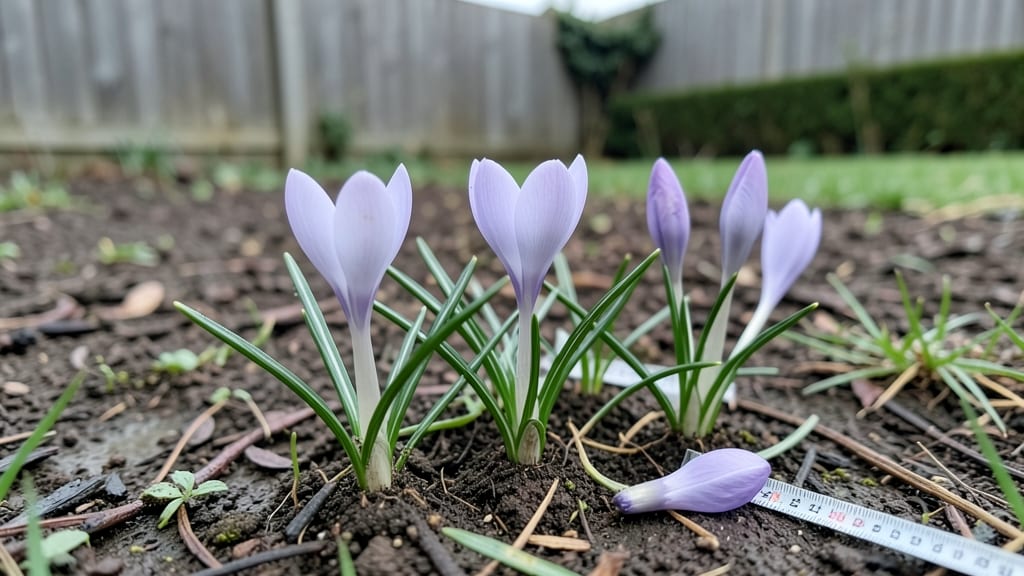
Crocuses bloom for about 1 to 2 weeks per season, with individual flowers lasting 3 to 7 days. Their vibrant display peaks in early spring, often between February and April, depending on the climate and variety planted.
Crocuses are nature's early spring cheerleaders, bursting through frost with a fleeting but stunning show. 🌸 The timing of their bloom isn't just about days—it's a delicate dance with temperature shifts.
Many gardeners swear by planting bulbs in fall when soil temps hit 50-60°F, which triggers their internal clocks to wake up just as winter loosens its grip.
Varieties like Crocus vernus often bloom earliest, while Crocus tommasinianus might linger later, creating a staggered display that keeps your garden looking fresh for weeks.
What's fascinating is how these flowers work on a biological schedule: buds form underground during summer's heat, then wait patiently for the right cues. Once they open, each bloom typically lasts 3-5 days at peak freshness, though some hardy varieties can stretch to 7 days in cooler climates.
The secret to longer displays? Planting in well-draining soil with 50% organic matter mimics their natural Mediterranean habitats, where they've evolved to thrive with minimal fuss.
💡 In This Article
- Crocus Flowering Stages Explained
- Extending Crocus Bloom Time with Gardening Tips
Crocus flowering stages explained
The crocus bloom cycle begins with a fascinating underground process. During summer's warmth, the corm (a thickened underground stem) stores energy while developing flower buds. These buds remain dormant until temperatures drop below 60°F in fall, triggering a biochemical response that prepares them for spring.
The key hormone here is gibberellin, which signals the buds to break dormancy when soil temperatures rise again in early spring—typically between 40-50°F—creating that iconic early-season display.
Once above ground, crocus blooms progress through three distinct stages. First comes the bud emergence phase, where the petals begin pushing through the soil's surface but remain tightly closed. This stage lasts 1-3 days, during which the flower absorbs sunlight to complete its opening.
Next is the full bloom phase, where petals unfurl completely to expose the stamens. This is when pollinators like bees are most active—each flower produces 6-8 stamens with bright orange pollen that's highly visible to insects.
The final stage is senescence, where petals begin wilting from the edges inward over 2-4 days.
Early bloomers like Crocus chrysanthus often emerge first, triggered by milder winter conditions, while late varieties such as Crocus tommasinianus wait for consistent 55°F+ soil temperatures. Here's what's happening biologically: early varieties have evolved shorter dormancy periods, while late types require more vernalization (cold exposure) to break dormancy.
This creates a natural staggered bloom that can extend your garden's color show by 3-4 weeks when planted together.
The lifespan of individual flowers varies by species and conditions. In optimal settings—full sun exposure, well-draining soil, and moderate humidity—most crocus blooms last 5-7 days at peak freshness. However, in cooler climates (45°F average temps), the blooms often persist 7-10 days due to slower metabolic processes.
The trade-off? Warmer springs (55°F+) can shorten bloom duration to just 3-5 days as the flowers rush to complete their reproductive cycle before summer heat arrives.
What most gardeners don't realize is how light intensity affects bloom duration. Crocuses in partial shade (receiving 4-6 hours of direct sunlight) tend to have slightly longer-lasting flowers because lower light reduces stress on the plant.
The brightest blooms? Those in full sun often open faster but may wilt quicker—nature's way of prioritizing reproduction over longevity when conditions are ideal.
Consider this comparison: A Crocus vernus bloom in a Zone 5 climate might last 6 days with morning sun, while the same variety in Zone 8 could bloom for only 4 days due to faster growth cycles.
The difference comes down to how quickly the plant completes its reproductive cycle—shorter days and cooler temps naturally extend each bloom's window.