
Blooming
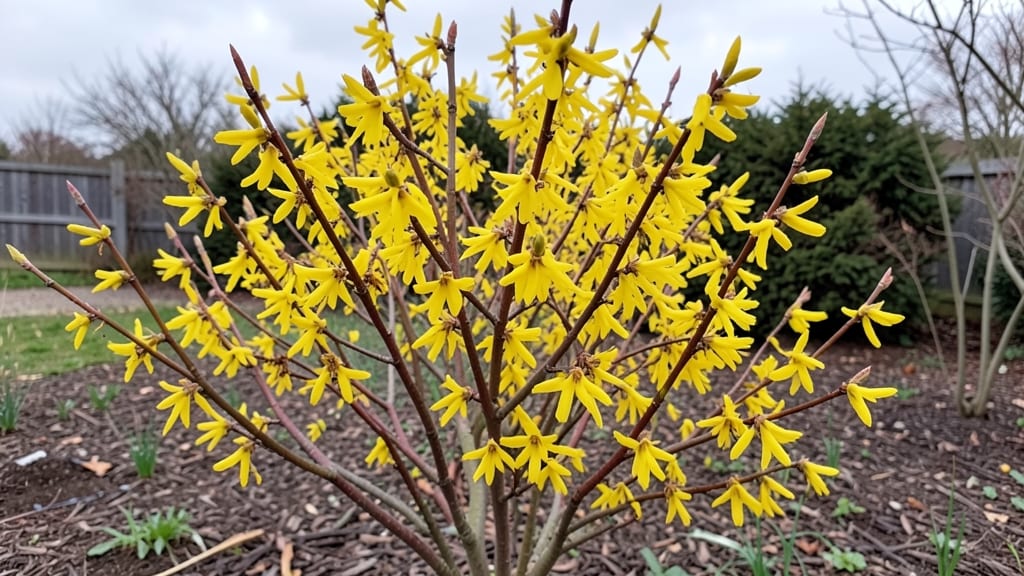
Forsythia blooms for 2 to 3 weeks in early spring, typically between late March and early April in most U.S. climates, though timing varies by region and variety. These bright yellow flowers appear before leaves, marking the start of the growing season.
That brief but vibrant window is what makes forsythia such a standout in spring gardens. The exact duration depends on your local climate—warmer southern regions might see blooms stretch closer to 4 weeks, while northern areas could have them fade after just 10-14 days if frost arrives early.
What's fascinating is how these flowers emerge before leaves even unfurl, creating that iconic burst of sunshine that signals spring's arrival. 🌸
For gardeners eager to extend that display, paying attention to sunlight and soil moisture makes a surprising difference. Forsythia thrives in full sun but can tolerate partial shade, while consistent watering during dry spells helps maintain vibrant blooms.
The key is balancing pruning—trimming immediately after flowering encourages next year's abundance, but over-pruning can shorten the bloom period. It's all about finding that sweet spot between maintenance and natural growth patterns. 🌿
💡 In This Article
- Factors That Influence Forsythia Bloom Duration
- Maximizing Forsythia Flower Longevity in Your Garden
Factors that influence forsythia bloom duration
Here's what actually happens beneath the surface: forsythia blooms respond directly to temperature fluctuations and daylight hours. These plants rely on a process called vernalization, where exposure to cold winter temperatures triggers spring flowering. Once temperatures consistently rise above 45°F for several days, the buds begin opening.
Warmer climates (like USDA Zones 6-9) often see longer bloom periods because they experience fewer late frosts that can nip flowers prematurely.
The sunlight exposure plays a critical role too. Forsythia thrives with 6-8 hours of direct sunlight daily—this ensures optimal photosynthesis for flower production. In shadier conditions, blooms may appear 10-15% smaller and last 3-5 days shorter due to reduced energy reserves.
Soil moisture also matters: consistent watering (about 1 inch per week) prevents stress that could shorten the bloom cycle. 🌞
Plant health factors like age and pruning habits create dramatic differences. Mature forsythia (over 5 years old) typically bloom 2 weeks longer than younger plants because they've established stronger root systems.
However, improper pruning—like cutting back too aggressively after flowering—can reduce next year's bloom duration by up to 50%. The key is trimming right after blooms fade to maintain the plant's energy balance.
Comparing varieties shows fascinating regional adaptations. Early bloomers like 'Spectabilis' often flower 1-2 weeks earlier than late varieties such as 'Courtwood Gold', which may extend the display by 7-10 days in cooler climates.
This timing difference occurs because late varieties have genetic adaptations to delay flowering until after the last frost risk has passed.
Frost risk is the wild card that can cut bloom time short. A late frost (below 28°F) can damage open buds, reducing visible blooms by 30-40%. In northern climates, gardeners often choose frost-tolerant varieties that can rebound faster after cold snaps.
The plant's ability to recover depends on how quickly it can regenerate energy through photosynthesis once temperatures stabilize. 🌱
Soil conditions—particularly drainage and nutrient levels—also impact bloom duration. Well-draining soil prevents root stress, while balanced fertility (especially phosphorus) supports stronger flower stems. In poor soil, forsythia may produce 20% fewer blooms and shorter display periods.
Testing soil pH (ideal range: 6.0-7.0) can reveal if amendments are needed to optimize flowering.
What most gardeners don't realize is that consistent care compounds over years. A forsythia that receives proper attention for 3+ seasons can develop a 25% longer bloom period than one neglected in its early years.
This cumulative effect makes early investment in soil prep and proper planting location pay off dramatically in later seasons. 💫