
Blooming
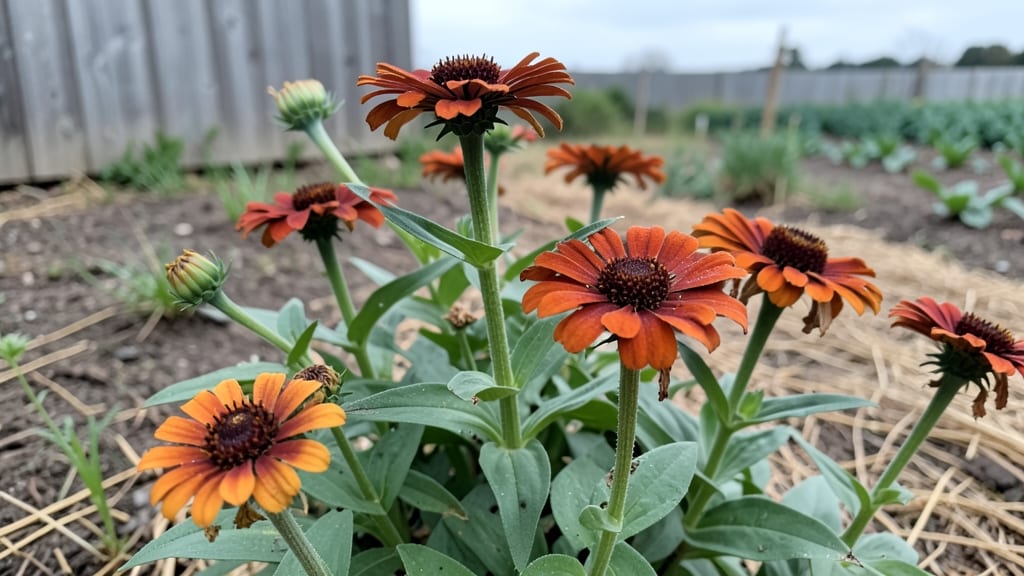
Zinnias bloom for 10 to 14 days per flower head, with peak flowering lasting 6 to 8 weeks during warm seasons. Regular deadheading extends blooming periods, while proper sunlight and watering encourage continuous reblooming throughout summer and early fall.
Zinnias thrive in the heat, but their individual blooms have a short but vibrant life cycle—each flower head lasts just 10-14 days before wilting naturally. 🌸 What sets them apart is their ability to produce new buds rapidly, especially when given full sun and consistent moisture, which triggers a cascading effect of continuous blooms from late spring through early frost.
This makes them a gardener's favorite for long-lasting color without constant replanting.
Interestingly, double-flowered varieties often bloom slightly longer than single-petaled types, though they may produce fewer stems overall. The key to unlocking their full potential lies in removing spent blooms promptly—this redirects the plant's energy toward fresh growth rather than seed production, ensuring your garden stays lively well into autumn.
💡 In This Article
- Zinnia Flower Lifespan and Seasonal Blooming Mechanics
- Maximizing Zinnia Blooms: Deadheading and Care Tips
Zinnia flower lifespan and seasonal blooming mechanics
Here's what's actually happening inside those vibrant zinnias: each flower head follows a precise biological timeline tied to its reproductive cycle. The 10-14 day lifespan of individual blooms stems from their rapid transition from pollination to seed production.
Once pollinated, the flower's petals begin to wilt within 48-72 hours as the plant redirects energy toward developing seeds in the central disc. This process is genetically programmed—zinnias are annuals that prioritize seed production to ensure the next generation's survival. 🌻
The 6-8 week peak blooming window occurs because zinnias produce flowers in succession from multiple buds along their stems. Unlike some perennials, zinnias don't have dormant periods—they continuously form new buds when environmental conditions are favorable.
Single-bloom varieties typically have longer individual bloom durations (up to 16 days) because their simpler petal structure requires less energy to maintain, while double-bloom types often last 8-12 days due to their denser, more complex flower heads that demand more resources.
Temperature plays a crucial role too—optimal daytime temps of 70-85°F maximize bloom production, while nights below 55°F can stunt growth.
What most people don't realize is how sunlight intensity affects this cycle. Zinnias are photoperiod-sensitive, meaning they respond to daylight length. In northern climates, they'll start blooming when days exceed 12-14 hours of light, while southern growers may see continuous flowering year-round.
The plant's vascular system also adapts—when exposed to 6+ hours of direct sunlight daily, zinnias develop stronger stems that support more flower heads. This is why gardeners in full-sun zones often get 30-50% more blooms than those in partial shade. 🌞
The science behind their seasonal longevity involves hormonal regulation. Ethylene gas, which triggers senescence (aging), accumulates more slowly in zinnias when they receive consistent moisture. Drought stress or uneven watering causes ethylene production to spike, accelerating wilting.
This is why maintaining 1-1.5 inches of soil moisture weekly (about 1 gallon per plant) keeps blooms vibrant longer. Nutrient availability matters too—zinnias thrive with balanced 10-10-10 fertilizer applied every 3-4 weeks, which supports their rapid growth and flower production.
Comparing cultivars reveals fascinating differences in bloom mechanics. The 'Benary's Giant' series, for example, produces 3-4 inch diameter blooms that last 12-15 days due to their thick petals, while the 'Crystal series' with its lacy petals may only last 8-10 days but produces 20% more stems.
The trade-off between bloom size and quantity is a direct result of genetic programming—larger flowers require more energy to develop but last longer once open, while smaller varieties prioritize rapid reproduction through volume. 🌺
Seasonal variations also explain why zinnias often stop blooming by late summer. As temperatures exceed 90°F consistently, the plants shift energy toward seed production as a survival mechanism.
This is particularly noticeable in double-bloom varieties, which often produce 20-30% fewer flowers in extreme heat because their complex petal structures demand more cooling resources. The solution? Strategic deadheading and providing afternoon shade can extend blooming by 2-4 weeks in hot climates.