
Blooming
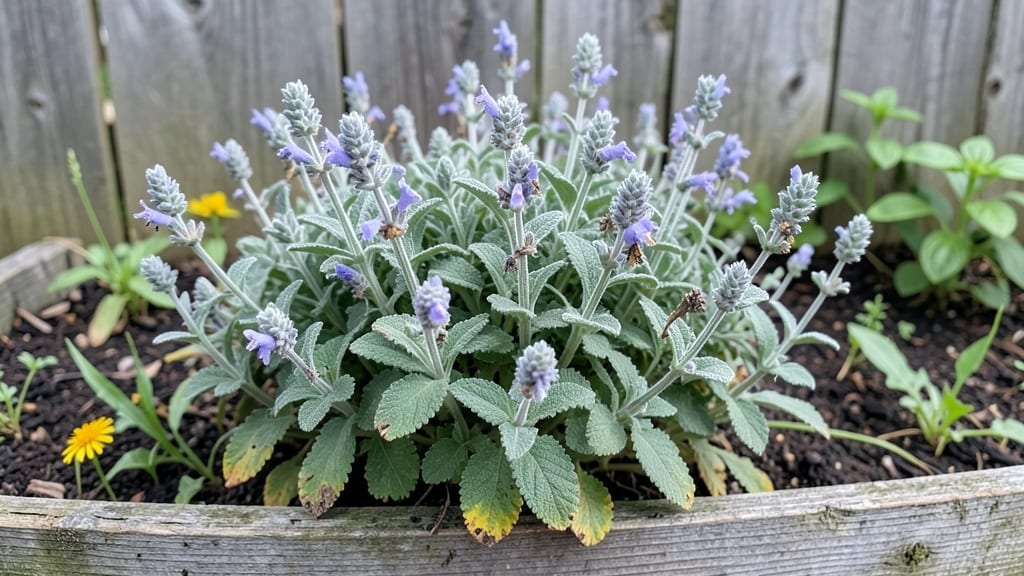
Catmint blooms for 6 to 8 weeks during its peak season, typically from mid-summer to early fall, with sporadic flowers appearing into late autumn if deadheaded regularly. Its long-lasting blooms attract pollinators and add vibrant color to gardens for weeks.
Catmint’s extended flowering period comes from its hardy nature and adaptability to varying conditions.
Unlike many perennials that fade quickly, catmint thrives in heat and drought, making it a low-maintenance star in late-summer gardens. 💫 The key to those extra weeks of color lies in its ability to rebound after pruning—cutting back spent blooms encourages new growth, while its semi-evergreen foliage often keeps the show going well into autumn.
What sets catmint apart is its resilience—it handles both full sun and partial shade, and its flowers remain vibrant even as temperatures drop. This makes it a favorite for pollinators like bees and butterflies, who rely on late-season nectar sources.
For gardeners, that means fewer replacements and more consistent beauty with minimal effort.
💡 In This Article
- Catmint Flowering Cycle: Stages and Seasonal Triggers
- Extending Catmint Blooms: Pruning and Care Tips
Catmint flowering cycle: stages and seasonal triggers
Here's what's actually happening behind catmint's impressive bloom duration: its flowering cycle is triggered by a combination of daylight length and temperature thresholds. Unlike many perennials that bloom in response to a single seasonal cue, catmint uses a dual-system approach.
The plant enters its primary bloom phase when daylight drops below 14 hours (typically mid-July in most climates), but sustained temperatures above 70°F keep the flowers producing actively. This explains why catmint often blooms later than spring flowers but outlasts them by weeks.
The key to its longevity lies in its semi-evergreen growth habit—catmint's woody stems store energy reserves that allow it to push new flower buds even as temperatures dip. Most perennials shut down completely by mid-autumn, but catmint's stems remain semi-dormant, ready to produce secondary blooms when stimulated.
This is why you'll often see catmint flowering sporadically through October and November in regions with mild winters—its stems continue photosynthesizing even when other plants have gone dormant.
What most people don't realize is how pruning mechanics actually work with catmint's biology. When you deadhead spent blooms, you're not just removing dead flowers—you're stimulating the plant's apical dominance switch.
Catmint's growth points are located at the leaf axils along its stems, and removing the main flower spikes signals these dormant buds to activate. This creates a cascading effect where new flowers emerge from multiple points along the stem, extending the bloom period by 3-4 weeks compared to unpruned plants.
The science behind catmint's extended flowering involves its photoperiod sensitivity combined with heat tolerance. Most flowering plants respond to either increasing or decreasing daylight, but catmint uses a short-day neutral response—it blooms when days get shorter but doesn't require complete darkness.
This flexibility means it can adapt to different latitudes while still producing flowers. The plant's native range across Europe and Asia spans diverse climates, which explains why it handles everything from 90°F summer heatwaves to 40°F autumn chills without skipping a beat.
Consider these seasonal triggers that influence catmint's bloom cycle:
- Primary bloom trigger: Daylight drops below 14 hours (mid-summer)
- Temperature threshold: Maintains active blooming above 65°F
- Secondary bloom stimulus: Pruning removes spent flowers, activating axillary buds
- Winter resilience: Semi-evergreen stems continue photosynthesis through fall
The result is a plant that can produce flowers for 8-10 weeks total when properly maintained—far exceeding the 3-5 week average of most perennials. This biological flexibility is why catmint remains one of the most reliable late-season bloomers in any garden. 🌿