
Blooming
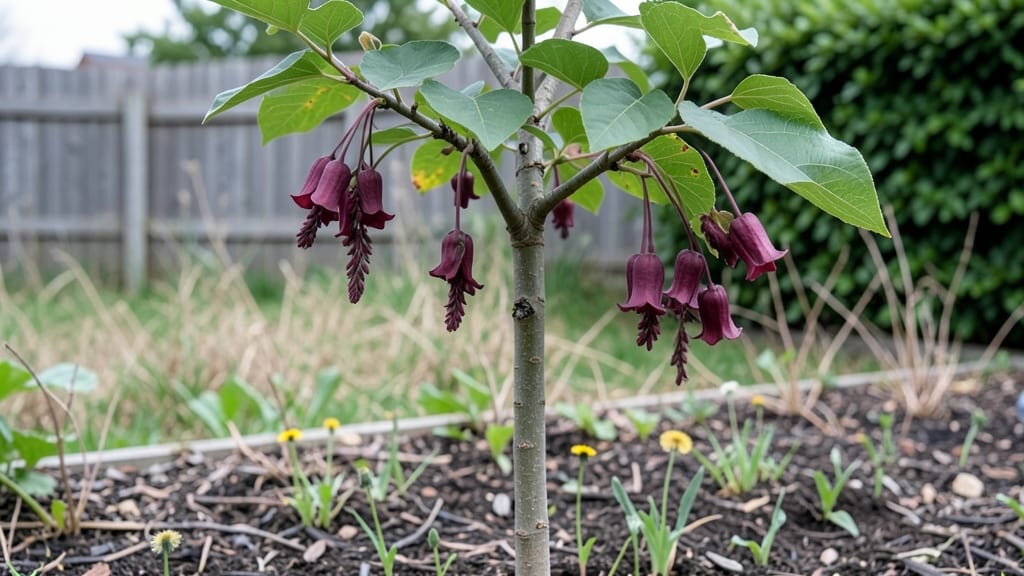
Pawpaw trees in bloom produce fragrant, marcescent flowers in late spring to early summer, typically from mid-April through June, lasting 2–4 weeks per bloom cycle. Female flowers appear on separate branches from males, requiring cross-pollination for fruit development.
You’ll know a pawpaw tree is in full bloom when you catch that sweet, tropical-like scent—it’s one of the most distinctive fragrances in the garden. 🌸 The flowers themselves are unique, with their yellow-green, cup-shaped blooms that stay attached to the tree even after wilting, a trait called marcescence.
This means they create a beautiful, almost surreal display as they transition from vibrant to dried petals, making them a standout feature in any landscape.
Here’s the fun part: these trees are dioecious, meaning male and female flowers grow on separate trees. To get fruit, you’ll need at least one male and one female tree nearby, as pawpaws rely on tiny beetles (and sometimes wind) to transfer pollen.
Planting multiple trees not only boosts your chances of fruit but also enhances the garden’s overall appeal with their striking, long-lasting blooms.
💡 In This Article
- Identifying Pawpaw Tree Flowers and Their Pollination Needs
- Optimal Growing Conditions for Extended Pawpaw Blooms
Identifying pawpaw tree flowers and their pollination needs
The pawpaw's flowers are a botanical marvel with their yellow-green, cup-shaped blooms that grow in clusters along the branches. These flowers stand out with their marcescent nature—meaning they cling to the tree even after wilting, creating a stunning layered effect.
Each flower measures about 1-2 inches wide and emits a sweet, almost tropical fragrance that attracts pollinators from a distance. The petals have a velvety texture, and the entire bloom sits on a thick, green receptacle that resembles a small vase.
Here's where it gets interesting: pawpaw trees are dioecious, meaning male and female flowers grow on separate trees. Male flowers produce abundant pollen, while female flowers have a distinctive stigma shaped like a tiny green star.
The key to successful pollination lies in their beetle-dependent system—tiny pawpaw beetles (Scolytus spp.) crawl into the flowers to feed on pollen, getting dusted with it as they move between male and female blooms.
Wind also plays a minor role, but beetles are the primary pollinators, especially in warmer climates where they're most active.
What most gardeners don't realize is that planting just one pawpaw tree won't guarantee fruit. You need at least one male and one female tree within 50 feet of each other for optimal pollination.
The beetles have a 3-5 day lifespan and travel limited distances, so proximity matters. 🌿 A single male tree can effectively pollinate up to 5-6 female trees when planted strategically.
This is why orchards often plant male trees every 50-100 feet in a grid pattern—it maximizes fruit production across the entire grove.
The pollination process begins at dawn when beetles emerge from their winter hiding spots. They're drawn to the fragrant flowers and enter through the base, where they feed on pollen and get coated in it. As they move to female flowers, they transfer this pollen, enabling fertilization.
The entire process takes about 10-14 days from pollination to fruit set, during which the female flowers develop into the iconic pawpaw fruits we know and love.
Interestingly, pawpaw flowers have a unique self-cleaning mechanism—the marcescent petals eventually dry and fall, but the receptacle remains, developing into the fruit's base. This adaptation helps protect the developing fruit from pests and disease.
The flowers' slightly acidic pH (around 5.5-6.0) also creates an environment that's less hospitable to many fungal pathogens, adding another layer of protection for the fruit.
For those growing pawpaws commercially, understanding these pollination dynamics is crucial. Studies show that orchards with proper male-to-female ratios can achieve 80-90% fruit set compared to just 10-20% in isolated single trees.
The key is creating a pollinator-friendly environment with multiple trees and minimal pesticide use, as even small amounts of chemicals can harm the delicate beetle population.