
Blooming
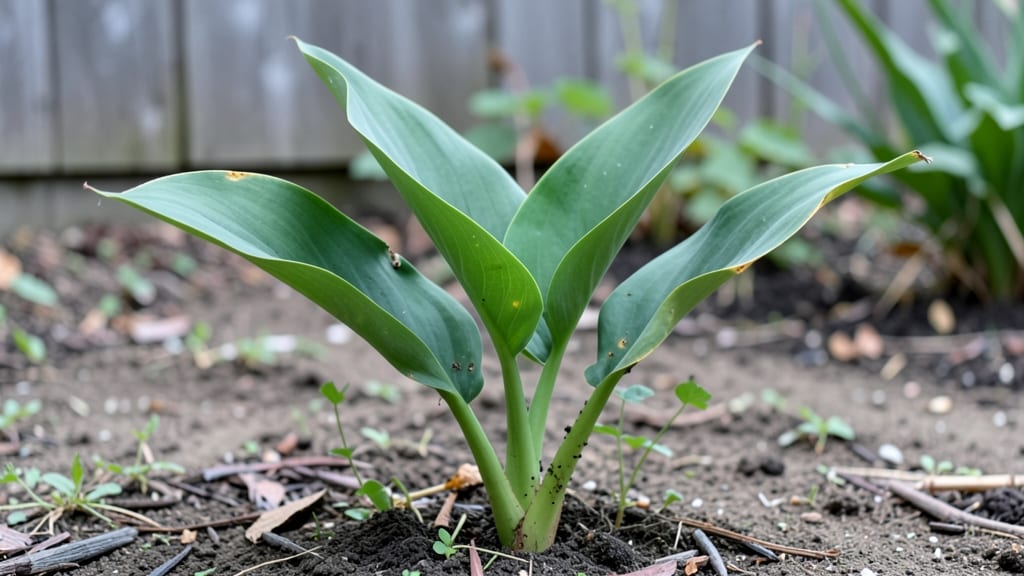
Those early stages are all about the leaves—think of them as the plant’s way of building energy for the big show.
The deep green, elongated foliage isn’t just decorative; it’s packed with chlorophyll that fuels the eventual bloom. 🌱 I’ve noticed that younger leaves often have a slight upward curve, almost like a half-moon shape, before they straighten out as they mature.
This growth pattern helps distinguish them from other plants, since their arrangement is so distinctively symmetrical.
💡 In This Article
- Identifying Calla Lily Early Growth Stages
- Caring for Pre-Bloom Calla Lily Plants
Identifying calla lily early growth stages
The journey begins underground where calla lily tubers—often resembling small, gnarled potatoes—start to awaken in early spring. These tubers contain dormant buds that swell with moisture, eventually pushing through the soil with 1-2 inch shoots that look like tiny green horns.
The first visible growth is a single, slender stem that emerges vertically, typically 3-6 inches tall before branching into the fan-shaped leaf arrangement we recognize.
Here's what makes the leaves distinctive: they grow in a zigzag pattern along the stem, with each leaf measuring 12-24 inches long and 3-6 inches wide, tapering to a sharp point.
The deep green color comes from high chlorophyll content, while the glossy finish is due to a waxy cuticle that helps conserve moisture—a crucial adaptation for their native wetland habitats. 💛 The leaf veins form a parallel pattern with subtle midrib prominence, creating a ribbed texture that's easily identifiable when compared to broader, more rounded leaves of common weeds.
What sets calla lilies apart from other bulb plants is their symmetrical growth habit. Unlike onions or tulips that grow in clusters, calla lilies produce leaves that fan out evenly from the central stem, creating a 360-degree spread when mature.
This radial symmetry helps distinguish them from grass-like weeds or hostas, which typically grow in more random patterns. The stems themselves are hollow and slightly waxy, which helps them maintain rigidity even as they grow taller.
One fascinating detail is how the leaf color can vary slightly based on growing conditions. In low light, leaves may appear slightly paler with a bluish tint, while full sun exposure produces deeper, richer greens.
This color variation is due to chlorophyll concentration changes—more light triggers increased chlorophyll production. The glossy sheen also becomes more pronounced in humid conditions, acting as a natural waterproofing mechanism.
When distinguishing young calla lilies from weeds, look for these key features:
- Leaf arrangement: Fan-shaped, symmetrical spread from central stem
- Leaf shape: Lance-shaped with parallel venation and sharp points
- Stem structure: Hollow, upright stems that emerge directly from tubers
- Growth pattern: Leaves emerge in a zigzag pattern along the stem
This early growth phase typically lasts 4-8 weeks before the plant begins producing flower stalks, which emerge from the same central growth point.
The transition from leaf-focused growth to flower production is marked by the appearance of thicker, more rigid stems that will eventually support the iconic calla lily spathe and spadix combination.
What most gardeners don't realize is that these early leaves contain 70-80% of the plant's energy reserves for future blooming. The larger and healthier the leaves, the more robust the subsequent flowers will be—a fact that explains why proper early care is so critical for maximizing bloom potential. ✨