
Blooming
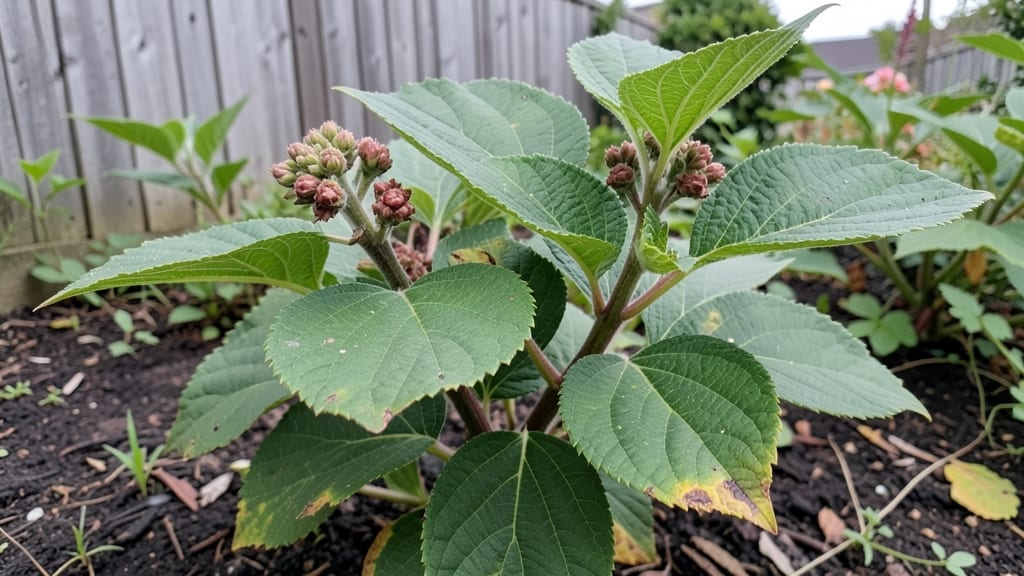
Before those iconic blooms appear, hydrangeas reveal their early growth through distinctive bud shapes and leaf patterns.
The fuzzy new shoots—often mistaken for pests—are actually tender growth points where future flowers will emerge, while the papery bracts act like protective packaging for the developing buds. 🌱 In cooler climates, these stages can stretch from late winter into spring, with varieties like mophead hydrangeas showing thicker buds compared to the flatter lacecap types.
💡 In This Article
- Identifying Hydrangea Buds and Early Growth Stages
- Tips for Encouraging Healthy Hydrangea Bud Development
Identifying hydrangea buds and early growth stages
Here's what's actually happening beneath those papery bracts: hydrangea buds develop from axillary buds located in the leaf axils (the angle between a leaf and stem). Mophead varieties produce thick, rounded buds that can reach 1-2 inches in diameter, while lacecap hydrangeas develop flatter, more elongated buds resembling tiny cones.
Panicle types show spiky, tapered buds that resemble miniature pinecones, often with a slight downward curve. The key factor is the bud density—mopheads pack more flower-forming tissue, which is why their blooms appear fuller.
The fuzzy new shoots you spot in late winter are actually terminal buds covered in fine hairs called trichomes, which help conserve moisture in cold conditions.
These shoots grow from old wood (last year's growth) in most hydrangea varieties, which is why pruning too late can remove next year's blooms. The papery bracts—often green, reddish-brown, or even purple—serve as protective scales that shield developing flower buds from frost and drying winds.
In warmer climates, these stages appear as early as February, while colder regions may see them emerge in April after the last frost.
What most people don't realize is how leaf shape varies by variety: mophead leaves are broader (3-5 inches wide) with 5-7 veins radiating from the center, while lacecap leaves are narrower (2-3 inches) with 3-5 veins.
The serrated edges aren't just for show—they increase surface area for photosynthesis, which fuels bud development. When examining new growth, look for light green or reddish stems—these indicate healthy, actively growing shoots. In contrast, dull gray or brown stems suggest stress from overwatering or nutrient deficiencies.
The timing of these stages depends heavily on your climate zone. In USDA Zone 5, buds typically swell in late May, while Zone 9 gardens may see them as early as February.
Here's how to distinguish old wood from new growth: old wood has brown, woody stems with visible lenticels (small raised pores), while new shoots are green, flexible, and covered in fine hairs.
The bracts on old wood buds are usually darker and more papery, while new buds have softer, velvety bracts that feel almost suede-like when touched.
Climate plays a surprising role in bud formation. In humid regions, hydrangeas may develop larger, softer buds due to increased moisture retention, while arid climates produce smaller, tighter buds as a drought adaptation.
The vernalization process (cold requirements) also matters—most hydrangeas need 400-600 hours below 40°F to trigger proper bud development. This is why gardeners in warm-winter areas sometimes struggle with sparse blooms—the plants aren't getting their cold signal. 🌿
Pro tip: If you're trying to predict bloom time, examine the bud tightness. Buds that feel firm and closed (like a tightly sealed button) are still developing, while those that begin to separate slightly (like a slightly open cone) are within 2-4 weeks of blooming.
This visual cue works for all three main varieties and is more reliable than calendar dates alone.