
Blooming
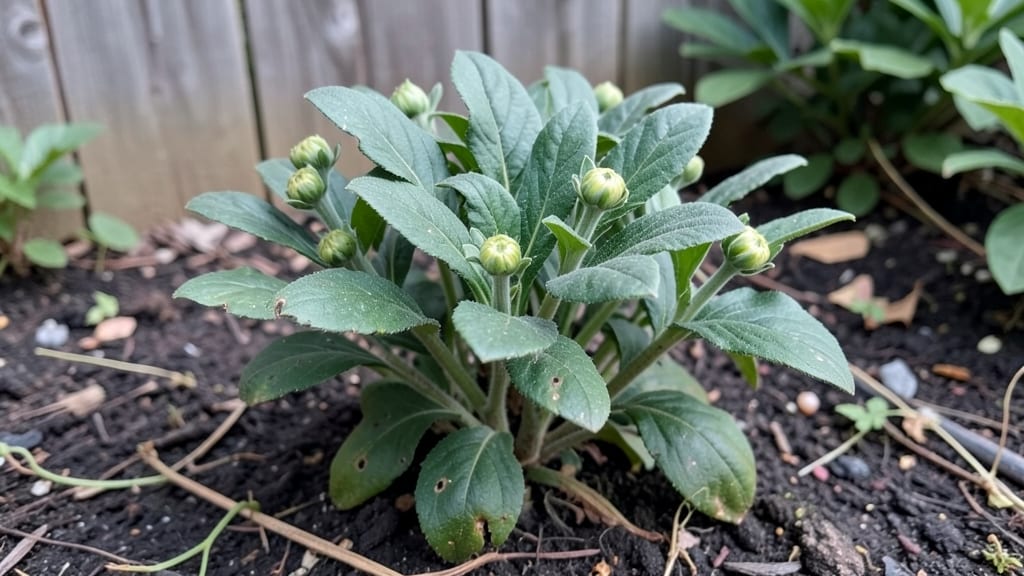
Before they burst into color, these plants focus all their energy on leaf and bud development. 🌱 The leaves start narrow and pointed, gradually filling out as the plant stores nutrients for blooming season.
You’ll often spot clusters of tiny buds along the stems—these are the future flowers, currently packed tightly like green marbles waiting for their big reveal.
What sets mums apart at this stage is their compact, rounded shape—almost like a miniature shrub. This dense growth habit helps them conserve energy until they’re ready to bloom, typically between late summer and early fall.
If you’re growing them yourself, giving them 6-8 hours of sunlight daily and well-draining soil makes all the difference in how quickly and vibrantly they’ll develop.
💡 In This Article
- Identifying Mum Plant Growth Stages Before Flowering
- Caring for Mums to Ensure Healthy Pre-Bloom Development
Identifying mum plant growth stages before flowering
The early growth stages of chrysanthemums reveal a fascinating botanical process where the plant prioritizes structural development over floral display. Here's what's actually happening: the plant produces lance-shaped leaves (typically 2-4 inches long) that emerge in a spiral pattern along the stems, creating that signature dense, bushy appearance.
These leaves are slightly fuzzy along the edges—a key distinguishing feature from other perennials—and their dark green color indicates active photosynthesis to fuel bud formation.
The flower buds begin as tiny, tightly packed structures that develop along the stem's axils (where leaves meet stems). These buds start as green or pale pinkish bumps (about 1/8-inch diameter) and gradually swell as the plant stores carbohydrates in its roots and stems.
The timing of this bud formation is heavily influenced by daylight hours—mums are short-day plants, meaning they need 12-14 hours of darkness daily to trigger blooming, typically starting in late July to August in temperate climates.
Temperature plays a critical role in pre-bloom development. Ideal daytime temperatures of 65-75°F promote steady growth, while nighttime temperatures below 50°F can stunt development.
The plant's compact growth habit—often reaching 12-24 inches tall by blooming time—is a result of its determinate growth pattern, where each stem ends in a flower rather than continuing to grow like indeterminate plants (such as tomatoes).
This dense structure helps the plant conserve energy until it's ready to produce vibrant blooms.
Visual cues can help distinguish immature mums from other plants. Look for the fuzzy leaf edges and the way stems branch out in a whorled pattern (multiple stems emerging from the same point). The buds will feel firm to the touch, unlike the softer stems of plants like asters.
In containers, mums may show signs of root binding before blooming—a good indicator they're ready for repotting if their roots are circling the pot bottom.
Environmental factors create noticeable variations in pre-bloom appearance. Plants grown in partial shade (3-6 hours of sunlight) will have lighter green leaves and fewer buds compared to those in full sun. Overwatering can cause the stems to become waterlogged and mushy, while underwatering leads to crispy leaf edges.
The ideal soil moisture maintains a consistently damp but not soggy environment—think of a wrung-out sponge.
What most gardeners don't realize is that the plant's energy allocation shifts dramatically during this stage. Up to 80% of the plant's resources go toward developing the root system and storing carbohydrates, with only 20% allocated to leaf and bud growth early on.
This explains why mums can appear relatively dormant before suddenly bursting into color—a process triggered by the right combination of daylight and temperature cues.