
Blooming
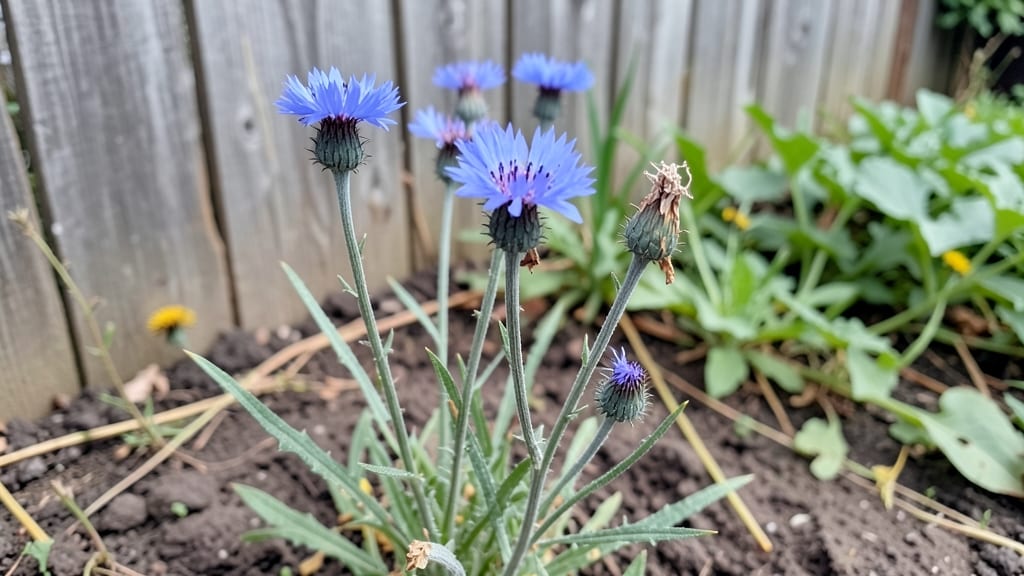
Cornflowers bloom in late spring to early summer, typically between May and July, producing vibrant blue flowers that attract pollinators and thrive in full sun with well-drained soil.
Cornflowers are true sun lovers, and their bloom timing is heavily influenced by daylight length rather than just calendar months. 🌞 Once temperatures consistently hit 50°F and days stretch beyond 14 hours of sunlight, they’ll burst into color—though in cooler northern climates, expect blooms to arrive slightly later than in warmer southern regions.
The key is planting seeds early in spring, as their natural 60-90 day growth cycle means late sowers might miss peak season entirely.
What’s fascinating is how these flowers respond to environmental cues: they’ll often delay blooming if nights stay too cool, waiting for ideal conditions. This adaptability makes them perfect for cut flower gardens, as you can encourage staggered blooms by staggering plantings every 2-3 weeks throughout spring.
Just remember—once those vibrant blue petals appear, they’ll only last 1-2 weeks per stem before needing deadheading to prolong the show.
💡 In This Article
- Cornflower Bloom Timing Factors
- Extending Cornflower Blooms with Care
Cornflower bloom timing factors
Here's what's actually happening when cornflowers bloom: these plants are photoperiod-sensitive, meaning their flowering cycle is triggered by increasing daylight hours rather than just warm temperatures. The magic number is 14-16 hours of daylight, which typically occurs in late spring when days lengthen past 14 hours.
This photoperiodic response explains why cornflowers in northern climates (like Minnesota) bloom later than those in southern regions (like Florida) - the daylight threshold arrives weeks apart between zones.
The temperature threshold works in tandem with daylight. Cornflowers need consistent daytime temperatures above 60°F and nighttime temps above 50°F to initiate blooming. What's fascinating is their built-in delay mechanism: if nights stay below 50°F for more than 3-4 days, they'll pause flowering until conditions improve.
This explains why late spring frost events can delay blooms by 1-2 weeks in marginal climates. The plant's natural growth cycle from seed to bloom takes 60-90 days, so planting timing becomes critical - sowing too late means missing peak season entirely.
Regional climate variations create dramatic differences in bloom timing. In Zone 5 (Midwest), cornflowers typically bloom in late May to early June, while in Zone 8 (California coast), they may start as early as March-April.
The Mediterranean climate of Zone 9 actually produces two bloom cycles - one in early spring and another in fall. This geographic variation occurs because cornflowers are native to southern Europe and western Asia, where they evolved to respond to specific seasonal patterns.
What most gardeners don't realize is that these regional differences can be manipulated by choosing early or late blooming varieties - some cultivars will flower 3-4 weeks earlier than standard types.
Planting time directly affects bloom cycles through a process called vernalization. While cornflowers don't require cold stratification like some perennials, they do benefit from early spring planting (2-4 weeks before last frost) which gives roots time to establish before the photoperiod trigger kicks in.
The key is matching your planting schedule to your local frost dates: in cold climates, sow seeds 4-6 weeks before last frost for summer blooms, while in warm climates, you can plant as early as February for spring color.
This timing strategy creates a 3-4 week window between first and last blooms in a garden.
What's particularly interesting about cornflower biology is their response to temperature fluctuations. Research shows that when daytime highs exceed 85°F during bloom time, flowers may last only 5-7 days before wilting, compared to 10-14 days in cooler 70-80°F conditions.
This heat sensitivity explains why cornflowers in desert climates often have shorter bloom periods unless given afternoon shade. The plant's natural defense mechanism is to produce more flowers during cooler periods, creating that characteristic wave of blue that gardeners love. 🌿
For gardeners in transitional climates, the secret to consistent blooming lies in staggered planting. By sowing seeds every 2-3 weeks from early spring through early summer, you can extend the bloom season by 6-8 weeks.
This technique works because each new planting reaches the photoperiod threshold at different times, creating a continuous display. The same principle applies to transplanting: setting out young plants in 2-week intervals will give you a steady succession of blooms throughout the season.
This is particularly valuable for cut flower production, where consistent harvests are essential.